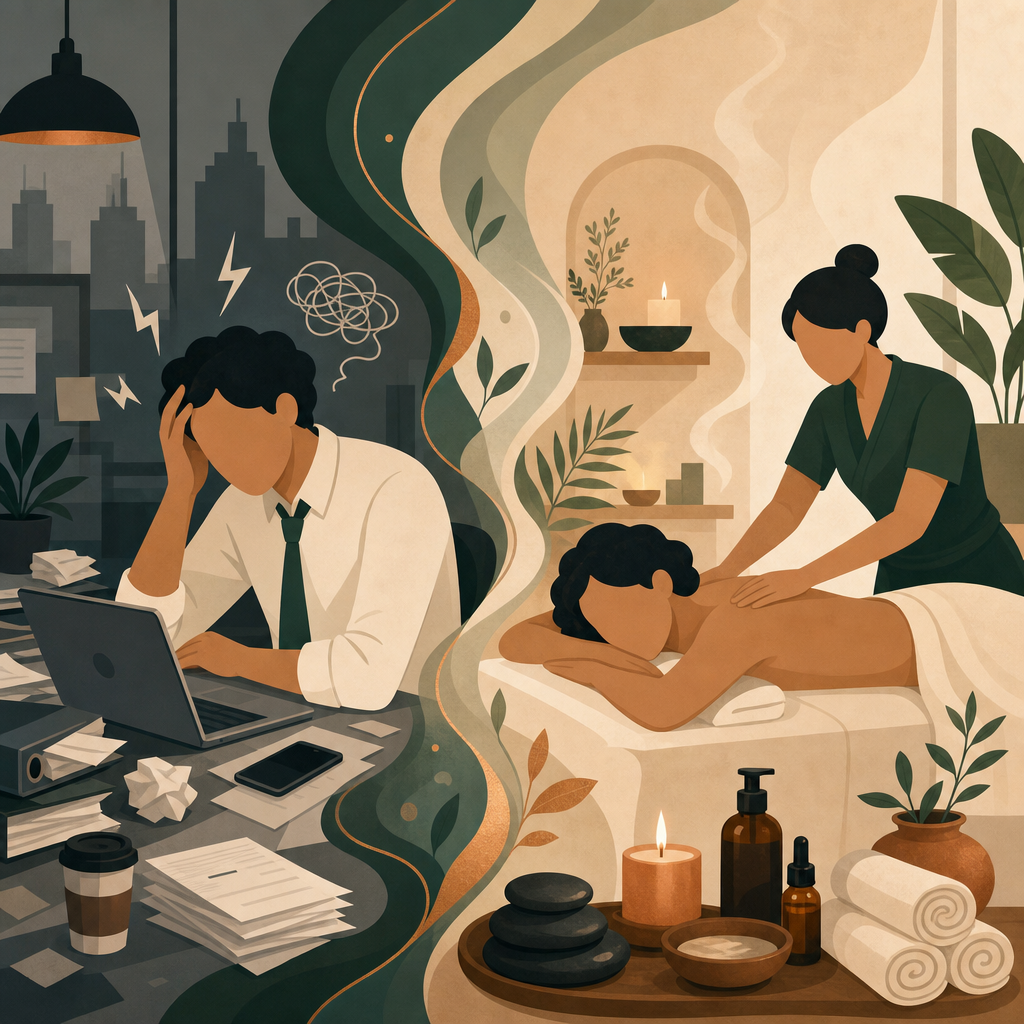
Burnout Recovery: A Complete Self-Care Plan for Overworked Professionals

I'm going to say something that might ruffle some feathers: if you're proud of how exhausted you are, you've got the wrong relationship with work. And I know this because I used to be exactly that person — running on fumes, wearing my 14-hour workdays like a badge of honor, convinced that if I slowed down for even a weekend, everything would fall apart.
Then my body made the decision for me. I crashed. Hard. Not a dramatic breakdown with flashing lights and sirens — more like a slow, quiet unravelling where I stopped caring about things I used to love, couldn't remember the last time I felt rested, and developed mysterious aches that no doctor could explain.
That was burnout. And let me tell you, burnout recovery isn't about booking a spa day and calling it done. It's a complete rethinking of how you relate to your body, your time, and your energy. This guide is everything I wish someone had handed me back then.
Burnout Isn't Just Being Tired
Let's get one thing straight. Burnout is not the same as being tired after a busy week. Burnout is a state of emotional, physical, and mental exhaustion caused by prolonged stress. It's what happens when you've been running on the treadmill of corporate expectations for so long that your body and mind simply refuse to keep going.
The World Health Organization officially classified burnout as an occupational phenomenon in 2019. The three key symptoms are:
- Exhaustion — Not just physical tiredness, but a bone-deep depletion that sleep doesn't fix
- Cynicism and detachment — That creeping sense of "what's the point?" about work you used to care about
- Reduced professional efficacy — Feeling like you're terrible at your job even when your actual performance is fine
If you're reading this in Raipur, working in IT, banking, education, healthcare, or any demanding corporate role, you're at high risk. The culture of "hustle harder" is particularly strong in growing cities like ours, where everyone's trying to prove something.
The Stages of Burnout — And Why Recovery Requires a Different Approach at Each Stage
Stage 1: The Honeymoon Phase
You're excited about your work. You're taking on extra projects, saying yes to everything, feeling energized. This is the stage where burnout starts, but you don't know it yet. You're running on adrenaline, and your body is keeping up — for now.
What to do: Build boundaries NOW before they're needed. Institute one non-negotiable rest day per week. Learn to say no to one extra commitment. This is prevention, not recovery.
Stage 2: Onset of Stress
You're still functioning, but you notice some days are harder than others. You're more irritable. Sleep isn't as refreshing. You might have a few too many evening drinks or too much caffeine just to get through the day.
What to do: This is when you need to intervene. A monthly stress relief massage can prevent progression. But more importantly, audit your workload. What can you drop?
Stage 3: Chronic Stress
This is where most people realize something is wrong. You're consistently exhausted. You've developed physical symptoms — headaches, back pain, digestive issues. You're snapping at colleagues and family members. Your work quality is dropping, which creates more stress, which makes everything worse.
What to do: You need professional support now. Weekly massage therapy to address the physical holding patterns. Consider talking to a therapist. This is not the time to push through. This is the time to actively recover.
Stage 4: Burnout
Full collapse. You can't get out of bed some days. You feel hollow, empty, disconnected from everything. You might be experiencing panic attacks, depression, or serious physical illness because your immune system has crashed.
What to do: Stop working. If that sounds impossible, it's exactly how serious this is. Take medical leave if you can. Get professional help — a doctor, a therapist, and a bodywork practitioner who understands burnout recovery. You need to rebuild from the ground up.
The Burnout Recovery Self-Care Plan
Alright. This is the practical part. Here's a step-by-step plan for corporate stress recovery, whether you're in early stage 2 or deep in stage 4.
Phase 1: The Emergency Reset (Weeks 1-2)
This is the triage phase. Stop making things worse before you start making things better.
- Sleep hygiene overhaul: No screens 90 minutes before bed. Same sleep and wake times every single day, including weekends.
- Caffeine curfew: Nothing caffeinated after 2 PM. Your adrenal system is already screaming for a break.
- Movement, not exercise: Don't add gym guilt to your burnout. Gentle walking, stretching, or yin yoga. That's it.
- First massage session: Book a 60-minute stress relief massage. Focus on full body — your nervous system needs a complete reset, not spot treatment.
- Digital boundaries: No work emails after 7 PM. Yes, I know your boss expects you to be available. You need to have that conversation. Your health depends on it.
Phase 2: Building the Foundation (Weeks 3-6)
Now that you've stopped the bleeding, start rebuilding.
- Weekly massage therapy: Commit to at least four weekly sessions. Burnout leaves your muscles in a chronic state of contraction — it takes multiple sessions to teach them to let go.
- Nutrition re-entry: If you've been surviving on vending machine lunches and late-night delivery, start with one properly cooked meal per day. Protein, vegetables, complex carbs. Nothing fancy.
- Social reconnection: Burnout makes you isolate yourself. Schedule one low-pressure social interaction per week. Coffee with a friend. A walk with a family member. No agenda.
- Workload conversation: Have an honest conversation with your manager about your capacity. You might be surprised — good managers would rather support you than lose you.
Phase 3: Sustainable Recovery (Weeks 7-12)
This is where you build the systems that prevent future burnout.
- Bi-weekly maintenance massages: Once your nervous system has stabilized, sessions every two to three weeks keep you there.
- Identify your stress patterns: What specific situations trigger your burnout response? Certain clients? Deadlines? Commuting? Identify them so you can plan around them.
- Create "white space" in your calendar: Block out 90 minutes twice a week for absolutely nothing. No meetings, no tasks, no obligations. Just space to exist.
- Re-evaluate your relationship with work: Do you need to change jobs? Roles? Industries? Burnout is often a sign that something fundamental is misaligned.
🌿 The Self-Care Checklist That Saved My Sanity
Print this. Stick it on your fridge. Check off at least three items every day:
- 7+ hours of sleep last night
- Ate at least one proper meal
- 15 minutes outside, no phone
- Didn't check work email after dinner
- Moved my body (even gently)
- Said no to something I didn't have energy for
- Had a conversation that wasn't about work
Why Massage Therapy Is Non-Negotiable for Burnout Recovery
I know I'm biased because I run a spa, but hear me out on this one.
Burnout isn't just in your head. It's in your body. When you're chronically stressed, your muscles remain in a constant state of low-grade contraction. Over weeks and months, this creates actual physical changes — knots (myofascial trigger points) form, connective tissue becomes stiff, and your posture degrades. This creates a feedback loop: your body hurts, so your mood worsens, so you cope worse with stress, so your body hurts more.
A good massage therapist breaks this loop. Here's how:
- Lowering cortisol: As I covered in our anxiety article, massage directly reduces the stress hormone that's keeping you stuck in burnout mode.
- Restoring parasympathetic tone: Regular sessions retrain your nervous system to spend more time in "rest and digest" mode and less in "fight or flight."
- Releasing chronic muscle tension: Burnout often shows up as specific patterns — tight upper back and shoulders from desk work, clenched jaw from stress, tight hips from the "brace for impact" posture of anxiety.
- Improving sleep quality: One of the fastest ways massage helps burnout is by improving the depth and quality of your sleep. And better sleep accelerates every other recovery effort you're making.
The Corporate Burnout Epidemic in Raipur
I see it every week. Professionals from IT companies in the Siltara and Tarrri areas, bankers from the Civil Lines, retail managers from Magneto Mall — they come in with the same story. "I used to love my job. Now I dread waking up. I don't even know who I am anymore."
Raipur has been growing at an incredible pace. New offices, new businesses, new opportunities. But with that growth comes pressure. The culture of "prove yourself" is relentless. And when your entire social circle is also overworked and stressed, it becomes normal. You don't realize how far gone you are until you try to stop and discover you can't.
I've had clients tell me they felt guilty taking an hour for a massage because there was work waiting. That guilt is a symptom. If you feel guilty about taking care of yourself, you're already deeper into burnout than you realize.
Final Thoughts: Burnout Recovery Is a Journey, Not a Destination
I want to be honest with you — burnout recovery isn't linear. You'll have good weeks and bad weeks. You might feel amazing after your first massage and then crash the next day. That's normal. That's your body releasing years of accumulated tension, and it takes time to process.
But here's the thing I've learned from my own recovery and from watching hundreds of clients go through theirs: it does get better. Your energy comes back. Your enthusiasm comes back. You start to remember what it feels like to wake up looking forward to the day instead of dreading it.
You just have to give yourself permission to recover. Not when the project is done. Not when the deadline passes. Not when things slow down (they never do). Now.
Come see us at Meraki Spa near Samta Colony in Raipur. We'll start where you are, not where you think you should be. One session at a time.
Final Thoughts: A Personal Note from Our Team
Every therapist at Meraki Spa has seen burnout up close — not just in our clients, but in our own lives too. The wellness industry isn't immune to the hustle culture. We've had days where we push through exhaustion to serve others, forgetting that we need care too. That hypocrisy taught us something important: you cannot pour from an empty cup.
If you're reading this and thinking, "This all sounds great, but I can't afford the time/money/energy right now," I hear you. That thought is the burnout talking. Burnout convinces you that recovery is a luxury you haven't earned yet. But here's the truth: you don't earn rest. You need it to function. The same way you don't "earn" sleep or water.
Start small. Start imperfectly. If a full spa session feels like too much, start with the checklist in this article. Pick three items and do them for a week. Come see us for a single 60-minute session. The goal isn't perfection — it's starting. And starting is the hardest part.
We're here at Meraki Spa near Samta Colony whenever you're ready. No judgment. No sales pitch. Just care.
People Also Ask
Related Articles
Wellness Guides, Pricing & FAQs
Massage for Anxiety: How Touch Therapy Calms Your Nervous System
12 min read · 12 May 2026

Wellness Guides, Pricing & FAQs
Sleep Better Tonight: Evening Massage Routine for Deep Sleep
11 min read · 12 May 2026
Wellness Guides, Pricing & FAQs
Phone Addiction and Neck Pain: The Digital Detox Massage Plan
12 min read · 12 May 2026
Enjoyed This Article?
Stop reading about relaxation — come experience it firsthand at Raipur SPA.