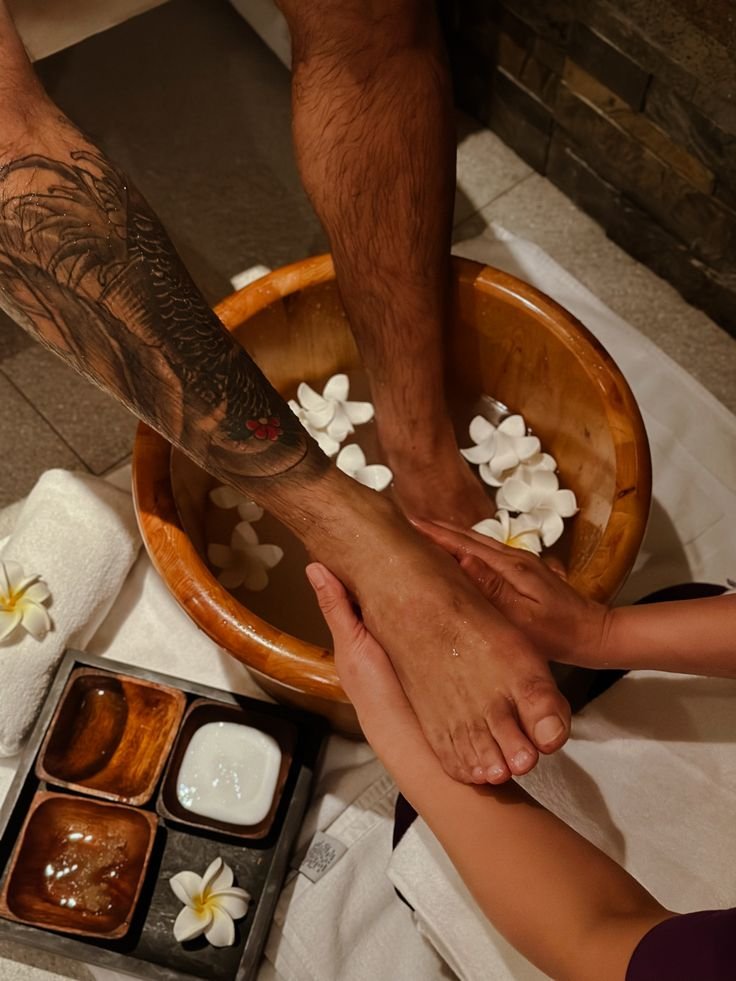
One of the most common sources of confusion when people book a massage is not knowing which type they actually need. The terms "relaxation massage" and "therapeutic massage" appear across spa menus and wellness websites, but they are often used inconsistently or without explanation. Some people book a deep tissue massage expecting general relaxation and are surprised by the intensity. Others book a Swedish massage hoping to address chronic back pain and are disappointed when nothing specific seems to change. Getting this distinction right matters — both for your experience and for whether the session actually helps you.
Relaxation Massage — What It Actually Is
Relaxation massage is any massage whose primary intent is to shift the nervous system from a state of alertness and stress (sympathetic dominance) to a state of rest and recovery (parasympathetic dominance). The most well-known types are Swedish massage and aromatherapy massage, though elements of relaxation technique appear in many treatments.
The defining characteristic is not the specific strokes used — it is the intent behind them. A relaxation massage uses long, flowing effleurage strokes (gliding over the skin surface), kneading petrissage, and rhythmic tapotement to stimulate sensory receptors in the skin and superficial muscles that communicate directly with the nervous system. The message being sent to the nervous system is: you are safe, you can slow down, recovery can begin.
Pressure in a relaxation massage is light to moderate. It is intentionally not deep enough to create significant local discomfort. The work covers the full body — back, arms, legs, neck, scalp, and sometimes the abdomen — without focusing heavily on any specific area. If you arrive with a knot in your right shoulder, a relaxation massage will work over that area, but it will not spend 15 minutes specifically addressing that knot. The goal is the whole system, not individual parts.
The physiological effects of relaxation massage are well-documented. Cortisol (the primary stress hormone) decreases measurably after a session. Heart rate and blood pressure drop. Respiratory rate slows. Serotonin and dopamine levels increase. The parasympathetic nervous system takes over, and the body begins the repair processes that it cannot prioritize while in a stress state — tissue repair, immune function, digestive regulation, hormonal recalibration.
These are not trivial benefits. In a context like Raipur, where professional and personal demands create sustained stress, regular relaxation massage is a genuine intervention for stress-related health conditions, not simply a luxury. But it is important to be clear about what it does and does not do: it promotes systemic wellbeing and nervous system regulation. It does not address specific musculoskeletal injuries, named clinical conditions, or chronic pain patterns in the way that therapeutic massage does.
Aromatherapy as a Form of Relaxation Massage
Aromatherapy massage deserves specific mention because many clients are uncertain about what it adds beyond scent. The essential oils used in aromatherapy massage are not merely pleasant — they have documented physiological effects. Lavender essential oil has been shown in multiple clinical studies to reduce cortisol levels and anxiety measures more effectively than the massage alone. Bergamot stabilizes mood and has mild anxiolytic (anxiety-reducing) effects. Eucalyptus improves respiratory function and mental clarity. Chamomile reduces inflammation markers.
The mechanism is both through skin absorption (the carrier oil allows lipid-soluble oil compounds to penetrate the skin surface) and through the olfactory nerve pathway — the most direct sensory route to the limbic brain. A well-chosen oil blend amplifies the nervous system effects of the relaxation massage significantly. This is why aromatherapy is particularly recommended for clients whose primary concern is mental decompression, anxiety, or sleep issues rather than physical pain.
Therapeutic Massage — What It Actually Is
Therapeutic massage is a broad category that includes any massage treatment with specific clinical goals — addressing a named condition, injury, or physical dysfunction. Deep tissue massage, sports massage, trigger point therapy, prenatal massage, and myofascial release are all forms of therapeutic massage. What they have in common is that they are structured around a clinical objective rather than general wellness.
The defining characteristics of therapeutic massage are specificity, intent, and the willingness to create productive discomfort in service of a functional goal. A therapeutic massage session begins with some form of assessment — either a structured intake about your symptoms and history, a physical observation of posture and movement, or both. The therapist identifies what is actually happening in the tissue: where adhesions have formed, which muscles are in hypertonic contraction (overly tight), where trigger points are creating referred pain, what fascial restrictions are limiting movement.
The work then targets these specific findings. In a deep tissue massage, the therapist uses sustained, slow, firm pressure to reach the deeper layers of muscle and connective tissue that lighter work cannot access. In trigger point therapy, the therapist locates specific hyperirritable points within the muscle that are generating pain (often felt at a site different from the trigger point itself) and applies sustained pressure — often quite firm — to deactivate them. In sports massage, specific techniques are applied to the muscle groups relevant to the athlete's sport and current training phase.
Therapeutic massage may not feel comfortable during the session. This is a significant departure from relaxation massage and is the source of much confusion when people book the wrong type. Deep tissue work in particular involves pressure that many clients describe as "good pain" — significant enough to be clearly felt, to require conscious breathing, to produce some tension in the body as you process it. This is different from actual pain (which means the pressure is too much and must be adjusted). The distinction is: productive discomfort stays manageable, breathing through it is possible, and it resolves rather than worsens when the pressure is released. Actual pain causes bracing, an inability to relax, and does not resolve when pressure lifts. If you are experiencing the latter, tell your therapist immediately.
Therapeutic massage may also leave you with some residual soreness the following day — similar to muscle soreness after exercise. This is normal and indicates that the tissue has been worked at a depth that will produce lasting change. It typically resolves within 24 to 36 hours and is followed by notably improved function and reduced pain in the treated area.
Specific Clinical Conditions Addressed by Therapeutic Massage
Therapeutic massage is an appropriate treatment for a wide range of conditions. Some of the most common ones we address at Raipur Spa:
Chronic lower back pain: Deep tissue work to the lumbar erectors, quadratus lumborum, gluteus medius, and piriformis — the muscles most commonly implicated in lower back pain — produces measurable improvement in pain and mobility. Multiple well-designed studies support massage as an effective treatment for non-specific chronic lower back pain.
Tension headaches and cervicogenic headaches: Trigger point work to the upper trapezius, SCM, and suboccipital muscles reliably reduces headache frequency and intensity for many headache sufferers. This is among the most well-supported applications of therapeutic massage.
Shoulder impingement and rotator cuff tightness: Myofascial release and deep tissue work to the rotator cuff muscles, pectoral minor, and surrounding structures improves shoulder range of motion and reduces impingement pain.
Plantar fasciitis: Deep friction work to the plantar fascia and specific trigger point work in the gastrocnemius and soleus reduces the tightness pattern that drives most plantar heel pain.
IT band syndrome: Working on the TFL and vastus lateralis (rather than trying to massage the IT band itself, which is inelastic fascia) reduces the tension that pulls on the band and causes lateral knee pain.
Occupational overuse conditions: Forearm, wrist, and hand tension from keyboard work, repetitive labor, or instrument playing responds well to targeted deep tissue and myofascial work.
Can Relaxation and Therapeutic Massage Overlap
Yes, and in practice they often do. A skilled therapist delivering a deep tissue massage will include effleurage strokes between deeper work sections — partly to flush the tissue and partly to give the nervous system moments of restoration between intense interventions. The relaxation and therapeutic approaches complement each other. Similarly, a relaxation massage that is delivered attentively will naturally address some superficial tension patterns even without specific clinical intent.
At Raipur Spa, our senior therapists often begin a session that was booked as therapeutic with a brief period of relaxation-style work to allow the client's nervous system to settle before the deeper work begins. A nervous system that is already slightly calmed tolerates and benefits from therapeutic pressure far better than one that is still in street-mode from the commute in. This integration of both approaches is what distinguishes skilled massage therapy from technically proficient but clinically limited work.
How to Choose the Right Type for Your Needs
The decision is simpler than it might seem:
Choose relaxation massage if: you are primarily stressed or mentally exhausted, you do not have a specific painful condition, you want to sleep better, you want to feel good and decompress, you are new to massage, or you simply need restoration after a demanding period.
Choose therapeutic massage if: you have a specific condition that has a name (back pain, IT band syndrome, frozen shoulder, plantar fasciitis, tension headaches), you are an athlete managing training load, you have chronic pain that has not responded to rest alone, or you have a specific area of restricted movement you want to address.
If you are unsure, call Raipur Spa before booking. Describe what you are experiencing and what you are hoping to achieve. Our reception team can recommend the most appropriate treatment type — and in some cases, suggest a modified session that incorporates elements of both.
Pricing Differences at Raipur Spa
Relaxation massage sessions tend to be priced somewhat lower than equivalent therapeutic sessions, reflecting the difference in clinical complexity and therapist specialization required.
Relaxation (Swedish) full body massage (60 minutes): Rs. 900. Aromatherapy full body massage (60 minutes): Rs. 1,000. Deep tissue therapeutic massage (60 minutes): Rs. 1,200. Sports massage (60 minutes): Rs. 1,200. Trigger point therapy session (45 minutes): Rs. 900. Combined relaxation and therapeutic session (90 minutes): Rs. 1,600.
The right massage for your specific need, delivered well, is worth the precision in selection. A relaxation massage when you need therapeutic work leaves you feeling pleasant but unchanged. A therapeutic massage when you only need relaxation may feel unnecessarily intense. Knowing the difference — and asking for the right thing — is the starting point for getting real value from your spa visits at Raipur Spa.
Enjoyed This Article?
Stop reading about relaxation — come experience it firsthand at Raipur SPA.
People Also Ask
Related Articles
Swedish & Relaxation Massage
Pre-Event Relaxation Massage for Better Performance
1 min read · 21 Apr 2026
Swedish & Relaxation Massage
Swedish Massage: Sabse Popular Massage Therapy Ka Complete Guide
6 min read · 14 Apr 2026

Swedish & Relaxation Massage
Couple Spa in Raipur — Romantic Wellness Experience for Partners
5 min read · 13 Apr 2026
Enjoyed This Article?
Stop reading about relaxation — come experience it firsthand at Raipur SPA.
 Chat on WhatsApp
Chat with us
Chat on WhatsApp
Chat with us