Thai Massage vs Swedish Massage - Which Should You Choose in Raipur?
Thai massage and Swedish massage are both legitimate, well-established therapeutic modalities, and both are available at Raipur Spa. But they are fundamentally different in technique, experience, and outcome, and understanding those differences is essential for choosing the right treatment for your specific situation. This guide covers exactly what distinguishes them, who benefits most from each, and how to choose based on your goals.
Thai Massage: What It Actually Is
Thai massage is a dry treatment. No oils are used, which means you remain fully clothed throughout in loose, comfortable clothing. The treatment does not take place on a cushioned table — traditional Thai massage is performed on a floor mat, though some variations use a table for specific techniques. The therapist uses hands, thumbs, elbows, forearms, knees, and feet to apply pressure along energy lines called Sen lines, which map closely to the fascial planes and nervous system pathways of the body.
What distinguishes Thai massage most clearly from other modalities is the stretching component. A significant portion of a Thai session involves the therapist moving the client's body into assisted stretches — yoga-like positions that lengthen muscles, decompress joints, and open ranges of motion that the client cannot achieve through self-stretching alone. The therapist stabilizes one part of the body while gently applying controlled force to another, creating a lever that produces deep stretch in specific muscle groups. Hip flexors, hamstrings, the thoracic spine, shoulders, and IT bands are commonly addressed in this way.
The experience is active in a way that no other massage modality is. While you are passive in the sense that the therapist drives all the movements, you are aware of the stretching, the pressure, and the repositioning throughout. Some techniques produce a pleasant muscular sensation that sits on the border between comfortable pressure and mild discomfort — this is the working zone where the tissue responds and changes.
Swedish Massage: What It Actually Is
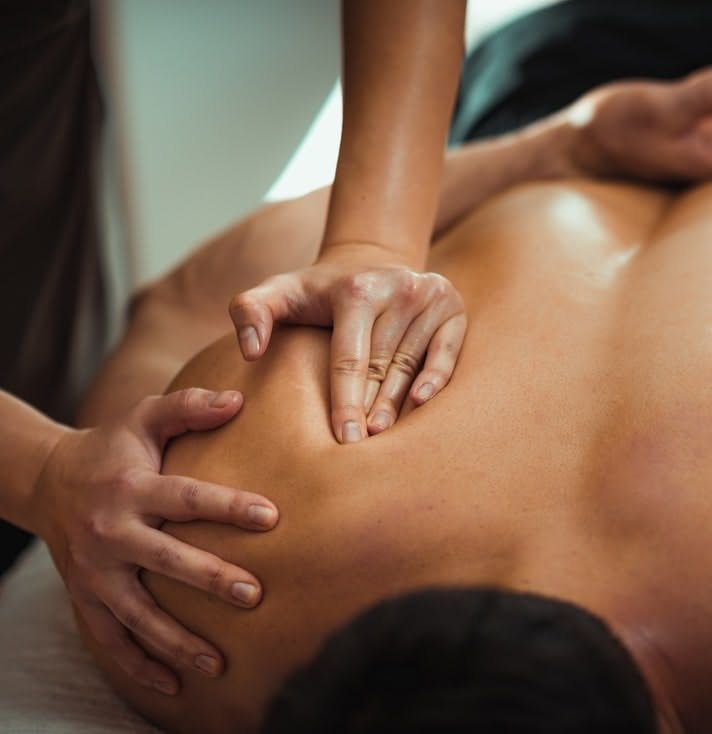
Swedish massage is the opposite experience in almost every dimension. The client undresses to their comfort level and lies on a padded massage table under draping. Oil is applied to the skin, and the therapist uses long gliding strokes called effleurage, kneading movements called petrissage, gentle tapotement, and light friction to work through the muscle layers systematically. The client is completely passive throughout — there is no participation, no repositioning, no stretching. The experience is of receiving continuous smooth, flowing contact.
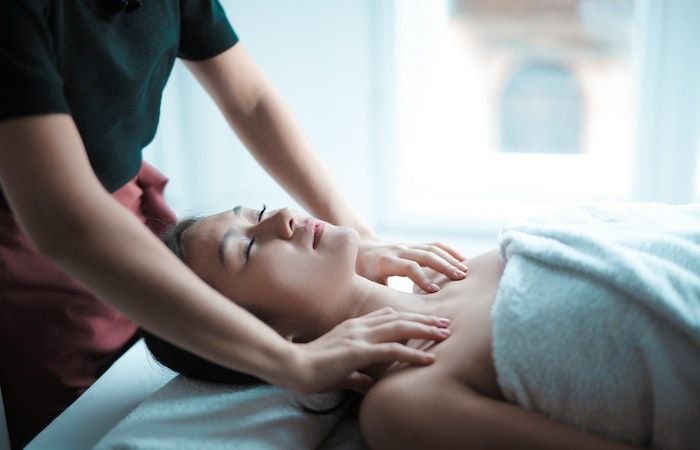
Swedish massage was developed in 19th century Sweden and became the foundation of Western therapeutic massage. Its primary effects are relaxation of the nervous system, improvement of peripheral circulation, reduction of muscle tension, and lymphatic drainage stimulation. It is the modality most associated with the image most people have of a spa massage: warm room, soft music, oil, flowing strokes, and a deeply peaceful state during the session.
The techniques used in Swedish massage are gentle by nature. While pressure can be adjusted and deeper work can be incorporated within a Swedish framework, the modality's fundamental design is toward relaxation rather than structural change or mobility improvement.
The Key Differences
Oil versus dry: Swedish uses oil applied to bare skin; Thai requires loose clothing and uses no oil. If skin contact and smooth flowing pressure is what you want, Swedish is appropriate. If you prefer to remain clothed or want work through clothing, Thai is the option.
Passive versus active: Swedish massage requires nothing from you. Thai massage involves being moved, repositioned, and stretched. If you want to simply receive without any participation, Swedish is the choice. If you respond well to feeling the body work through movement and want an active therapeutic experience, Thai is more engaging.
Relaxation versus mobility: Swedish massage excels at nervous system relaxation, stress reduction, and producing a calm, peaceful state. Thai massage excels at improving flexibility, releasing joint compression, addressing muscle shortening, and producing a sense of physical openness and lightness after the session. Both modalities reduce muscular tension, but they do so through different mechanisms and produce different outcomes.
Sedating versus stimulating: Swedish massage is typically sedating — many clients fall asleep during the session and feel deeply relaxed afterward. Thai massage is typically energizing — the stretching and pressure work leaves most clients feeling physically lighter and more awake, with improved postural awareness. An evening session for sleep support calls for Swedish. A morning session for energy and mobility calls for Thai.
Who Should Choose Thai Massage
Thai massage is the better choice for people with limited flexibility or range of motion who want professional stretching assistance. Desk workers with hip flexor tightness and thoracic spine compression respond particularly well. Athletes who need flexibility work alongside therapeutic pressure — cricketers, football players, gym trainees — benefit from the combined compression and stretch that Thai delivers. People who feel restless during conventional massage and find it difficult to remain still enjoy the movement-based nature of Thai. Anyone who leaves regular massage feeling relaxed but not physically changed will often find that Thai massage produces a more noticeable structural benefit.
Who Should Choose Swedish Massage
Swedish massage is the better choice for people whose primary goal is stress reduction, sleep support, or nervous system recovery. It is also more appropriate for people with fragile connective tissue, recent injuries, or conditions where stretching is contraindicated. First-time massage clients often find the Swedish experience more accessible because the sensory input is gentler and the experience is familiar. People who are physically sensitive, carrying high anxiety, or simply exhausted and needing pure rest will be better served by Swedish. Pregnant women, older adults, and those recovering from illness typically receive Swedish rather than Thai.
Combination Options
At Raipur Spa, it is possible to combine elements of both modalities within a single session. A therapist with dual training can begin with Thai compression and stretch work and transition into Swedish oil-based relaxation strokes, providing both structural improvement and nervous system relaxation in one visit. This combination is particularly effective for clients who have both physical tightness that needs addressing and stress that needs releasing. Discuss this option at booking.
Contraindications
Thai massage contraindications include osteoporosis, recent joint surgery or fractures, severe disc herniation or acute spinal conditions, active inflammation in joints, and first trimester of pregnancy. The assisted stretching techniques require the therapist to apply leverage forces that are not appropriate for structurally fragile or acutely injured tissue.
Swedish massage has fewer absolute contraindications. The primary ones are active infections, open wounds, severe cardiovascular conditions, and certain skin conditions. It is generally safe for most populations when performed by a trained therapist.
Pricing at Raipur Spa
Thai massage at Raipur Spa is priced at Rs. 1,200 for a 60-minute session and Rs. 1,800 for a 90-minute session. The 90-minute session allows full-body coverage at a pace that does not feel rushed and is recommended for first-time Thai massage recipients. Swedish massage is priced at Rs. 900 for a 60-minute session and Rs. 1,500 for a 90-minute session. The combination Thai-Swedish session is priced at Rs. 1,600 for 90 minutes. Contact Raipur Spa to book your session and discuss with the therapist which approach best suits your current physical state and goals.
More About Thai Massage vs Swedish Massage
Here is something that drives me absolutely crazy. People will spend hours scrolling through social media, watching mindless videos, consuming content that adds nothing to their lives. But ask them to spend sixty minutes taking care of their own body and suddenly they are too busy. Too busy for what For the one thing that actually keeps you functional It makes no sense. We have normalized being constantly stressed, constantly tense, constantly in varying degrees of pain. We treat headaches with pills instead of addressing the neck tension causing them. We treat back pain with more sitting instead of releasing the tight muscles. The entire approach is backwards. Preventive care through regular massage is cheaper, more effective, and has zero side effects compared to the pharmaceutical approach. But try telling that to someone who has been conditioned to believe health comes in a pill bottle.
class="mt-14 pt-8 border-t border-warm-200/50 flex items-center justify-between flex-wrap gap-4 reveal"> All ArticlesEnjoyed This Article?
Stop reading about relaxation — come experience it firsthand at Raipur SPA.
Thai vs Swedish: A Detailed Comparison for Raipur Residents
For residents of Raipur who are choosing between Thai and Swedish massage, the decision should be based on what you want to achieve from your session. If your primary goal is relaxation — to feel calm, reduce stress, and give your nervous system a break from the demands of city life — Swedish massage is the better choice. Its gentle, rhythmic strokes are designed specifically to induce a state of deep relaxation. If your primary goal is to improve flexibility, release deep muscle tension, or address specific mobility issues, Thai massage will serve you better. Its assisted stretching techniques produce physiological changes that Swedish massage cannot achieve. Many of our clients at Raipur SPA use both modalities at different times depending on their needs: Swedish for periods of high stress or when they simply want to relax, and Thai for maintenance of flexibility and when they feel their body has become stiff and restricted. Having both options available allows you to match your treatment to your current needs rather than being limited to a single approach.
FAQ: Can I Switch Between Thai and Swedish Massage?
Absolutely. Many of our clients alternate between modalities based on their current needs. There is no requirement to commit to one type of massage. We encourage you to try both and see which works best for you at different times. Your therapist can also recommend a combination approach if your needs fall between the two modalities.
People Also Ask
Related Articles
Swedish & Relaxation Massage
Pre-Event Relaxation Massage for Better Performance
9 min read · 21 Apr 2026
Swedish & Relaxation Massage
Swedish Massage: Sabse Popular Massage Therapy Ka Complete Guide
9 min read · 14 Apr 2026

Swedish & Relaxation Massage
Couple Spa in Raipur — Romantic Wellness Experience for Partners
8 min read · 13 Apr 2026
Enjoyed This Article?
Stop reading about relaxation — come experience it firsthand at Raipur SPA.
 Chat on WhatsApp
Chat with us
Chat on WhatsApp
Chat with us

DeepSeek AI · Raipur SPA