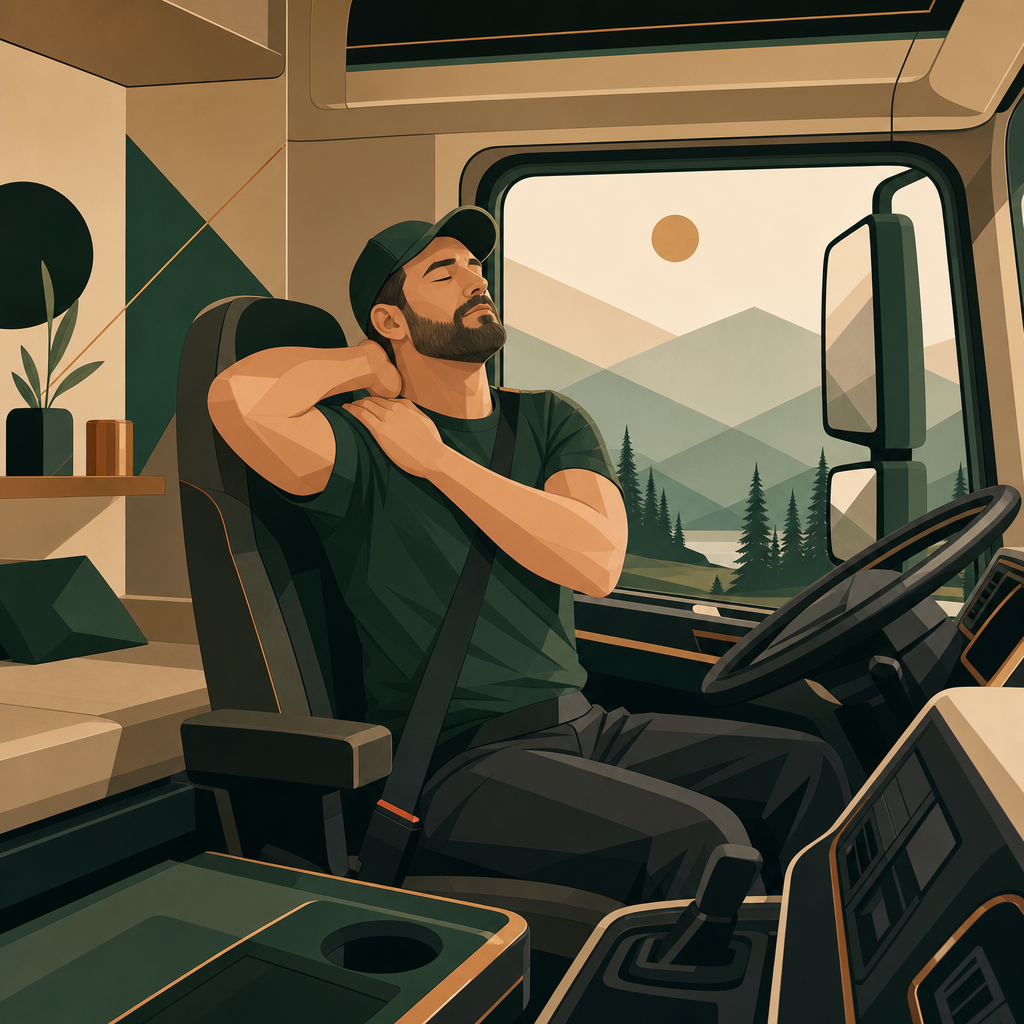
Massage for Truck Drivers: Long-Haul Relief Strategies
If you drive a truck for a living, I don't need to tell you what your body feels like at the end of a long haul. The ache in your lower back that starts around hour three. The stiffness in your right leg from riding the pedals. The shoulder that's been in spasm since that pothole you hit two states ago. The numbness that creeps into your hands after hours of gripping a steering wheel.
Truck driving is one of the most physically demanding professions in India, yet it's rarely recognized as such. You're not lifting heavy boxes or running around a construction site, so people assume it's easy. But eight to twelve hours of sustained vibration, static posture, repetitive micro-movements, and environmental stress takes a devastating toll on the human body. I've worked with dozens of truck drivers at Raipur SPA in Samta Colony near Agrasen Chowk, and I can tell you with certainty — the damage is real, it's cumulative, and it's entirely preventable with the right approach.
This guide covers the specific problems truck drivers face, the massage techniques that actually help, and a practical plan for incorporating body maintenance into a lifestyle that doesn't exactly make self-care easy.
The Anatomy of Driving Damage — Why Trucking Destroys Your Body
Before we talk solutions, let's talk about what's happening to your body during every hour behind the wheel. Understanding the mechanics makes the solutions make sense.
Prolonged sitting with vibration: You're not just sitting — you're sitting on a surface that's vibrating for hours on end. This sustained vibration is transmitted through your spine, particularly your lumbar vertebrae, at frequencies that have been shown to accelerate disc degeneration. A landmark study published in Spine journal found that professional drivers have a significantly higher rate of degenerative disc disease compared to non-drivers. The vibration causes micro-trauma to the intervertebral discs that accumulates over years.
Static lower body positioning: Your hips are fixed at roughly 90 degrees for hours. Your hamstrings are constantly compressed against the seat. Your hip flexors are shortened. Your glutes are deactivated — they essentially "go to sleep" because they're not being asked to do anything. This combination creates a pattern called "lower crossed syndrome" where tight hip flexors and weak glutes pull your pelvis forward, creating a chain reaction of back pain that extends all the way up your spine.
Upper body tension: Holding a steering wheel requires constant, low-level muscle activation in your shoulders, upper back, and arms. It's not heavy work, but sustained for 8+ hours, it creates chronic tension patterns. Your right shoulder (or left, depending on your vehicle) is particularly affected because of the asymmetric reaching and the need to maintain control. This leads to referred pain patterns that drivers often mistake for heart problems or other serious conditions.
Cervical spine strain: Check mirrors, look at road, check mirrors, look at road. The repetitive micro-movements of your neck create tension in the cervical spine that leads to chronic stiffness, tension headaches, and even nerve impingement that can cause numbness and tingling in your arms and hands. Add to that the visual strain of focusing on the road for hours, and you've got a recipe for chronic discomfort.
Circulatory issues: Sitting for extended periods impedes blood flow, particularly in your legs. This increases the risk of deep vein thrombosis (DVT), varicose veins, and general leg fatigue and swelling. Poor circulation also means that the metabolic waste products your muscles produce aren't being cleared efficiently, leading to faster onset of muscle soreness and fatigue.
This isn't a theoretical list. If you've been driving for more than a few years, you're experiencing some version of every single one of these problems. You may have normalized them — "it's just part of the job" — but they're not normal. They're predictable consequences that have predictable solutions.
The Massage Strategies That Work for Truck Drivers
Not all massage is created equal when it comes to driver-specific issues. Here's what actually works:
1. Lower Back and Glute Release
This is the priority area for every truck driver, period. The combination of prolonged sitting and vibration creates deep, chronic tension in the lumbar spine and gluteal muscles that doesn't respond to stretching alone.
Target muscles: Quadratus lumborum (deep lower back), gluteus maximus and medius, piriformis (deep glute that can compress your sciatic nerve), and the multifidus muscles (small stabilizers along your spine).
Best massage techniques: Deep tissue work with sustained pressure on trigger points. The glutes, in particular, benefit from focused, sustained pressure — your therapist will use their elbow or a specialized tool to work into the deep layers of muscle that standard hands-on techniques can't reach effectively. The piriformis release is another critical component — when this muscle gets tight, it can irritate the sciatic nerve, causing pain, numbness, and tingling that radiates down your leg.
At Raipur SPA: Our therapists are experienced in working with drivers and understand the specific tension patterns that result from long hours behind the wheel. We'll spend extra time on your lower back and glutes — the areas that suffer most — and work with you to develop a maintenance schedule that fits your driving route.
2. Hip Flexor Release
Your hip flexors — particularly the psoas muscle — are in a shortened position every moment you're sitting. Over years of driving, they adapt to this shortened state. When you try to stand up straight, they resist being lengthened, pulling your pelvis forward and creating lower back strain.
Best massage techniques: Myofascial release and gentle stretching of the hip flexors. This is a sensitive area and requires a skilled touch. Your therapist will work through the abdominal wall to access the psoas directly — it's an intense sensation but provides dramatic relief. The combination of psoas release and glute activation is the most effective intervention we've found for driver-related lower back pain.
3. Upper Back and Shoulder Work
The constant low-level tension of gripping and steering creates what I call "driver's shoulders" — tight, elevated upper traps with weakness in the muscles between the shoulder blades. This asymmetrical loading contributes to postural distortions that affect everything from headaches to breathing mechanics.
Best massage techniques: Deep stripping of the upper traps and levator scapulae (the muscle that runs from your neck to your shoulder blade), combined with chest opening to counteract the forward roll of the shoulders. Your therapist will also work on the rhomboids and middle traps — these need to be strengthened, but the massage prepares them to respond better to exercise by releasing the reciprocal tension that's been holding them in a stretched, weak position.
4. Leg and Foot Massage
Your legs are working even when you're sitting — your right foot is constantly modulating the pedals, your left foot is bracing, and both legs are fighting against gravity and vibration. The calves, in particular, can become extremely tight and develop trigger points that refer pain to other areas of the body.
Best massage techniques: Deep compression and stripping of the calves, followed by foot reflexology to address the specific points associated with the spine and sciatic nerve. Many drivers at Raipur SPA tell us that the leg and foot component is the part of the session they feel the most difference in because it addresses circulation issues that affect their comfort throughout the day.
Self-Care Techniques for the Road
I know you can't get a professional massage every day. You're on the road, you have deadlines, and a spa isn't exactly a standard truck stop amenity. Here are self-care techniques you can do in your cab, during breaks, and at truck stops:
Glute activation (30 seconds per side): While parked, stand beside your truck and squeeze your glutes as hard as you can. Hold for 10 seconds, release, and repeat three times. This "wakes up" the glute muscles that go dormant from prolonged sitting. Do this every time you take a break.
Hip flexor stretch (60 seconds per side): In a lunge position with your rear knee on the ground, gently push your hips forward until you feel a stretch in the front of your rear hip. Hold for 30 seconds, breathe, then push a little deeper. This counteracts the shortened hip flexor position of driving.
Tennis ball back massage (5 minutes): Keep a tennis ball or lacrosse ball in your cab. Before starting your day and after parking for the night, place the ball against a wall and use it to work the tight spots in your upper back, glutes, and the area between your shoulder blades. This is the single most effective self-massage technique for drivers — it's cheap, portable, and works. We demonstrate this technique in detail at Raipur SPA so you can do it correctly on your own.
Seated spinal twists (1 minute per side): While sitting in your cab (parked!), twist your torso to the right using the steering wheel or passenger seat for leverage. Hold for 30 seconds, breathing deeply. Repeat to the left. This maintains mobility in your thoracic spine, which is the area that stiffens most from driving posture.
Foot rolling (3 minutes): A water bottle, a tennis ball, or a purpose-made foot roller — roll it under your feet while sitting. This massages the plantar fascia, which takes constant abuse from pedal work, and stimulates reflex points that affect the rest of your body.
Neck releases (90 seconds): Gently drop your ear to each shoulder, holding for 30 seconds. Then turn your head to each side, holding for 15 seconds. These simple movements prevent the cervical stiffness that leads to tension headaches.
Ergonomics: Setting Up Your Cab to Minimize Damage
Your truck's cab is your workplace for 8-12 hours a day. Setting it up right is not optional — it's as essential as checking your tires and fluids. Here's what to optimize:
Seat adjustment: Your seat should support your entire thigh without pressing behind your knee. Your knees should be at the same level as your hips or slightly lower — not higher. Your lower back should have firm lumbar support. If your seat doesn't provide it, use a rolled-up towel or a lumbar cushion.
Seat angle: Your seat shouldn't be too reclined or too upright. The ideal angle is roughly 100-110 degrees — slightly tilted back from vertical. This reduces pressure on your lumbar discs while still keeping you engaged with the road.
Steering wheel position: Your shoulders should be relaxed, not shrugged. Your elbows should be slightly bent (about 120 degrees), not locked straight or excessively bent. Your wrists should reach the top of the wheel without your shoulders leaving the back of the seat.
Pedal reach: You shouldn't have to stretch your legs to reach the pedals. If you do, move your seat closer. The slight bend in your knee should be maintained even when the pedal is fully depressed.
Mirror placement: Mirrors should be positioned so you can see what you need without rotating your head excessively. If you have to turn your head more than 30 degrees to check a mirror, it's in the wrong place. Consider adding wide-angle mirrors to reduce neck rotation.
Break schedule: Aim for a 5-minute break every 2 hours. During that break, get out of the cab, walk around, do the glute activation and hip flexor stretches I mentioned, and rehydrate. This simple habit dramatically reduces the cumulative damage of long-haul driving.
The Hidden Factor Nobody Talks About: Vibration Exposure
There's one element of truck driving that's rarely discussed but causes enormous damage: whole-body vibration. The constant low-frequency vibration of a running truck, transmitted through the seat into your spine, has been identified by occupational health researchers as a major risk factor for disc degeneration and chronic back pain.
Massage therapy doesn't eliminate vibration exposure, but it mitigates its effects by improving circulation, reducing muscle spasm, and increasing the body's resilience to mechanical stress. Regular massage sessions help your body recover from the daily assault of vibration in a way that rest alone cannot.
The research is clear: drivers who receive regular therapeutic massage report significantly less back pain, fewer missed work days, and better overall health outcomes compared to drivers who rely solely on rest and over-the-counter pain medication.
Creating a Realistic Maintenance Schedule
I understand that a truck driver's schedule doesn't lend itself to weekly spa appointments. Here's a realistic plan:
Minimum: One professional massage per month. A 60-minute deep tissue session at Raipur SPA in Samta Colony targets the specific driver problem areas — lower back, glutes, hips, shoulders, and legs. One session per month provides enough cumulative benefit to prevent the worst damage, especially when combined with daily self-care techniques.
Ideal: One professional session every two weeks. At this frequency, the body never fully returns to its pre-massage tension state. Each session builds on the previous one, and clients report consistent, dramatic improvement in their comfort and mobility. The investment pays for itself in reduced medical costs, fewer missed days, and improved quality of life.
Optimal: Add daily self-care. The drivers who get the best results use professional massage as the foundation and supplement it with the self-care techniques I described above. They do the glute activations during fuel stops, the tennis ball work at the end of each shift, and the hip flexor stretches at meal breaks. These small habits compound into significant long-term benefits.
We recommend our truck driver clients book their sessions in advance around their routes. If you're coming through Raipur, schedule a stop at Raipur SPA near Agrasen Chowk in Samta Colony. We can usually accommodate same-day bookings for drivers who need to fit a session between hauls.
What to Expect from Your First Massage as a Driver
If you've never had a professional massage, here's what to expect at Raipur SPA. Our intake process includes questions about your driving habits, the type of vehicle you operate, your average daily hours, and your specific pain points. This information helps your therapist customize the session to your exact needs.
The first session tends to uncover more tension than you realize you're carrying. Drivers consistently tell us, "I didn't know that muscle was even tight until you worked on it." The therapist will work within your comfort level — deep tissue work can be intense, but it's productive discomfort, not pain. Communicate with your therapist about pressure and areas of sensitivity.
After your first session, you'll likely notice immediate changes: easier movement, less stiffness when you get out of the cab, better sleep quality, and reduced reliance on pain medication. These benefits accumulate with consistent sessions. Many of our driver clients tell us within a month that they can't imagine going back to how they felt before.
Final Word to the Drivers
Your job is essential. The goods that move across this country move because of you. But that doesn't mean your body should pay the price forever. The damage that trucking causes is predictable, and when it's predictable, it's preventable.
Take care of your body the way you take care of your truck. You wouldn't drive 10,000 kilometers without an oil change. Don't drive 10,000 kilometers without giving your body the maintenance it needs. One massage a month at Raipur SPA in Samta Colony, combined with the self-care techniques I've shared here, will change how you feel behind the wheel — and more importantly, how you feel when you're not.
Stop by Raipur SPA near Agrasen Chowk on your next route through the city. We understand your schedule. We know what your body needs. And we'll have you back on the road feeling better than you have in years.
People Also Ask
Related Articles

Corporate & Workplace Wellness
Beauticians and Salon Staff: Preventing Hand and Back Strain
13 min read · 12 May 2026

Corporate & Workplace Wellness
Massage for Teachers: Voice Strain and Posture Relief
13 min read · 12 May 2026

Corporate & Workplace Wellness
Corporate Wellness Programs in Raipur: The Complete Guide for Companies, HR Leaders and Business Owners
9 min read · 05 May 2026
Enjoyed This Article?
Stop reading about relaxation — come experience it firsthand at Raipur SPA.