
What is an Abhyanga massage and what are its benefits?
Abhyanga is a traditional Ayurvedic full-body massage performed with warm herbal oil, typically using rhythmic strokes along the body's energy channels. It is valued for relaxation, improved circulation, softer skin, and relief from everyday muscle stiffness and stress. Sessions usually last 45 to 60 minutes and are offered at premium spas in Raipur as a restorative therapy.
Key Takeaways
- • Abhyanga is a classical Ayurvedic warm-oil full-body massage using rhythmic strokes.
- • It is primarily chosen for relaxation, stress relief, and general wellbeing.
- • Warm herbal oils are selected based on individual constitution and season.
- • Sessions typically run 45 to 60 minutes and may include steam or a warm bath afterward.
- • Regular sessions are associated with softer skin, better circulation, and reduced muscle stiffness.
- • It is available at premium spas in Raipur for those seeking authentic Ayurvedic therapy.
What Is Abhyanga Massage in Raipur and Why It Works
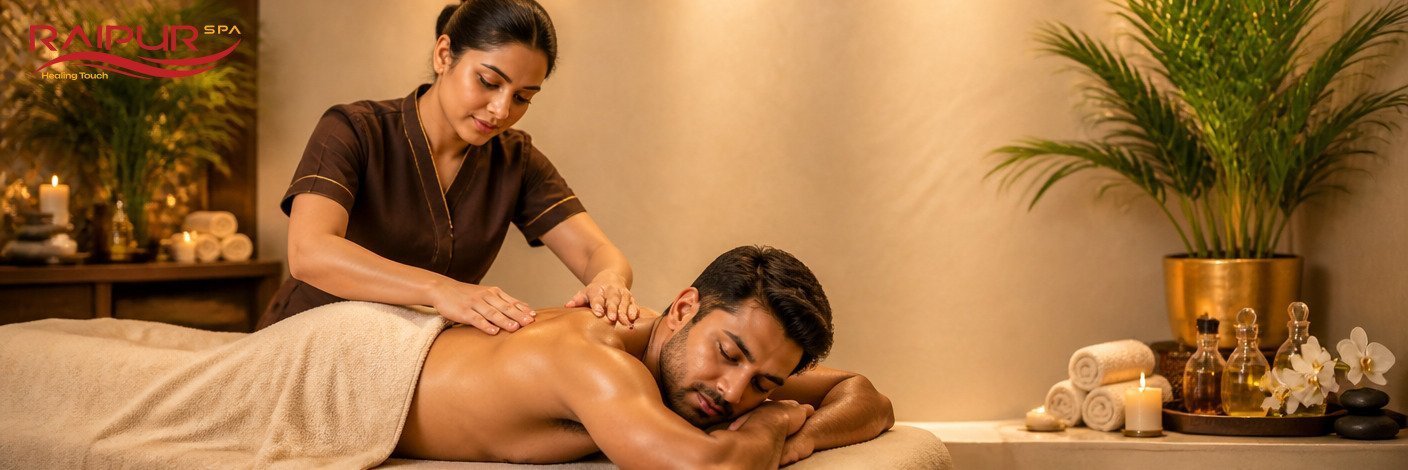
Abhyanga massage in Raipur is a traditional Ayurvedic full-body therapy where warm herbal oil is applied with rhythmic, synchronized strokes to calm the nervous system, improve circulation, and release deep muscular tension. At Raipur SPA in Samta Colony, our therapists follow classical Ayurvedic sequences adapted to your body's needs and dosha balance.
If you have been carrying stiffness in your shoulders for months, or you wake up tired even after eight hours of sleep, this therapy is worth understanding properly. It is not just another oil massage. It is a structured healing practice with roots going back thousands of years, and it works on the body and mind at the same time.
What surprises most first-time clients is how different the experience feels from a conventional spa massage. The room is warm, the oil is heated to body temperature, and the strokes are slower than you expect. There is no rush, no background chatter, no attempt to fit as many techniques as possible into an hour. Instead, the therapist works methodically through the body, and somewhere in the middle you stop tracking time. That shift — from a busy mind to a settled one — is a big part of why people come back.
In a city like Raipur, where long commutes, desk-bound work, and irregular sleep are common, this therapy has found a natural audience. People are not looking for luxury for its own sake. They are looking for something that actually helps them feel better by the end of the week, and that is exactly what a well-executed Abhyanga session delivers.
Key Takeaways
- Abhyanga is a warm herbal oil massage from Ayurveda that targets circulation, joint stiffness, and nervous system calm.
- A proper session uses dosha-specific oils and follows directional strokes along muscles and lymph pathways.
- Regular sessions can ease chronic back and neck pain, improve sleep quality, and reduce stress hormones.
- Best results come from consistency — once or twice a month suits most people.
- Therapy at Raipur SPA starts from ₹999, open daily 11:00 AM to 09:00 PM.
- Avoid eating a heavy meal right before your session; light food two hours prior is ideal.
- The oil is chosen for your body type — not a one-size-fits-all blend — so a short consultation before the session matters.
- Leave 30 to 60 minutes before showering so the oil can absorb properly.
Where Abhyanga Comes From and What Makes It Different
Abhyanga appears in classical Ayurvedic texts like the Charaka Samhita, where it is described as one of the core daily rituals for maintaining health. The word itself means "to rub oil onto the limbs." Simple enough on the surface, but the tradition behind it is detailed. The texts describe not only which oils to use but also the direction of strokes, the time of day best suited for the practice, and the kind of person for whom each variation is appropriate.
Historically, Abhyanga was part of a morning routine — an oil application before bathing, done at home with family members helping each other. It was preventive care as much as treatment, a way of keeping the joints supple and the skin nourished through changing seasons. Over time, the practice moved into dedicated therapy spaces, but the principles stayed the same.
What separates Abhyanga from a standard spa oil massage is the intent. A relaxation massage focuses on comfort. Abhyanga works with marma points, the body's energy junctions, and follows specific stroke directions — upward on the limbs toward the heart in some sequences, circular over joints, and long sweeping movements along the spine. The therapist is not simply applying pressure where it feels good; they are following a map of the body that has been refined over centuries.
There is also a difference in tempo. A typical spa massage might move quickly through several techniques to cover the whole body in an hour. Abhyanga prefers fewer strokes, repeated with consistency. That repetition is what allows the nervous system to settle. The body recognizes rhythm, and rhythm is what signals safety.
How the Oils Are Chosen
The oil is not random. Sesame base is common, infused with herbs like ashwagandha, brahmi, or dashamoola depending on what your body needs. Someone with dry, cold skin and stiff joints usually receives a heavier warming oil. Someone with heat and restlessness gets a cooling blend. The choice is not about preference alone — it is about matching the oil's qualities to the body's current state.
For example, a person who works long hours in an air-conditioned office, drinks little water, and feels cold most of the time is a classic candidate for a warming, nourishing oil. Someone who is naturally energetic, sleeps lightly, and feels warm even in winter might do better with a lighter, cooling preparation. Getting this wrong is not dangerous, but it can make a session feel less effective than it should.
At Raipur SPA, our therapists ask a few quick questions before your session to match the oil and pressure to your constitution. That small step makes a real difference in how you feel afterward. Tell us if you have sensitive skin, allergies, or a preference for a lighter or richer oil — we adjust accordingly.
The Benefits You Can Actually Expect
Let's talk about what people notice after a session, because that is what matters when you are deciding whether to book. Wellness marketing tends to overpromise, so here is a grounded look at what regular clients report.
1. Deep Muscular Relief
The warm oil penetrates the skin and the sustained strokes work through muscle layers that stretching alone cannot reach. People with desk jobs and long commutes often report their neck and lower back feeling noticeably looser after one session. The relief tends to last a few days, and with regular sessions it builds.
A common story: someone who spends six to eight hours at a laptop comes in with shoulders that feel like stone. After 60 minutes, they can turn their head fully without wincing. That is not magic — it is sustained warmth plus careful, directional pressure on muscles that have been held in one position for too long.
2. Better Sleep
Abhyanga stimulates the parasympathetic nervous system — the rest-and-digest side. Many clients tell us they sleep deeper for two or three nights after a session. If insomnia has been a problem, a series of regular sessions tends to help more than a single visit. The effect is cumulative because the nervous system learns, over time, what it feels like to switch off.
3. Improved Circulation and Skin Health
The directional strokes support blood flow and lymphatic movement, which helps with fluid retention and dull skin. The oils themselves nourish the skin barrier, so people with dryness often see a difference within a week of regular sessions. In Raipur's dry winter months, this is one of the most appreciated benefits.
4. Stress Reduction
Cortisol levels respond to touch and warmth. The combination of warm oil, steady rhythm, and a quiet room gives your nervous system something it rarely gets during the week — a genuine signal that it is safe to slow down. Many clients describe the feeling afterward as "reset" rather than "relaxed," which is a useful distinction.
5. Joint Mobility
For stiffness related to age, weather changes, or old injuries, the combination of warmth and careful joint work helps restore range of motion. It is not a replacement for medical treatment, but it complements physiotherapy well. If you are recovering from a minor strain, tell your therapist so they can work around the area rather than on it.
6. A Quieter Mind
This one is harder to measure but clients mention it most often. An hour without a phone, in a warm room, with someone attending to you methodically, gives the mind a break from decision-making. For people who spend their days managing teams, clients, or households, that pause is its own kind of medicine.
What Happens During a Session at Raipur SPA
Your therapist begins with a brief consultation — sleep patterns, areas of tension, any injuries. Then you settle onto a warm massage table while the oil is heated to a comfortable temperature. The session runs 60 to 90 minutes depending on the package.
The strokes are slow and deliberate, covering the back, shoulders, limbs, and often the scalp and feet. Pressure is adjusted throughout based on your feedback. Most people drift into a half-sleep state somewhere in the middle. That is normal and a good sign.
Afterward, you rest for a few minutes. The oil is left on the skin for a while because absorption continues after the session ends. A warm shower follows when you are ready. Many clients say the shower is the best part — warm water, soft skin, and a body that feels lighter than it did an hour earlier.
What to Expect Step by Step
- Consultation (5–10 minutes): Quick questions about sleep, tension, injuries, and skin sensitivity.
- Oil selection: Your therapist chooses a herbal blend suited to your body type and current needs.
- Warm-up: The oil is heated and a few gentle strokes help your body adjust to the touch.
- Main sequence: Back, shoulders, limbs, and often scalp and feet, following classical directional strokes.
- Rest: A few quiet minutes wrapped in warmth before you get up.
- Shower: Optional but recommended after 30 to 60 minutes.
Who Should Consider Abhyanga — and Who Should Check First
Abhyanga suits most healthy adults. It is particularly helpful for people with sedentary jobs, chronic mild back or neck tension, poor sleep, dry skin, or general fatigue.
If you are pregnant, have an active skin infection, fever, or a recent injury, speak with your doctor first. Our team at Raipur SPA will also guide you honestly — if a therapy is not right for you on a given day, we will say so. It is better to reschedule than to push through a session that your body is not ready for.
People on blood-thinning medication or with very sensitive skin should mention it during consultation so the therapist can adjust pressure and oil choice. None of this is a reason to avoid the therapy entirely — it is simply information that helps us personalize the session.
How Often Should You Book?
For general maintenance, once or twice a month works well. If you are dealing with a specific issue like chronic stiffness or poor sleep, a short series of weekly sessions over four to six weeks tends to produce better results than occasional visits.
Ayurveda has always emphasized rhythm over intensity. Small, regular care beats an occasional grand gesture. Think of it the way you think about exercise: one intense workout does not change your fitness, but consistent movement does.
A practical way to plan: book your next session before you leave. Clients who schedule in advance tend to keep the habit; those who say "I'll call when I need it" usually wait until the tension is severe again.
Practical Tips Before Your Visit
- Eat light two hours before your session — an empty stomach is uncomfortable, a full one is worse.
- Arrive ten minutes early so you are not rushing in.
- Tell your therapist about any injuries, surgeries, or skin conditions.
- Drink water afterward and keep the rest of the evening gentle.
- Wear comfortable clothing you can change out of easily.
- Avoid alcohol before your session; it affects how your body responds to the warmth and pressure.
- Bring a hair tie if you have long hair — scalp work is part of the session and loose hair can get oily.
- If you have a preferred pressure level, say so at the start rather than waiting for the therapist to guess.
How Abhyanga Fits Into a Broader Wellness Routine
Abhyanga works best when it is part of a routine rather than a one-off treat. The people who get the most from it tend to pair it with a few simple habits: drinking enough water, taking short walks after meals, and keeping a consistent sleep schedule. None of these are dramatic, but together they support what the therapy is trying to do.
Some clients use Abhyanga as a monthly reset — a fixed point in the calendar that forces them to slow down. Others book it around seasonal changes, when joints tend to stiffen or skin dries out. Both approaches work. The key is that the session is not the only thing happening; it is a support, not a solution on its own.
If you are also doing physiotherapy for a specific issue, tell your therapist. Abhyanga can complement that work by keeping surrounding muscles relaxed, but it should not replace professional medical advice.
Frequently Asked Questions
What is Abhyanga massage?
Abhyanga is a traditional Ayurvedic full-body massage using warm herbal oil applied with rhythmic strokes. It targets circulation, muscle tension, joint stiffness, and nervous system calm.
How long does an Abhyanga session take?
Most sessions run between 60 and 90 minutes, including a brief consultation and a short rest afterward. At Raipur SPA, therapy starts from ₹999.
Is Abhyanga painful?
No. Pressure is adjusted to your comfort throughout. You may feel mild soreness in tight areas the next day, similar to after a good stretch, but the session itself is deeply relaxing.
Can I take a shower after Abhyanga?
Yes, but wait at least 30 to 60 minutes so the oil can absorb. A warm shower afterward is ideal and leaves your skin soft rather than greasy.
How often should I get an Abhyanga massage?
Once or twice a month is enough for general wellness. For specific concerns like chronic stiffness or sleep issues, weekly sessions for four to six weeks work better.
Do you use medicated oils?
Yes. Our therapists select herbal oils based on your body type and current needs, using classical Ayurvedic blends. Tell us about allergies or skin sensitivities beforehand.
Can I book Abhyanga if I have never had an Ayurvedic massage before?
Absolutely. Most of our clients are first-timers. The therapist explains each step, checks in on pressure, and keeps the session comfortable. There is no prior knowledge required.
Is it safe during pregnancy?
Speak with your doctor first. Some gentle oil therapies are used during pregnancy, but the strokes and oils need to be adapted, and medical clearance is important.
Final Word
Abhyanga is one of those rare therapies that feels indulgent and is genuinely good for you at the same time. If your body has been asking for a break, this is a thoughtful way to give it one.
Raipur SPA is open daily from 11:00 AM to 09:00 PM in Samta Colony, Raipur. Call or WhatsApp +91 7987 303 127 to book your Abhyanga session — we will help you pick the right oil and duration for your needs.
Frequently Asked Questions
What happens during an Abhyanga massage session?
The therapist applies warm herbal oil over the body using coordinated, rhythmic strokes, often focusing on the back, limbs, and joints. Sessions usually last 45 to 60 minutes and may finish with steam or a warm bath to help the oil absorb.
Is Abhyanga massage suitable for everyone?
It suits most healthy adults seeking relaxation and general wellness. People with skin conditions, recent injuries, fever, or certain medical conditions should consult a doctor before booking, and pregnant women should inform the therapist in advance.
Which oil is used in Abhyanga therapy?
Therapists typically use warm sesame, coconut, or herbal-infused oils chosen according to body type, season, and personal preference. You can request a specific oil or a lighter option during booking.
How often should you get an Abhyanga massage?
Many people book a session monthly or seasonally for relaxation and self-care, while others prefer a short series of weekly sessions. Frequency depends on personal goals, lifestyle, and therapist guidance.
How is Abhyanga different from a regular oil massage?
Abhyanga follows Ayurvedic principles, including oil selection, stroke direction, and marma point focus, rather than general relaxation techniques. It is typically more structured and slower-paced than a standard spa oil massage.
What should you do after an Abhyanga massage?
Rest for a short while, stay hydrated, and avoid immediate exposure to cold or strenuous activity. Many spas recommend leaving the oil on the skin for a while or taking a warm bath to support absorption.
Book Your Session
Book Your SessionPeople Also Ask
Related Articles
Massage Therapy
Pain Relief Massage in Raipur 2027: Best Therapies for Back and Joint Pain
12 min read · 23 Nov 2026

Massage Therapy
Massage Therapy Trends in Raipur 2027: What to Expect This Year
14 min read · 23 Nov 2026

Massage Therapy
Hot Stone Massage in Raipur (2027 Guide): Warm Therapy for Deep Relaxation
13 min read · 22 Nov 2026
Enjoyed This Article?
Stop reading about relaxation — come experience it firsthand at Raipur SPA.