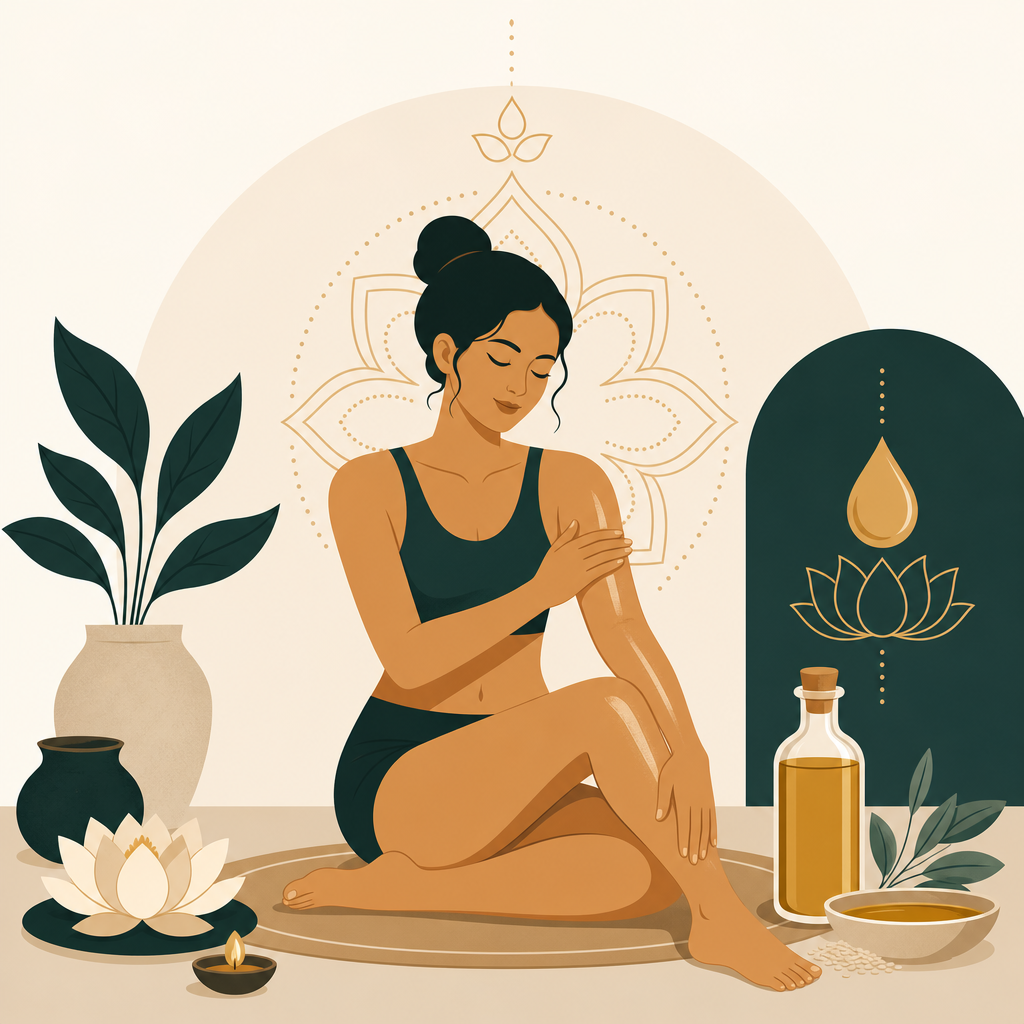
Abhyanga: The Ancient Ayurvedic Self-Massage You Can Learn

Let me start with a confession: I didn't take Abhyanga seriously for years. I thought it was one of those ancient practices that sounded nice in theory but was too impractical for modern life. Who has time to warm oil and massage themselves head to toe every morning? I certainly didn't — or so I told myself.
Then I spent time in Kerala studying Ayurvedic massage techniques, and everything changed. I met a 78-year-old Ayurvedic practitioner who had the skin of someone half his age. He moved with a fluid grace I'd never seen in someone his age. His eyes were clear, his mind was sharp, and when I asked him his secret, he said simply: "I have not missed my Abhyanga in forty years."
That was the moment I started paying attention. And after practicing it myself for several years now, I can tell you without hesitation: Abhyanga is one of the most powerful, accessible, and deeply nourishing wellness practices available to us. And unlike so many wellness trends, it's backed by thousands of years of continuous practice and increasingly, by modern science.
This guide will teach you everything you need to know to start your own Abhyanga practice, right here in Raipur.
What Is Abhyanga?
Abhyanga is the Ayurvedic practice of self-massage with warm oil. The word comes from Sanskrit — "abhi" meaning "into" and "anga" meaning "limb" or "body part." Together, it means "to massage into the body."
But it's more than just massage. In Ayurvedic philosophy, Abhyanga is a form of self-love and self-care that nourishes the body, mind, and spirit simultaneously. It's considered so important that the ancient texts describe it as a daily practice — not a luxury for special occasions, but a fundamental part of maintaining health, the way we think of brushing our teeth or taking a shower.
The practice involves applying warm, herb-infused oil to the entire body in specific patterns, using long strokes on the limbs and circular motions on the joints. It's typically done in the morning before bathing, and the oil is left on for 15-30 minutes before washing off.
The Scientific Benefits of Oil Massage
Modern research has caught up with what Ayurvedic practitioners have known for millennia. Here's what the science says about Abhyanga:
- Improved circulation: The stroking motions of massage, combined with the warming effect of the oil, stimulate blood flow. A 2019 study found that a single session of oil massage increased peripheral blood flow by up to 40%.
- Lymphatic drainage: The gentle pressure of Abhyanga stimulates the lymphatic system, which is responsible for removing waste and toxins from your tissues.
- Stress reduction: Research consistently shows that oil massage reduces cortisol levels and increases serotonin and dopamine. The warm oil itself soothes the nervous system.
- Improved sleep: Evening Abhyanga, in particular, has been shown to improve sleep quality by activating the parasympathetic nervous system.
- Skin health: Regular oil massage improves skin hydration, elasticity, and barrier function. The oils used in Abhyanga are rich in antioxidants and fatty acids.
- Joint health: The circular motions on joints improve synovial fluid circulation, which can help with stiffness and arthritis.
- Muscle recovery: The combination of warmth and pressure helps release muscle tension and reduce soreness after physical activity.
Choosing the Right Oil for Your Body Type
Ayurveda teaches that we're all born with a unique constitution, or dosha — Vata, Pitta, or Kapha — and that different oils work better for different body types. Here's a simple guide:
| Dosha (Body Type) | Best Oil | Characteristics |
|---|---|---|
| Vata (Air + Ether) | Sesame oil (warm, heavy) | Dry skin, cold hands/feet, light frame, anxious tendencies |
| Pitta (Fire + Water) | Coconut oil (cooling) | Sensitive skin, warm body, prone to inflammation, intense personality |
| Kapha (Earth + Water) | Mustard oil or almond oil (warming, stimulating) | Oily skin, heavy build, prone to congestion and lethargy |
If you're not sure what your dosha is, sesame oil is the safest all-around choice and the most traditional. You can also use organic sunflower oil or olive oil. The most important thing is that the oil is unrefined, cold-pressed, and warmed before application.
🌿 How to Warm the Oil
Place your oil in a small bottle. Fill a bowl with hot tap water and place the bottle in it for 5 minutes. Test a drop on your wrist — it should feel comfortably warm, not hot. Never microwave your oil, as this can damage its beneficial properties.
The Complete Abhyanga Self-Massage Routine
Here's the step-by-step practice. For your first session, set aside 30 minutes. Once you're practiced, you can do a thorough Abhyanga in 15-20 minutes.
Step 1: Preparation (5 minutes)
- Warm your oil as described above
- Sit on a towel or old sheet — oil will drip
- Take three deep breaths to center yourself
- Apply a few drops of oil to your hands and rub them together to warm them
Step 2: The Scalp (3 minutes)
- Apply oil generously to your scalp with your fingertips
- Use small, firm circular motions, as if shampooing
- Pay special attention to the crown of your head and the base of your skull
- This is deeply grounding for Vata types and very calming for anxiety
Step 3: The Face and Ears (2 minutes)
- Use gentle upward strokes on your forehead and cheeks
- Circular motions on your temples and jaw
- Massage your earlobes — they contain acupressure points for every organ
- Avoid getting oil in your eyes or nostrils
Step 4: The Arms (3 minutes)
- Start at your shoulders and use long strokes down to your fingertips
- Circular motions on your shoulder joints, elbows, and wrists
- Give each finger a gentle pull and squeeze
- Repeat on both arms
Step 5: The Chest and Abdomen (3 minutes)
- Use gentle clockwise circles on your abdomen (this follows the direction of digestion)
- Long, sweeping strokes on your chest outward from the center
- Abhyanga on the abdomen is excellent for digestive health
Step 6: The Back (3 minutes — with a partner or towel)
- If you can reach, use upward strokes on your lower back
- For the areas you can't reach, you can use a long-handled brush or towel with oil
- Or simply do what you can — even partial Abhyanga is beneficial
Step 7: The Legs (3 minutes)
- Long strokes from your thighs down to your feet
- Circular motions on your hip joints, knees, and ankles
- Extra attention to your feet — massage each toe and the arch
- The soles of the feet have reflex points for every organ
Step 8: Rest and Absorb (5-15 minutes)
- Sit or lie quietly and let the oil absorb into your skin
- Read, meditate, or just sit in silence
- The longer you leave the oil on, the deeper the benefits
- Then shower with warm water — use a mild natural soap if needed
When and How Often to Practice
The traditional recommendation is daily Abhyanga, particularly for Vata types. But let's be realistic — who in modern Raipur has time for that?
Here's my practical recommendation: start with twice a week. Sunday morning and Wednesday evening are good options. Once you experience the benefits, you'll naturally want to do it more often. Most of my clients settle into a 3-4 times per week rhythm within a month.
As for timing:
- Morning Abhyanga: Before your bath or shower. It energizes and grounds you for the day.
- Evening Abhyanga: Before bed. It calms the nervous system and promotes deep sleep.
- Pre-workout: A light oil massage before exercise warms up the muscles and improves performance.
The best time is the one you'll actually do. Don't let perfectionism stop you from starting.
Common Questions About Abhyanga
Will the oil stain my clothes?
Wear old clothes or a towel during the practice. After showering, pat dry — don't rub — so a thin layer of oil remains on your skin. This residual oil is beneficial and will absorb within 30-60 minutes.
Can I use store-bought massage oil?
Yes, but check the ingredients. Avoid mineral oil, synthetic fragrances, and preservatives. Pure sesame oil, coconut oil, or almond oil are best. You can find good-quality oils in most Raipur grocery stores or health food shops.
What if I have a skin condition?
If you have eczema, psoriasis, or any skin condition, consult an Ayurvedic practitioner or your doctor before starting. Some oils can help these conditions, but others might aggravate them.
Can pregnant women practice Abhyanga?
Yes, with modifications. Avoid deep pressure on the abdomen. Some essential oils are not safe during pregnancy, so stick with plain sesame or coconut oil. Always consult your healthcare provider.
Is there a difference between Abhyanga and a professional Ayurvedic massage?
Yes. Professional Abhyanga at a spa like Meraki Spa is more thorough — the therapist can reach every part of your body, uses specific pressure, and often includes Marma point work (Ayurvedic pressure points). Professional sessions are wonderful for deep treatment, but self-Abhyanga is an incredible daily practice that professional sessions can't replace.
Why Abhyanga Matters in Modern Life
I think the reason Abhyanga has survived for thousands of years is that it addresses something fundamental that modern life has stripped away: the ritual of caring for your own body with attention and love.
Most of us rush through our morning routines. Shower, dress, coffee, out the door. Our bodies are something we drag from place to place, tools for getting things done. Abhyanga forces you to slow down and actually be present with your physical self. To feel your skin, your muscles, your bones. To notice where you're holding tension. To give yourself the gift of deliberate, nourishing touch.
In a world that constantly tells you to optimize, produce, and achieve, Abhyanga is a radical act of simply being. And that's exactly why we need it.
If you want to learn Abhyanga with professional guidance, visit us at Meraki Spa near Samta Colony in Raipur. We offer Abhyanga sessions and can teach you the self-practice techniques. But even if you never step into our spa, I hope this article has given you the confidence to try it at home. Start with five minutes. Use whatever oil you have. See how it feels. I think you'll be surprised.
People Also Ask
Related Articles
Ayurvedic & Traditional Indian Therapies
Shirodhara Experience: What to Expect in Your First Session
10 min read · 12 May 2026
Ayurvedic & Traditional Indian Therapies
North-East Indian Massage Traditions: A Cultural Deep Dive
11 min read · 12 May 2026
Ayurvedic & Traditional Indian Therapies
Ayurvedic Body Types: Which Massage Oil Is Right for Your Dosha?
11 min read · 12 May 2026
Enjoyed This Article?
Stop reading about relaxation — come experience it firsthand at Raipur SPA.