What is an Ayurvedic Abhyanga massage and what should you expect during a session in Raipur?
Abhyanga is a traditional Ayurvedic full-body massage performed with warm herbal oil in long, rhythmic strokes that follow the body's natural energy channels. A typical session in Raipur lasts 45 to 60 minutes and includes a brief consultation, oil selection based on your dosha, the massage itself, and a warm rest period afterward. Sessions are generally relaxing and non-invasive.
Key Takeaways
- • Abhyanga is a warm-oil full-body massage rooted in Ayurvedic tradition, not a deep-tissue or clinical treatment.
- • Sessions typically run 45-60 minutes and begin with a short consultation to match oil to your dosha.
- • Warm sesame, coconut, or herbal oils are commonly used, chosen for skin type and season.
- • Expect long, rhythmic strokes over the body with gentle pressure and a warm rest afterward.
- • Many people report feeling relaxed and refreshed; avoid heavy meals and schedule rest time post-session.
- • Choose a spa in Raipur with trained therapists and clear hygiene practices for a safe experience.
Ayurvedic Abhyanga Massage in Raipur: What It Is and Why It Works
An Ayurvedic Abhyanga massage in Raipur is a traditional warm-oil full-body therapy rooted in 5,000-year-old Ayurvedic practice. It uses rhythmic, directional strokes with dosha-specific herbal oils to calm the nervous system, improve circulation, ease muscle stiffness, and restore deep rest. Sessions run 45–75 minutes and begin with a consultation.
What makes Abhyanga stand apart from the massages most of us grew up with is its intent. A spa massage is often treated as an occasional reward. Abhyanga is designed as a health practice — something you return to regularly, the way you would return to a physiotherapist or a good gym routine. The strokes are slower, the oil is warm and herbal, and the therapist is thinking about your body type, your season, and your current imbalances rather than simply working out a knot in your shoulder.
In Raipur, this distinction matters. The city has a large population of people who spend their days at desks, in traffic, or on their feet managing shops and businesses. The result is a familiar pattern: tight shoulders, restless sleep, low-grade fatigue that never quite goes away. Abhyanga was built for exactly that pattern.
Key Takeaways
- Abhyanga is a warm-oil Ayurvedic massage using long, rhythmic strokes along the body's energy channels.
- It helps with stress, poor sleep, joint stiffness, fatigue, and dry skin — and supports better circulation.
- Oil choice matters: sesame, coconut, mustard, and medicated blends are matched to your dosha and season.
- A typical session is 45–75 minutes and includes a short consultation plus a warm-oil ritual.
- At Raipur SPA in Samta Colony, therapies start from ₹999 and are available daily, 11:00 AM to 09:00 PM.
- It is generally safe for most adults, but avoid it during fever, acute illness, or on open wounds.
- Arrive on a relatively empty stomach, plan to rest for 30–60 minutes after, and drink water.
- Once a fortnight suits general wellness; weekly sessions help if you are managing chronic stiffness or burnout.
What Exactly Is Abhyanga?
Abhyanga comes from the Sanskrit words abhi (toward) and anga (limb). In practice, it is a full-body oil massage where warm herbal oil is applied in long, steady strokes that follow the direction of hair growth and lymphatic flow.
Unlike a deep-tissue or Swedish massage that focuses on particular muscle groups, Abhyanga works on the whole system. The strokes are softer and more rhythmic, designed to settle the nervous system rather than push hard into tissue. A therapist trained in Ayurveda will typically work in a fixed sequence — scalp, face, neck, shoulders, arms, chest, abdomen, back, legs, and feet — so that no region is skipped and the flow of the session feels continuous rather than piecemeal.
In Ayurveda, this is considered a daily self-care ritual (dinacharya) — not just a treat. Classical texts describe self-Abhyanga as something done each morning before bathing, in the same way you would brush your teeth. That mindset is what makes it feel different from a typical spa massage. The therapist is not trying to deliver a luxurious experience first and a therapeutic one second; the therapy is the point.
There is also a structural logic to it. Ayurveda describes the body as having channels (srotas) through which nutrients move and waste is carried away. Warm oil, applied in the right direction with the right pressure, is believed to loosen stagnation in those channels. Whether or not you accept the traditional framework, the practical effects — warmth, relaxation, improved circulation, softer skin — are things most clients notice within a single session.
Why Abhyanga Is Gaining Popularity in Raipur
Raipur has a busy, growing professional class — people working long desk hours, commuting through traffic, and managing family responsibilities. That combination shows up as stiff shoulders, restless sleep, and constant low-grade fatigue.
Consider a typical client profile: a 34-year-old working in a corporate office in the city centre, sitting for eight to nine hours a day, driving 40 minutes each way, and managing a household in the evening. By the weekend, the neck is tight, the lower back aches, and sleep is shallow. A conventional painkiller or a quick shoulder rub offers a couple of hours of relief. Abhyanga offers something more systemic — warmth that reaches the muscles, a nervous system that finally downshifts, and skin that feels genuinely nourished afterward.
Abhyanga addresses those issues gently. Many clients at Raipur SPA come in for the first time with neck or lower-back tightness and leave asking when they can book again. The repeat bookings are usually driven by sleep quality and the general sense of lightness the next morning, rather than by any single dramatic result.
There is also a practical appeal: it is one of the most accessible Ayurvedic therapies, needs no equipment, and fits easily into a lunch break or a weekend evening. You do not need to fast for a day, change your diet for a week, or commit to a residential programme. You book a slot, show up, and leave feeling different.
Raipur's climate adds another reason. Summers are hot and dry, winters bring dry skin and stiffness, and the monsoon brings humidity that makes many people feel heavy and sluggish. Abhyanga oils can be adjusted to each season, which makes the therapy useful year-round rather than only in winter.
The Benefits of Ayurvedic Abhyanga Massage
1. Deep relaxation and stress relief
The slow, repetitive strokes stimulate the parasympathetic nervous system — the "rest and digest" mode. Heart rate and cortisol levels tend to drop, and many clients feel drowsy within the first ten minutes. This is not a coincidence or a placebo; the rhythm of the strokes is deliberately steady, because the body responds to predictability. A therapist who keeps changing pace and pressure keeps the nervous system alert. A therapist who maintains a slow, even rhythm invites it to settle.
If you have ever noticed that you relax more in a warm bath than in a busy room, you already understand the principle. Abhyanga combines warmth, touch, and rhythm — three inputs the nervous system reads as safety.
2. Better sleep quality
Warm oil on the scalp and soles of the feet is a classic Ayurvedic sleep aid. If you struggle to switch off at night, an evening Abhyanga session often helps more than a standard body massage. The feet in particular are considered important in Ayurveda — they carry a dense network of nerve endings, and applying warm oil there is a traditional remedy for restlessness.
A practical tip: if you book an evening session, try to keep the rest of the evening calm. Going straight from the massage table to a bright screen or a stressful phone call undoes much of the benefit. A light dinner and an early night make the most of it.
3. Relief from stiffness and joint discomfort
Warm oil penetrates the skin and eases joint stiffness. Circulation improves, which helps with chronic tightness in the neck, shoulders, and lower back — especially for people who sit for long hours. The warmth also helps the muscles around a stiff joint release their protective tension, which is why many people feel more mobile immediately after a session.
For anyone with a desk job, the neck and upper back are usually the first areas to complain. A therapist working systematically through the shoulders and along the spine can release a surprising amount of accumulated tightness in a single session — and regular sessions keep it from rebuilding.
4. Improved circulation and lymph flow
Strokes directed toward the heart support venous return and lymphatic drainage. Over time, this can reduce that heavy, puffy feeling in the legs and improve overall energy. People who stand for long hours — shopkeepers, teachers, nurses — often notice this benefit most clearly.
Lymphatic fluid does not have a pump of its own the way blood has the heart. It relies on muscle movement and external pressure. A well-performed Abhyanga provides that pressure in a gentle, systematic way, which is part of why the therapy is traditionally associated with reduced swelling and a lighter feeling in the limbs.
5. Healthier, more nourished skin
Abhyanga is genuinely good for the skin barrier. Sesame and coconut oils are rich in fatty acids, and regular sessions help with winter dryness and dullness — a real benefit in Raipur's dry season. The mechanical action of the massage also improves blood flow to the skin, which supports its natural renewal.
Clients with dry, flaky skin often report that the effect lasts several days after a session. If you have very dry skin, ask the therapist about leaving the oil on for a little longer before showering.
6. Mental clarity and better focus
The scalp and head massage portion of Abhyanga is calming without being sedating. Many clients report sharper focus and a lighter mood the following day. This is partly a downstream effect of better sleep and lower stress, but the head massage itself — slow, deliberate pressure across the scalp and temples — has a noticeably clarifying quality.
7. A gentler alternative to deep-tissue work
Not everyone wants or tolerates deep-tissue pressure. If you have a low pain threshold, are recovering from an injury, or simply find intense massage uncomfortable, Abhyanga offers a middle path. It is substantial enough to feel therapeutic, but soft enough that you are not bracing against it.
Which Oils Are Used, and How Are They Chosen?
Oil selection is the heart of a good Abhyanga. A trained therapist matches the base oil and herbal blend to your body constitution (dosha), current imbalances, and the season. This is not guesswork — it is a structured decision, and a good therapist will usually explain their reasoning if you ask.
- Sesame oil — warming and grounding; the standard choice for Vata types and the colder months. It is the most commonly used base oil in classical Abhyanga.
- Coconut oil — cooling and light; suited to Pitta types and Raipur's hot summer. It absorbs quickly and leaves less residue.
- Mustard oil — warming and stimulating; used for Kapha types and for stiffness. It has a strong scent and a penetrating quality, so it is usually used in smaller quantities or blended.
- Medicated blends — oils infused with herbs such as ashwagandha, brahmi, or dashamoola for specific concerns like sleep, stress, or joint discomfort.
If you have sensitive skin or a known allergy, tell your therapist upfront. A patch test is always an option, and a good spa will never push an oil you are unsure about. If you are unsure what suits you, ask for a simple sesame or coconut base rather than a complex medicated blend on your first visit — it is easier to judge how your skin responds.
Season matters too. In Raipur's peak summer, a heavy warming oil can feel uncomfortable; a lighter coconut base is more sensible. In winter, sesame or a warming medicated blend is the better fit. A therapist who ignores the season and uses the same oil for everyone is not really practising Abhyanga.
What to Expect in an Abhyanga Session
Before the massage
You will fill out a short health form and have a brief conversation about your concerns, sleep, and any injuries. Arrive without a heavy meal — ideally two hours after eating. A light snack an hour before is fine for most people.
Wear or bring clothing you do not mind getting oil on, and expect to be asked about allergies, recent injuries, pregnancy, and any medical conditions. This is not bureaucracy — it is how the therapist decides which oils and which pressure to use.
During the massage
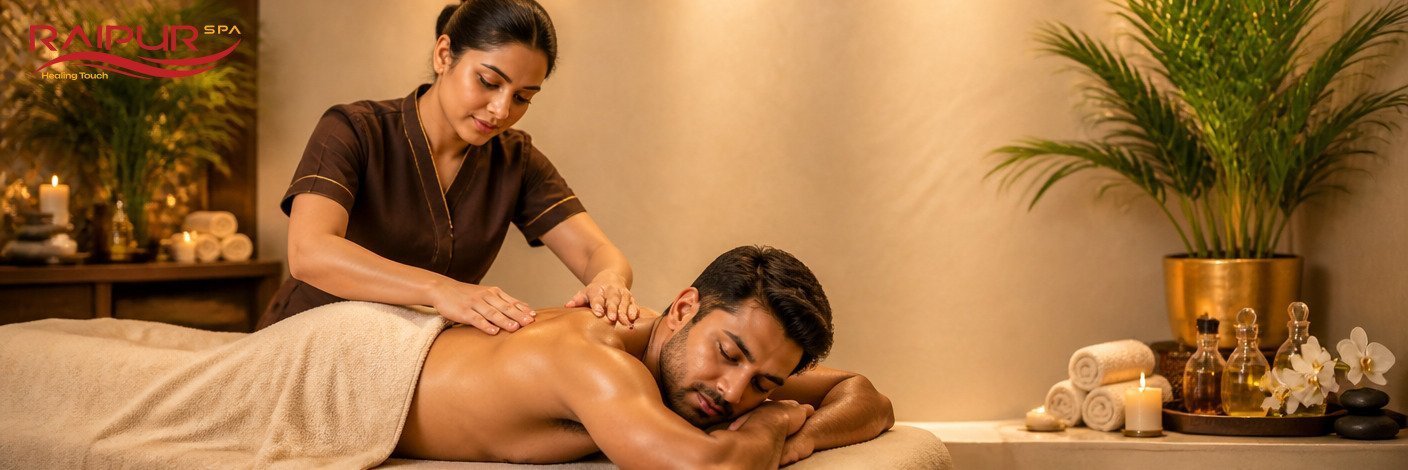
You will lie on a comfortable table, draped with towels except for the area being worked on. The therapist warms the oil first, then works through your scalp, face, shoulders, back, arms, legs, and feet in a set sequence.
Pressure is moderate and adjustable. Speak up if anything feels too firm or too light — the best sessions are a two-way conversation. A common mistake first-timers make is staying silent out of politeness. Therapists genuinely prefer feedback; it makes their job easier and your session better.
The oil will be warm but not hot. If it feels uncomfortable at any point, say so immediately — the therapist can cool it or switch to a different blend.
After the massage
Most spas allow the oil to stay on the skin for 30–60 minutes before a warm shower. That resting period is when absorption continues, so don't rush to wash it off. Drink water, and give yourself a quiet ten minutes before heading back into traffic.
Some people feel sleepy afterward; others feel energised. Both are normal. Avoid intense exercise or a heavy meal immediately after the session, and try to keep the rest of the day relatively calm if you can.
How Often Should You Get an Abhyanga Massage?
For general stress and wellness, once a fortnight works well. If you are dealing with persistent stiffness, poor sleep, or burnout, weekly sessions for four to six weeks make a noticeable difference.
Ayurveda traditionally recommends daily self-Abhyanga at home, and a professional session once a week or fortnight complements that beautifully. If you want to try self-Abhyanga, keep it simple: warm a small amount of sesame or coconut oil, apply it in long strokes toward the heart, spend a little extra time on the feet and scalp, and shower after 15–20 minutes. You do not need a full ritual to get some of the benefit.
Think of professional sessions as the deep clean and home practice as the daily maintenance. Neither replaces the other.
Is Abhyanga Safe for Everyone?
Abhyanga is generally safe for healthy adults. However, skip it if you have a fever, an active infection, open wounds, or a recent fracture. People with uncontrolled blood pressure or certain skin conditions should check with their doctor first.
Pregnant women can often have a modified, gentler version — but always inform the therapist before booking so they can adjust the oils and pressure. Some oils traditionally used in Abhyanga are avoided during pregnancy, so this conversation is important rather than optional.
If you are on medication for a chronic condition, or have recently had surgery, mention it during the consultation. In most cases the therapist will simply adjust the session rather than turn you away.
How to Choose a Good Abhyanga Therapist in Raipur
Not every massage advertised as Ayurvedic is actually Abhyanga. A few simple questions will tell you a lot before you book.
- Ask about training. A therapist trained in Ayurvedic protocols will know the doshas, the standard oil types, and the traditional stroke sequence.
- Ask about the oils. Medicated herbal blends are different from generic massage lotion. If the spa cannot tell you what is in the oil, that is a warning sign.
- Ask about the consultation. A genuine Abhyanga session includes a short conversation about your health and concerns before the massage begins.
- Ask about hygiene and draping. Clean towels, proper draping, and a calm, well-maintained room are basic expectations.
Price is a useful signal but not the only one. A very cheap Abhyanga is often a standard oil massage with a different name. A fair price reflects trained hands, quality oil, and enough time to do the therapy properly.
Where to Get an Authentic Abhyanga Massage in Raipur
If you are looking for a genuine Ayurvedic Abhyanga massage in Raipur, technique and oil quality matter more than décor. Ask whether the therapist is trained in Ayurvedic protocols and whether the oils are medicated blends rather than generic lotions.
Raipur SPA, located in Samta Colony, offers Abhyanga alongside a full menu of therapeutic and relaxation treatments. Therapies start from ₹999, and the spa is open daily from 11:00 AM to 09:00 PM. It is a calm, well-maintained space where the focus stays on the therapy itself.
Samta Colony is easy to reach from most parts of the city, which makes it practical for an evening session after work or a weekend appointment. If you are booking for the first time, mention that it is your first Abhyanga — the therapist will usually take a little more time explaining the process.
Frequently Asked Questions
What is an Ayurvedic Abhyanga massage?
It is a traditional full-body warm-oil massage from Ayurveda, performed with long, rhythmic strokes using herbal oils chosen for your body type. It is used for relaxation, circulation, stiffness, and sleep support.
How long does an Abhyanga session take?
Most sessions run 45 to 75 minutes, including a brief consultation. Allow extra time afterward if you want to rest or shower at the spa.
Is Abhyanga painful?
No. Pressure is moderate and rhythmic, not deep-tissue. You can ask your therapist to adjust firmness at any point during the session.
Which oil is best for Abhyanga?
It depends on your dosha and the season. Sesame suits Vata types and cooler weather, coconut suits Pitta and summer, and medicated herbal blends target specific concerns like stress or joint stiffness.
Can I take a shower right after Abhyanga?
Wait 30 to 60 minutes if possible, so the oil can absorb fully. Use a mild soap and warm — not hot — water.
How much does an Abhyanga massage cost in Raipur?
At Raipur SPA, therapies start from ₹999, with pricing depending on session length and the oil blend chosen. Call to confirm current rates and availability.
Should I eat before an Abhyanga massage?
No. Try to leave at least two hours between a full meal and your session. A light snack an hour before is usually fine. Massage on a full stomach can feel uncomfortable.
Can I get Abhyanga during my period?
Many therapists will adjust or postpone a full-body Abhyanga during menstruation, following traditional guidance. A gentler session focused on the head, neck, and shoulders is often a good alternative. Mention it when booking so the therapist can advise.
Final Thoughts
Abhyanga is one of those rare therapies that feels indulgent and is genuinely therapeutic at the same time. If stress, stiffness, or poor sleep have become your normal, a warm-oil Ayurvedic session is a sensible place to start.
The best approach is to try one session, pay attention to how you sleep that night and how you feel the next morning, and then decide how often to return. Most people find that a fortnightly rhythm works well, with a weekly stretch during particularly demanding periods.
Ready to book? Call or WhatsApp Raipur SPA at +91 7987 303 127 to reserve your slot in Samta Colony, Raipur. Open daily, 11:00 AM to 09:00 PM.
Frequently Asked Questions
How long does an Abhyanga massage take?
Most Abhyanga sessions last between 45 and 60 minutes, including a brief consultation and post-massage rest. Some spas offer 90-minute extended versions.
Which oil is used in Abhyanga?
Warm sesame oil is the most traditional choice, though coconut, mustard, or herbal-infused oils may be used. The therapist selects oil based on your dosha, skin type, and the season.
Is Abhyanga massage painful?
No, Abhyanga uses gentle to moderate pressure with long, rhythmic strokes and is generally described as relaxing. Tell your therapist if you prefer lighter or firmer pressure.
What should I do before and after an Abhyanga session?
Avoid a heavy meal for about an hour before your appointment and arrive a few minutes early. Afterward, rest briefly, stay warm, and avoid immediate strenuous activity or cold exposure.
Can anyone get an Abhyanga massage?
Many adults enjoy it, but those who are pregnant, have skin conditions, recent injuries, or certain health concerns should consult a qualified practitioner first. Spas typically screen for these during consultation.
How often should you get an Abhyanga massage?
Frequency depends on personal preference and goals, with some people booking monthly and others weekly for short periods. Discuss a suitable schedule with your therapist rather than following a fixed rule.
Book Your Session
Book Your SessionPeople Also Ask
Related Articles
Massage Therapy
Pain Relief Massage in Raipur 2027: Best Therapies for Back and Joint Pain
12 min read · 23 Nov 2026

Massage Therapy
Massage Therapy Trends in Raipur 2027: What to Expect This Year
14 min read · 23 Nov 2026

Massage Therapy
Hot Stone Massage in Raipur (2027 Guide): Warm Therapy for Deep Relaxation
13 min read · 22 Nov 2026
Enjoyed This Article?
Stop reading about relaxation — come experience it firsthand at Raipur SPA.