
Best Essential Oils for Home Massage: A Beginner's Buying Guide
Walk into any health food store, and you'll face a wall of essential oils that all promise the world — relaxation, energy, pain relief, focus, sleep, happiness. The labels are beautiful, the prices range from ₹300 to ₹3,000 per bottle, and unless you know what you're doing, you're going to waste a lot of money on oils that smell nice but don't actually do what you need them to do.
At Raipur SPA in Samta Colony near Agrasen Chowk, we use essential oils as part of many of our treatments. Not as a gimmick, but because the right oil combined with the right massage technique produces results that neither can achieve alone. Over the years, we've tested dozens of oils, blends, and brands. We've figured out what actually works and what's just clever marketing.
This guide is designed for complete beginners. By the end, you'll know exactly which oils to buy for your specific needs, how to use them safely, where to find quality products in India, and what to absolutely avoid.
Understanding Carrier Oils vs. Essential Oils
This is the most important distinction and the one that beginners get wrong most often. Let me be crystal clear:
Essential oils are concentrated plant extracts. They're volatile, aromatic, and extremely potent. Think of them as the "flavor" or "medicine." You do NOT apply undiluted essential oils directly to your skin — it's like drinking pure vanilla extract instead of using it in a recipe. It will burn, irritate, and possibly harm your skin.
Carrier oils are neutral base oils that dilute essential oils and provide the slip needed for massage. Think coconut oil, almond oil, jojoba oil, or grapeseed oil. These are the "vehicle" that carries the essential oil onto your skin and allows your hands to glide smoothly.
The rule is simple: for massage, you should never use more than 3-5 drops of essential oil per tablespoon (15 ml) of carrier oil. For sensitive skin, start with 2 drops per tablespoon. More is not better — it's actually worse, because higher concentrations increase the risk of skin irritation without providing additional therapeutic benefit.
Many commercially available "massage oils" are pre-diluted with a carrier oil, but they often use cheap, low-quality essential oils and synthetic fragrances. You're better off making your own blends with quality ingredients.
Five Essential Oils That Actually Work for Massage
You don't need a collection of fifty oils to be effective. Start with these five. They cover 90% of massage scenarios a beginner will encounter.
1. Lavender (Lavandula angustifolia) — The All-Rounder
Best for: Relaxation, sleep, stress relief, minor muscle tension.
Why it works: Lavender is the most studied essential oil in the world, and for good reason. Multiple peer-reviewed studies have demonstrated its ability to reduce cortisol levels, lower heart rate, improve sleep quality, and reduce anxiety. It's also one of the gentlest essential oils on the skin, making it ideal for beginners and those with sensitive skin.
Aroma profile: Floral, herbaceous, slightly sweet — universally pleasant and non-offensive. Even people who claim to dislike "flowery" scents usually find lavender acceptable.
How to use it in massage: Add 4-5 drops to 15ml of carrier oil for a full-body relaxation massage. It's especially effective when combined with the massage techniques we discussed in our office worker's guide — the lavender enhances the relaxation response that the massage creates.
What to look for: Buy Lavandula angustifolia (also called "true" or "English" lavender). Avoid "Lavandin" (Lavandula hybrida) which is a cheaper hybrid that has a camphor-heavy scent and less therapeutic value.
2. Peppermint (Mentha piperita) — The Energizer
Best for: Headaches, muscle pain, mental clarity, digestive discomfort, cooling sensation.
Why it works: Peppermint contains menthol, which activates cold-sensitive receptors in the skin, creating that cooling sensation. This is useful for soothing overheated, overworked muscles. Peppermint has also been shown to improve cognitive performance and reduce mental fatigue. A 2018 study published in the Journal of the International Society of Sports Nutrition found that peppermint oil applied topically significantly reduced muscle soreness after exercise.
Aroma profile: Sharp, minty, invigorating — not for everyone, and definitely not for bedtime use.
How to use it in massage: Use sparingly — 2-3 drops per 15ml of carrier oil. Peppermint is strong and can cause a burning sensation if overused. It's excellent for foot massages, calf massages after a long day of standing, and for rubbing into temples during a headache (using just a single drop on your fingertip, applied to the temple — avoid the eyes).
What to look for: Mentha piperita with a high menthol content (40%+). The higher the menthol content, the more therapeutic effect. Cheap peppermint oils often cut corners on the menthol content, providing fragrance without efficacy.
3. Eucalyptus (Eucalyptus globulus or Eucalyptus radiata) — The Deep Healer
Best for: Deep muscle pain, respiratory congestion, arthritis, inflammation.
Why it works: Eucalyptus contains 1,8-cineole (eucalyptol), a compound with potent anti-inflammatory and analgesic properties. When massaged into sore muscles, it increases blood flow and reduces the inflammatory response. It's also well-known for its ability to clear nasal passages when inhaled — though that's more of a bonus than the primary use for massage.
Aroma profile: Strong, medicinal, camphoraceous — distinctly therapeutic rather than pleasant. It's the smell of healing, not indulgence.
How to use it in massage: 3-4 drops per 15ml of carrier oil. Focus on areas of deep muscle soreness — lower back, shoulders, thighs. The combination of eucalyptus with deep tissue work is particularly effective because the oil's anti-inflammatory properties enhance the mechanical release of the massage.
What to look for: Eucalyptus radiata is gentler and more suitable for massage and topical use than Eucalyptus globulus. It has a softer aroma and is less likely to cause skin irritation. Avoid using eucalyptus around the face of young children or people with asthma — the strong vapors can trigger respiratory reactions in sensitive individuals.
4. Ginger (Zingiber officinale) — The Warming Pain Reliever
Best for: Joint pain, arthritis, muscle stiffness, cold extremities, post-workout recovery.
Why it works: Ginger has been used in Ayurvedic and traditional Chinese medicine for thousands of years for its warming and anti-inflammatory properties. Modern research confirms that ginger contains compounds called gingerols and shogaols that inhibit inflammatory pathways in the body. When applied topically through massage, ginger creates a gentle warming sensation that increases blood flow to the treated area — exactly what stiff, cold joints need.
Aroma profile: Warm, spicy, earthy — grounding and comforting. It pairs exceptionally well with sweet orange or lavender.
How to use it in massage: 3-4 drops per 15ml of carrier oil. Ginger is excellent for joint-focused massage — knees, shoulders, wrists, and fingers. It's also wonderful for foot massages for people whose feet are always cold. A ginger-infused massage oil is a game-changer during winter months.
What to look for: Ginger essential oil from fresh rhizomes (not dried). The aroma and therapeutic properties are significantly different. Check the botanical name — Zingiber officinale — and avoid "ginger CO2 extract" which is different and can be more irritating.
5. Sweet Orange (Citrus sinensis) — The Mood Lifter
Best for: Stress, depression, anxiety, digestive massage, creating a pleasant atmosphere.
Why it works: Sweet orange is an uplifting, antidepressant oil that has been shown to reduce anxiety and improve mood. The scent alone can lower cortisol levels and increase feelings of well-being. Unlike many citrus oils, sweet orange is relatively gentle on the skin when properly diluted, making it a good choice for general massage use.
Aroma profile: Bright, sweet, juicy, cheerful — universally enjoyed and safe for almost everyone. It's the least likely oil to cause any negative reaction.
How to use it in massage: 4-5 drops per 15ml of carrier oil. Sweet orange is especially effective when blended with lavender (3 drops lavender + 2 drops sweet orange per 15ml) for a deeply relaxing yet mood-elevating massage experience.
What to look for: Sweet orange (Citrus sinensis) is different from bitter orange (Citrus aurantium). Both have therapeutic uses, but sweet orange is more suitable for massage. Also note that all citrus oils are phototoxic — avoid sun exposure on areas where citrus oils have been applied for at least 12 hours.
Best Carrier Oils for Home Massage
The carrier oil is the base of your massage blend. It provides slip, skin nourishment, and determines how the oil feels and absorbs. Here are the best options for home use:
Sweet Almond Oil — The gold standard for massage. Lightweight, absorbs moderately well, rich in vitamin E, and has a neutral scent that doesn't compete with essential oils. It's affordable and available at most health stores in India. The only downside is that it can go rancid if stored in a warm place for too long.
Coconut Oil (Fractionated) — Fractionated coconut oil stays liquid at room temperature, unlike regular coconut oil which solidifies. It's lightweight, absorbs quickly, and has a very long shelf life. It's slightly more expensive than almond oil but worth it for the stability alone.
Jojoba Oil — Technically a wax ester, not an oil, which means it's the closest thing to your skin's natural sebum. It absorbs beautifully, doesn't feel greasy, and never goes rancid. It's more expensive, so it's best reserved for smaller batch blends or use on your face and hands.
Grapeseed Oil — The lightest of the commonly available carrier oils. Absorbs nearly instantly and has almost no scent. It's excellent for people who dislike the feeling of "oily" skin after a massage. It's also very affordable. The tradeoff is that it's less nourishing than almond or jojoba.
Sesame Oil — A staple in Ayurvedic massage (Abhyanga). It's warming, deeply nourishing, and has been shown to have antioxidant properties. It has a distinct nutty scent that pairs well with ginger, eucalyptus, and lavender. Use it for self-massage on days when you feel run down or cold.
Where to Buy Quality Essential Oils in India
The essential oil market in India has exploded in recent years, and quality varies tremendously. Here's what I've learned from years of sourcing oils for Raipur SPA:
What to avoid: Oils sold at shopping malls, railway station shops, and general stores. These are almost always synthetic fragrances labeled as "essential oils" or genuine oils that have been adulterated with cheaper synthetic compounds. A bottle of "lavender oil" for ₹150 is not lavender oil — it's synthetic fragrance in a carrier oil. Similarly, most oils sold on Amazon from unknown brands should be treated with suspicion.
Reliable brands in India: Soulflower, Moksha, Aroma Treasures, and Nature's Tattva offer good quality at reasonable prices. For premium therapeutic-grade oils, I recommend sourcing from specialized aromatherapy suppliers like PureNatural or VedaOils. The price difference is usually 20-30%, but the quality difference can be 200-300%.
How to spot quality:
- Look for the botanical name (Latin name) on the label. No botanical name = avoid.
- Check for the country of origin. Quality lavender comes from France or Bulgaria. Quality peppermint comes from the USA or India.
- Glass bottles are mandatory for quality oils (essential oils degrade plastic). Oil in plastic packaging = low quality.
- Look for "100% pure," "therapeutic grade," or "GC/MS tested." The last one (gas chromatography/mass spectrometry testing) is the gold standard.
- Price is a guide — real essential oils require kilograms of plant material to produce a single bottle. If it's suspiciously cheap, it's not real.
Beginner Recipes for Home Massage
Here are three simple, effective blends to get you started. Mix these in a small glass bottle and shake well before each use. Store in a cool, dark place and use within 3 months.
Relax & Sleep Blend:
30ml carrier oil + 8 drops lavender + 3 drops sweet orange + 2 drops chamomile (if available).
Use for evening self-massage before bed. Focus on shoulders, feet, and hands.
Muscle Recovery Blend:
30ml carrier oil + 5 drops peppermint + 4 drops eucalyptus + 3 drops ginger.
Use after exercise or a long day on your feet. Best for lower body massage — calves, thighs, lower back.
Stress Relief Blend:
30ml carrier oil + 6 drops lavender + 3 drops sweet orange + 2 drops frankincense (if available).
Use anytime during the workday, on wrists, temples, and the back of the neck. The combination is proven to reduce anxiety and improve mood.
Safety Rules Every Beginner Must Know
Essential oils are powerful. Respect them.
- Never ingest essential oils. Not in water, not in tea, not in food. Internal use should only be under the supervision of a qualified aromatherapist or physician. Oils that are safe for internal use must be labeled as such and come from a supplier whose sourcing and purity you trust absolutely.
- Always do a patch test. Apply a small amount of your diluted blend to your inner arm and wait 24 hours before using it for a full-body massage. Some people discover surprising sensitivities this way.
- Keep oils away from eyes and mucous membranes. If you get oil in your eye, flush with a carrier oil (not water — water makes it worse).
- Be cautious with citrus oils — they're phototoxic. Avoid sun exposure for 12+ hours after application.
- Pregnancy caution: Many essential oils are contraindicated during pregnancy, especially in the first trimester. Clary sage, rosemary, jasmine, and several others can trigger contractions. If you're pregnant, consult a qualified aromatherapist or your doctor before using any essential oils.
- Keep out of reach of children. A small amount of undiluted peppermint oil can cause serious respiratory distress in a toddler. Treat essential oils like medicine — in a high cabinet, not on a low shelf.
- Pets and essential oils: Cats are particularly sensitive to essential oils. Many oils that are safe for humans are toxic to cats, even when diffused. Avoid using essential oils around cats, birds, and small pets unless you've confirmed safety with a veterinarian.
Why Essential Oils Enhance Professional Massage
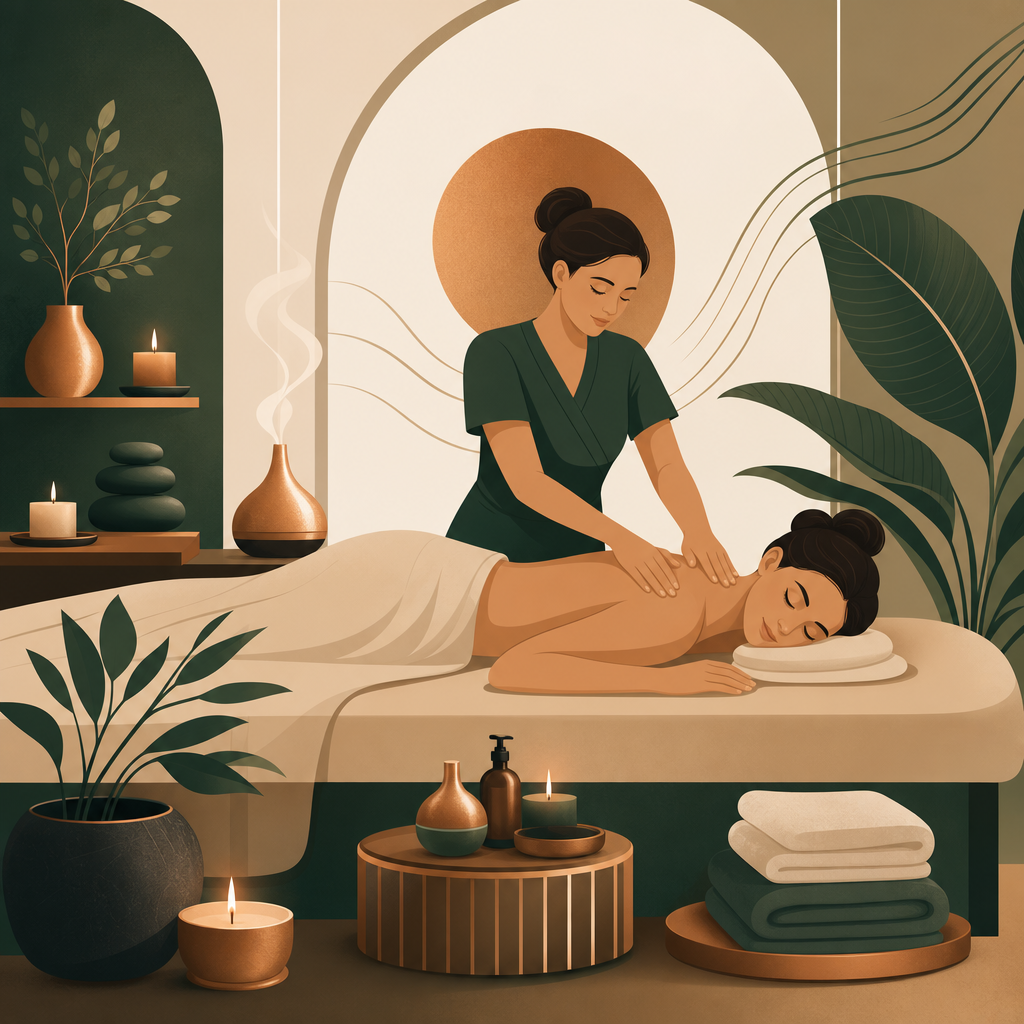
While this guide focuses on home use, I want to be clear that essential oils reach their full potential when combined with professional massage therapy. Our therapists at Raipur SPA in Samta Colony near Agrasen Chowk are trained in aromatherapy massage — the art of selecting specific oils and massage techniques that work synergistically for each client's needs.
When you receive a professional aromatherapy massage, your therapist considers not just your physical complaints but also your emotional state, your energy levels, and even your olfactory preferences (because a scent you dislike will create stress, not relieve it). They select oils that address your specific needs, blend them properly, and deliver them through massage techniques that maximize absorption and therapeutic effect.
Consider using your home massage skills as a supplement to professional treatments. Massage your own shoulders with a lavender blend between spa visits. Work a ginger-peppermint blend into your feet after a long day. And when your body needs deep, targeted work that your own hands can't provide, come visit us at Raipur SPA for a professional aromatherapy session. The combination of daily self-care and monthly professional treatment is the most effective approach to long-term wellness.
Final Thoughts
Starting with essential oils for home massage doesn't have to be expensive or complicated. Begin with two oils — lavender for relaxation and peppermint for muscle relief. Sweet almond or fractionated coconut oil as your carrier. Two glass bottles (one for your blend, one for your carrier oil). That's all you need.
Learn how each oil smells, how it makes you feel, how your body responds. Expand your collection gradually. And remember — quality matters more than variety. Five excellent oils are worth more than fifty mediocre ones.
At Raipur SPA in Samta Colony, we believe that wellness should be accessible — both at home and in the treatment room. These oils, used thoughtfully, bring a piece of the spa experience into your daily life. And when you're ready for the full experience, our doors are open near Agrasen Chowk, waiting to welcome you.
People Also Ask
Related Articles
Wellness Guides, Pricing & FAQs
Massage for Anxiety: How Touch Therapy Calms Your Nervous System
12 min read · 12 May 2026

Wellness Guides, Pricing & FAQs
Burnout Recovery: A Complete Self-Care Plan for Overworked Professionals
10 min read · 12 May 2026

Wellness Guides, Pricing & FAQs
Sleep Better Tonight: Evening Massage Routine for Deep Sleep
11 min read · 12 May 2026
Enjoyed This Article?
Stop reading about relaxation — come experience it firsthand at Raipur SPA.