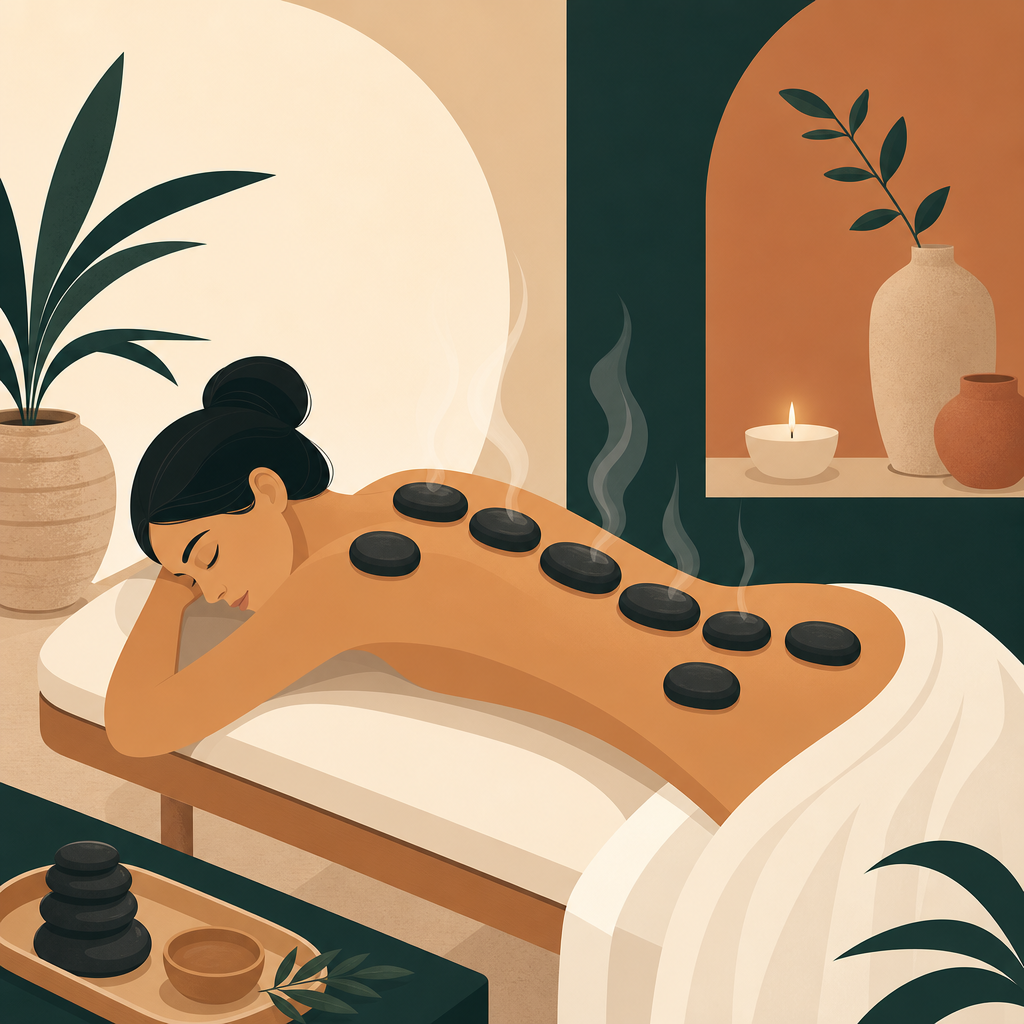
Is Hot Stone Just a Gimmick? The Real Therapeutic Benefits

I'll be straight with you: when I first started in massage therapy, I thought hot stone massage was more about spectacle than substance. Basalt stones, heated to a specific temperature, placed along the spine — it looked beautiful, sure. But I figured the actual therapeutic benefit came from the massage strokes, not the stones themselves.
Then I received my first hot stone session. And I changed my mind completely.
Not because it felt good — though it absolutely did — but because I couldn't ignore how different my body felt afterward compared to a regular massage. The relaxation was deeper. The muscle release lasted longer. And the heat seemed to reach places that hands alone couldn't touch.
That experience sent me down a research rabbit hole. What does the science say about hot stone massage? Is it genuinely therapeutic, or is it an expensive version of putting a heating pad on your back?
The answer, as it turns out, is more interesting than either extreme.
Where Hot Stone Massage Comes From
First, a quick history. Hot stone massage isn't a modern spa invention — the use of heated stones for therapeutic purposes goes back thousands of years. Indigenous cultures in North America used heated basalt stones in sweat lodge ceremonies. Ancient Chinese and Ayurvedic traditions incorporated warm stones into healing practices. The Japanese tradition of Jin Shin Do uses warming techniques that resemble stone therapy.
The modern version as we know it — smooth basalt stones systematically placed and used as massage tools — was popularized in the 1990s by Mary Nelson, an Arizona massage therapist. Basalt is the stone of choice because it's an igneous rock that retains heat exceptionally well and cools slowly, giving the therapist a generous working window.
So no, it's not a gimmick invented by spa marketers. It's a practice with real historical roots that was refined into a modern therapeutic modality.
The Science of Heat and Muscle
Let's talk about what happens when you apply therapeutic heat to muscle tissue. This is important because it explains why hot stone massage works differently — and in some cases, better — than hands-only massage.
Physiological Effects of Heat on Muscles
- Vasodilation: Heat causes blood vessels to widen, increasing blood flow to the area by up to 30%. More blood means more oxygen and nutrients to the muscles, and faster removal of metabolic waste products.
- Muscle relaxation: Heat reduces muscle spindle sensitivity and decreases gamma motor neuron activity. In plain English: heat tells your muscles to stop contracting and let go. This is why a hot shower feels so good after a long day.
- Tissue elasticity: Heated tissues stretch more easily. Collagen fibers become more pliable at elevated temperatures, which means the therapist can work on tight areas with less resistance and more effectiveness.
- Pain gate theory: The sensation of warmth competes with pain signals at the spinal cord level. Heat essentially "closes the gate" to some pain signals, providing natural pain relief.
When you combine these thermal effects with skilled massage techniques, you get something that neither heat alone nor massage alone can achieve. The stones prepare the muscle to receive the massage work, and the massage work amplifies and directs the benefits of the heat.
How a Real Hot Stone Session Works
If you've only seen hot stone massage in spa brochures or Instagram reels, let me describe what an actual session at Raipur SPA looks like. Because there's a difference between the real thing and a superficial version.
The Stones
We use volcanic basalt stones — smooth, dense, and flat. They range from large stones for the back muscles to tiny ones for between the toes and fingers. The stones are heated in a specialized water heater set to a precise temperature — usually between 120–130°F (49–54°C). Too cool and they don't provide therapeutic benefit. Too hot and they burn the skin. The art is in getting it exactly right.
The Session Flow
A hot stone session at our spa in Samta Colony typically follows this pattern:
- Placement: Stones are placed at key points — along the spine, in the palms, between the toes. These stationary stones bring heat deep into the tissues while the therapist begins working on other areas.
- Gliding: The therapist holds a stone in hand and uses it as an extension of their own hand, gliding it along the muscles with oil. The heat penetrates deeper than hands alone can deliver.
- Kneading with stones: For tighter areas, the therapist uses the edge of the stone to work into specific muscle fibers, combining heat with targeted pressure.
- Cool stones (optional): Some therapists alternate between hot and cool marble stones to stimulate circulation through alternating vasodilation and vasoconstriction — a technique known as contrast therapy.
The Benefits That Go Beyond Relaxation
Let's get specific about what hot stone therapy is genuinely good for. I'll separate this into what the research supports and what experienced therapists observe in practice.
What Research Supports
While large-scale clinical trials on hot stone massage specifically are limited (research funding tends to go to pharmaceutical studies, not spa therapies), the research on thermotherapy — therapeutic heat application — is robust. And hot stone massage is essentially a very sophisticated thermotherapy delivery system.
- Chronic pain management: Studies on heat therapy show significant pain reduction for chronic lower back pain, osteoarthritis, and fibromyalgia. A 2013 review in the journal Pain Medicine found that heat wrap therapy reduced pain and improved muscle strength in patients with acute lower back pain.
- Flexibility and range of motion: Research shows that heat application before stretching increases range of motion more effectively than stretching alone. This is why hot stone sessions often produce dramatic improvements in flexibility — sometimes visible within one session.
- Stress reduction: A small study of hot stone massage published in the International Journal of Therapeutic Massage and Bodywork found significant reductions in cortisol (stress hormone) and increases in serotonin (mood-regulating neurotransmitter) after a single session.
What Experienced Therapists Report
This is where I draw on my own experience and conversations with colleagues at Raipur SPA and beyond:
- Cold hands, warm reception: This sounds trivial, but have you ever had a massage where the therapist's hands are cold? It breaks the relaxation. Hot stones eliminate that problem — the therapist's hands stay warm through the entire session through contact with the stones.
- Deeper work with less pressure: Because heat relaxes muscle tissue, the therapist can achieve deep release with less mechanical pressure. This is huge for people who find deep tissue massage painful but still need therapeutic-level work.
- Lasting afterglow: Clients consistently report that the warmth continues radiating into muscles for hours after the session. Many say they sleep better that night than they have in weeks.
- Dynamic tension release: The contrast between the warm stones and the cooler air creates a sensory experience that seems to help clients mentally let go of tension in a way that hands alone don't achieve.
Who Benefits Most from Hot Stone Therapy?
Based on everything I've seen and experienced, here's who I'd recommend hot stone massage to:
Excellent Candidates
- People who feel cold easily or run cold all the time
- Those with chronic muscle tension who find deep tissue too painful
- Stress-heavy professionals who need serious relaxation
- People with poor circulation or cold extremities
- Anyone with fibromyalgia or chronic fatigue (gentle heat is very helpful)
- First-time massage clients who are nervous about pressure
Not Suitable For
- Recent injuries with active inflammation (heat increases swelling)
- Areas with acute burns, rashes, or skin conditions
- People with certain heart conditions (heat stresses the cardiovascular system)
- Pregnant women (prenatal hot stone is available but uses modified, gentler techniques)
- Anyone with heat sensitivity or certain neurological conditions that affect temperature sensation
Is It Worth the Extra Cost?
Hot stone massage typically costs more than a standard massage. The extra covers the stone equipment, the heating system, the higher skill required (it takes training to handle stones safely and effectively), and the longer preparation and cleanup time.
Is it worth it? For the right person, absolutely. Think of it as a difference in kind, not just price. A standard Swedish massage and a hot stone massage are different experiences. The hot stone session delivers deeper thermal penetration and a different quality of relaxation.
It's like the difference between drinking a cup of hot tea and taking a hot bath. Both involve heat, but they're different experiences with different effects. One is not "better" — just different, and better suited to certain needs.
A Note About Quality
Not all hot stone massages are created equal. The cheap "hot stone add-on" at many spas is just a regular massage with a couple of warm rocks placed on your back for a few minutes. That's not real hot stone therapy.
At Raipur SPA in Samta Colony near Agrasen Chowk, our therapists are specifically trained in hot stone techniques. The stones are properly cleaned and sanitized between each use. The temperature is carefully managed. And the stones are used throughout the session, not just placed and forgotten.
If you're going to try hot stone, try it somewhere that does it properly. A mediocre hot stone session is disappointing. A great one can change how you think about massage.
Hot Stone Therapy for Different Body Parts
One of the most misunderstood aspects of hot stone massage is that it's a one-size-fits-all treatment. In reality, skilled therapists use different techniques and stone sizes for different areas of the body. Here's how a comprehensive hot stone session addresses each region:
The Back — The Main Event
The back receives the most attention in a hot stone session, and for good reason. Large, flat basalt stones are placed along either side of the spine — never directly on the vertebrae — to warm the erector spinae muscles, the long bands of muscle that run alongside your spine. These muscles are almost always tight in adults, especially in people who sit at desks. The large stones stay in place for several minutes, allowing deep heat to penetrate through layers of muscle while the therapist works on other areas. Then the therapist uses a medium stone in each hand to glide along the back muscles with long, sweeping strokes. The heat from the stone allows for deeper gliding with less friction, making even deep work feel gentle.
The Neck and Shoulders — The Tension Zone
Smaller, rounded stones are used for the neck and shoulder area. These stones fit comfortably in the curve of the neck and can be placed along the trapezius muscles — the ones that form that tense ridge between your neck and shoulders that office workers know all too well. The therapist may also use a small heated stone to work along the occipital ridge (the base of the skull), which is a common site for tension headaches. Clients often report that this part of the session produces the most noticeable immediate relief.
The Palms and Feet — The Surprise Favorites
Many clients are surprised by how much they enjoy the stone placement on their palms and between their toes. Small, smooth stones are placed in each palm, and the client is asked to gently close their hand around them. The warmth spreads through the hands and fingers almost immediately. Similarly, small flat stones are placed between the toes — a sensation that clients describe as both unusual and deeply pleasurable. These areas are rich in nerve endings, and the combination of heat and gentle pressure creates a profound sense of grounding and relaxation.
The Legs and Hips — The Underappreciated Areas
Hip flexors and quadriceps tend to be tight in anyone who sits for long periods, and the hamstrings and calves carry tension from standing and walking. Medium-sized stones are used to warm these areas before the therapist works on them with traditional massage strokes. The stones help release the deep hip rotators — muscles that are notoriously difficult to access with hands alone. For athletes or people who stand all day, this part of the session is often the most therapeutic.
What to Expect During Your First Hot Stone Session
If you're considering your first hot stone massage at Raipur SPA, here's exactly what you can expect so there are no surprises:
Before the session: Your therapist will ask about any medical conditions, injuries, or areas of concern. Be honest about any heart conditions, circulation issues, or areas of numbness — these affect how we use the stones. You'll undress to your comfort level (most clients undress fully, but you can keep underwear on) and lie face-down on the massage table with a sheet covering you.
The first stone placement: The therapist will place the first set of stones on your back while they're still warm but not hot. You'll feel a gentle, pleasant warmth — never burning or uncomfortable. If anything feels too hot, tell your therapist immediately. Good therapists check in about temperature frequently.
During the session: The therapist will continuously swap stones — removing cooled stones from the heater and placing fresh warm ones. You'll hear the gentle clink of stones being placed and moved, which many clients find meditative. The therapist will alternate between placing stationary stones and using stones as massage tools.
After the session: You'll feel deeply relaxed, possibly a bit sleepy. Your muscles will feel warm and loose for hours afterward. Drink plenty of water — the heat encourages toxin release, and hydration helps your body process that. Avoid heavy meals and alcohol for the rest of the day. Most clients report the best sleep they've had in months on the night after a hot stone session.
Real Client Stories from Raipur SPA
Over the years at Raipur SPA in Samta Colony, we've collected countless stories of how hot stone therapy has helped our clients. Here are a few that stand out:
Priya, 34, IT professional: "I spend nine hours a day at a computer. My shoulders were so tight I couldn't turn my head fully to the left. My physio told me to try hot stone therapy. The first session was uncomfortable in some spots — the therapist found knots I didn't know I had — but by the end, I could turn my head normally. After four sessions, the problem hasn't returned."
Rajesh, 52, business owner: "I was skeptical. I'm not a spa person. My wife booked it for my birthday. The therapist placed stones on my palms and back, and within ten minutes I felt something I hadn't felt in years — total stillness. No phone, no business calls, no stress. Just warmth. I've been coming back monthly for two years now."
Anita, 28, yoga instructor: "I teach yoga five days a week, so my body takes a lot of wear. Hot stone massage has become part of my recovery routine. The heat helps my muscles release in ways that stretching alone doesn't achieve. It's not a luxury for me — it's maintenance."
These stories reflect what we see every day: hot stone therapy works for a wide range of people, from desk workers to athletes to skeptical spouses. The common thread is that everyone who tries it properly — at a spa that takes the technique seriously — walks away genuinely impressed.
Maintenance and Hygiene: Why It Matters
One concern clients sometimes raise is about hygiene. After all, the same stones are used on different clients. At Raipur SPA, we take stone sanitation extremely seriously. After each session, every stone is hand-washed with antibacterial soap, scrubbed individually, and then soaked in a hospital-grade disinfectant solution. They're rinsed thoroughly and dried before being stored. The heating unit itself is cleaned and sanitized daily. If you have specific concerns about hygiene, feel free to ask us — we're happy to walk you through our processes.
Stones also need to be inspected regularly for cracks or chips. A cracked stone can harbor bacteria even after cleaning, and a chipped stone can have sharp edges that could scratch the skin. Our therapists inspect every stone before and after each session. This level of care is part of what separates a professional hot stone session from a casual one.
The Bottom Line
No, hot stone massage is not just a gimmick. It's a legitimate therapeutic modality that combines the proven benefits of thermotherapy with skilled massage techniques. The heat penetrates deeper than hands alone can deliver, the stones provide a different quality of pressure work, and the overall experience is genuinely different from a standard massage.
Is it right for everyone? No. Is it worth the hype? For the right person at the right time, absolutely. And if you've never tried it — or if you've only tried a poor version — I encourage you to experience the real thing.
Experience authentic hot stone therapy at Raipur SPA. Located in Samta Colony near Agrasen Chowk, Raipur. Our trained therapists use premium basalt stones and personalized techniques. Book your session at raipurspa.com or call us today.
People Also Ask
Related Articles
Wellness Guides, Pricing & FAQs
Massage for Anxiety: How Touch Therapy Calms Your Nervous System
12 min read · 12 May 2026
Wellness Guides, Pricing & FAQs
Burnout Recovery: A Complete Self-Care Plan for Overworked Professionals
10 min read · 12 May 2026
Wellness Guides, Pricing & FAQs
Sleep Better Tonight: Evening Massage Routine for Deep Sleep
11 min read · 12 May 2026
Enjoyed This Article?
Stop reading about relaxation — come experience it firsthand at Raipur SPA.