Does Massage Really Remove Toxins? The Truth About Lymphatic Drainage

I need to be honest with you about something. For years, I told clients that massage "releases toxins from your muscles" and that's why they needed to drink extra water afterward. I said it with complete confidence, because that's what I'd been taught, that's what all the senior therapists said, and frankly, it sounded scientific enough.
Then I actually looked into the research. And I felt a bit silly.
Here's the thing: the "toxin release" narrative around massage is one of the most persistent myths in the wellness industry. And while the reality is more nuanced, the truth is actually more interesting — and still very good news for anyone who gets massages.
So let's break this down properly. What does massage actually do to your body's detoxification systems? Spoiler: the answer involves your lymphatic system, and it's fascinating.
Where Did the Toxin Myth Come From?
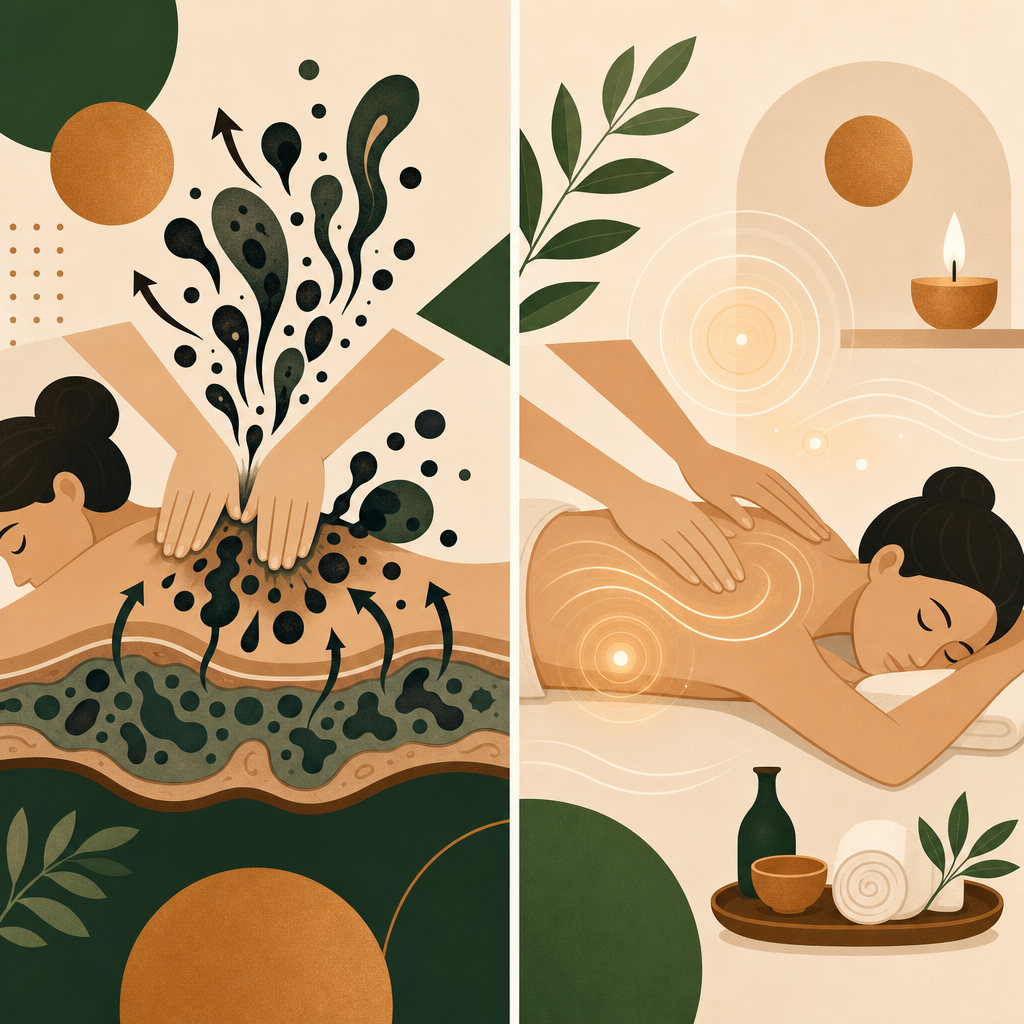
The idea that massage "releases toxins" has been around for decades. The theory goes like this: muscles hold onto toxins (whatever that means), and when a massage therapist works on tight spots, those toxins are released into the bloodstream. The kidneys and liver then have to work overtime to process and eliminate them, which is why you might feel tired or nauseated after a deep massage, and why you need extra water.
It sounds logical, doesn't it? And it's been repeated so many times that most people — including most massage therapists — accept it as fact.
But here's the problem: no scientific study has ever demonstrated that massage releases any identifiable "toxins" from muscle tissue. The concept of "toxins" in the context of massage is so vague as to be meaningless. Which toxins? Measured how? Removed through what mechanism? The questions have never been satisfactorily answered.
What Massage Actually Does to the Lymphatic System
Now, this is where things get both more accurate and more interesting.
The lymphatic system is your body's waste management network. It's a system of vessels and nodes that collects excess fluid, cellular waste, and immune cells from your tissues and transports them back to your bloodstream for processing. Unlike your circulatory system, which has the heart as a pump, the lymphatic system relies on muscle movement, breathing, and manual stimulation to move fluid along.
The Lymphatic System in Simple Terms
Think of your body like a city. Your blood vessels are the highways delivering supplies (oxygen, nutrients) to every neighborhood. Your lymphatic system is the garbage collection and sewage network, picking up waste products and returning them to the main processing plants (liver, kidneys).
Massage — particularly gentle, rhythmic techniques like manual lymphatic drainage — does stimulate lymph flow. This has been demonstrated in research. Light pressure in the direction of lymph nodes can increase the rate of lymph circulation by up to 20%. This improved circulation helps your body clear out metabolic waste products — things like lactic acid, urea, and other byproducts of normal cellular function — more efficiently.
Notice I said "metabolic waste products," not "toxins." There's a difference. Metabolic waste is the normal, everyday garbage your cells produce. Toxins, in the way most wellness marketing uses the word, implies some external poison that needs special detoxification. That's a very different (and much more dubious) claim.
The Lactic Acid Question
One specific claim you hear often: "Massage flushes out lactic acid, which reduces soreness."
This is partially true but mostly overblown. Lactic acid was long blamed for post-exercise muscle soreness. We now know that lactic acid clears from muscles within about an hour after exercise — naturally, without any intervention. The "delayed onset muscle soreness" (DOMS) you feel a day or two after a hard workout is caused by microscopic muscle damage and inflammation, not lactic acid build-up.
Massage does help with DOMS, but not by flushing lactic acid. Research shows that massage reduces inflammation and promotes the production of new mitochondria in muscle cells — which actually helps muscles recover at the cellular level. That's a more impressive benefit than the lactic acid story, in my opinion.
What About "Detox" Marketing?
Walk through any city in India and you'll see spas advertising "detox massages," "lymphatic drainage for weight loss," and "toxin-removing treatments." A lot of these claims are marketing fluff. Here's the uncomfortable truth:
- Your liver and kidneys are your real detox organs. No massage can substitute for a healthy liver and functioning kidneys.
- No known toxin has been shown to be released from muscle tissue through massage in measurable quantities.
- Lymphatic drainage is a legitimate technique with real benefits — but those benefits are about reducing swelling, improving immune function, and promoting relaxation, not "detoxification."
This doesn't mean lymphatic drainage massage is useless. Far from it. It's an evidence-based treatment for conditions like lymphedema (swelling from lymph node damage), post-surgical swelling, and chronic inflammation. It's also deeply relaxing and can boost immune function. It just doesn't "pull toxins out of your muscles" the way the marketing suggests.
The Real Benefits of Lymphatic Drainage Massage
Let's talk about what lymphatic drainage actually does for you. Because the truth is impressive enough that you don't need the exaggerated claims.
1. Reduced Swelling and Edema
This is the most well-established benefit. Manual lymphatic drainage is a recognized treatment for lymphedema — a condition where lymph fluid accumulates in tissues, often after cancer treatment or surgery. The gentle, rhythmic techniques physically move fluid out of congested areas.
2. Improved Immune Function
Your lymph nodes are where immune cells are produced and activated. By improving lymph flow, you're helping these immune cells circulate more effectively. People who receive regular lymphatic drainage often report getting sick less frequently — and there's plausible biology behind that claim.
3. Faster Recovery from Injury and Surgery
After an injury or surgery, swelling is a major obstacle to healing. Lymphatic drainage helps reduce that swelling, bringing fresh blood and nutrients to the healing area while clearing out inflammatory byproducts.
4. Deep, Lasting Relaxation
Lymphatic drainage requires extremely light pressure — barely a touch in some techniques. This activates the parasympathetic nervous system (your "rest and digest" mode) more effectively than many deeper modalities. Clients often report falling asleep during the session.
5. Better Skin Health
For facial lymphatic drainage in particular, the results can be striking. Reduced puffiness, brighter skin, and improved tone — because you're literally draining excess fluid from facial tissues.
What to Look for in a Lymphatic Drainage Session
If you decide to try lymphatic drainage — and I think it's worth trying, especially if you deal with puffiness, sinus congestion, or stress — here's what to look for:
- Light pressure: If the therapist is digging in, that's not lymphatic drainage. True lymphatic work uses gentle, rhythmic pressure — the texture of the touch should feel like a whisper.
- Directional strokes: The therapist should be working toward lymph node areas (neck, armpits, groin), not away from them.
- No oil slathering: Too much oil makes it hard to maintain the light, precise contact needed for effective drainage.
- A qualified practitioner: Not all massage therapists are trained in true lymphatic drainage. Ask about their training in manual lymphatic drainage (MLD) specifically.
Should You Still Drink Water After Massage?
Yes. But not because of the toxin flushing.
Drinking water after massage is good for you for several legitimate reasons:
- Hydration supports all your body's metabolic processes, including muscle recovery
- Water helps maintain healthy blood volume and circulation
- If you received any deep work, your muscles are in a recovery state and need hydration like after a workout
- Proper hydration supports kidney and liver function — your actual detox organs
So by all means, drink that water. Just know it's for general health and recovery, not because you've just mobilized a reservoir of toxins.
A More Honest Way to Think About Massage and Cleansing
Instead of thinking about massage as a "detox" treatment, I prefer to think of it as a support system for your body's natural cleaning processes.
Your body is already perfectly designed to handle waste processing. Your liver filters blood, your kidneys remove waste compounds, your intestines eliminate solid waste, your lungs expel carbon dioxide, and your lymphatic system manages cellular debris. These processes happen 24/7 without any help from outside.
What massage does is optimize the conditions for these processes. Better circulation means more efficient delivery of oxygen and nutrients to tissues and more efficient removal of waste products. Better lymphatic flow means less fluid congestion and improved immune surveillance. Better stress response (lower cortisol) means all your body's systems function more effectively.
So massage doesn't "detox" you. But it helps your body do its own detoxification better. That's a more honest — and still very valuable — benefit.
Common Questions I Get at Raipur SPA About This Topic
Since I started being honest about the toxin myth, clients ask me a lot of follow-up questions. Here are the most common ones, with straightforward answers.
"If massage doesn't release toxins, why do I sometimes feel tired or nauseous after a deep session?"
This is a great question, and it's the main reason people believe the toxin story. The truth is that feeling tired after a deep massage is perfectly normal — but it has nothing to do with toxins. Your muscles just received a thorough workout. Deep tissue massage creates microtrauma in tight muscle fibres, similar to what happens during exercise. Your body responds by sending blood and nutrients to those areas to begin repair. That's metabolic work, which requires energy. Feeling tired afterward is the same kind of post-exercise fatigue you'd feel after a good gym session, not a "detox reaction."
As for nausea: this can happen if the massage was very deep and stimulated a strong parasympathetic response (your "rest and digest" nervous system). Sudden, deep relaxation can cause a temporary drop in blood pressure, which some people experience as lightheadedness or mild nausea. It passes quickly with rest and hydration. Again — no toxins involved.
"What about the smell after a deep tissue session? Clients sometimes have a strong body odour — isn't that toxins leaving?"
The smell is real but it's not toxins. What you're smelling is the natural bacterial breakdown of sweat and sebum on the skin, combined with the metabolic byproducts released from muscle tissue during manipulation. When a therapist works deeply on tight muscles, they're physically compressing and stretching tissue, which can push fluids and cellular debris into the interstitial space and eventually into the lymphatic system. The odour comes from normal biological compounds — the same ones that give sweat its characteristic smell. It's not "toxin release" any more than your gym clothes after a workout are "detoxing."
"Should I avoid massage if I have kidney or liver problems?"
Only if your doctor specifically advises against it. The concern people raise is that massage might "overload" compromised detox organs by dumping toxins into the bloodstream. Since we've established that massage doesn't release detectable toxins, this concern is unfounded. However, there are other reasons someone with kidney or liver disease might need to be cautious about massage — for example, if they have fragile skin, easy bruising, or fluid imbalances. Always consult your doctor if you have a chronic condition. But you don't need to worry about a "toxin overload."
How This Changes the Way We Practice at Raipur SPA
You might wonder: if the toxin story isn't true, does anything change about how we actually do massage? The answer is no — and yes.
No, because the techniques that therapists believed were "releasing toxins" are the same techniques that actually improve circulation, reduce muscle tension, and stimulate lymph flow. The work itself doesn't change. What changes is how we talk about it.
Yes, because when we're honest with our clients about what's happening in their bodies, they can make better decisions. They understand that feeling tired after a deep tissue session means their body is doing repair work — not having a "healing crisis." They know that drinking water helps their overall recovery, not some mysterious flushing process. And they trust us more because we're not repeating pseudoscientific claims.
At Raipur SPA, our therapists are trained to explain the real physiology behind what we do. We don't use buzzwords to impress you. We tell you what's happening and why it helps. That transparency is part of what makes a session with us different from a session at a spa that still repeats the old "toxins" story.
The next time a massage therapist tells you they're "releasing toxins from your muscles," you now know the full picture. The work they're doing is real and beneficial. The explanation they're giving is well-meaning but inaccurate. And the good news is that the real benefits of massage — improved circulation, reduced muscle tension, better lymphatic flow, stress reduction — are all more science-backed and impressive than the myth anyway.
Come visit Raipur SPA in Samta Colony. We'll work on your tight muscles, help your body recover, and tell you exactly what's happening — honestly, clearly, and without any of the pseudoscience.
Book your session at Raipur SPA — Samta Colony, near Agrasen Chowk, Raipur. Call us or visit raipurspa.com. Your health deserves honest answers.
People Also Ask
Related Articles
Wellness Guides, Pricing & FAQs
Massage for Anxiety: How Touch Therapy Calms Your Nervous System
12 min read · 12 May 2026

Wellness Guides, Pricing & FAQs
Burnout Recovery: A Complete Self-Care Plan for Overworked Professionals
10 min read · 12 May 2026

Wellness Guides, Pricing & FAQs
Sleep Better Tonight: Evening Massage Routine for Deep Sleep
11 min read · 12 May 2026
Enjoyed This Article?
Stop reading about relaxation — come experience it firsthand at Raipur SPA.