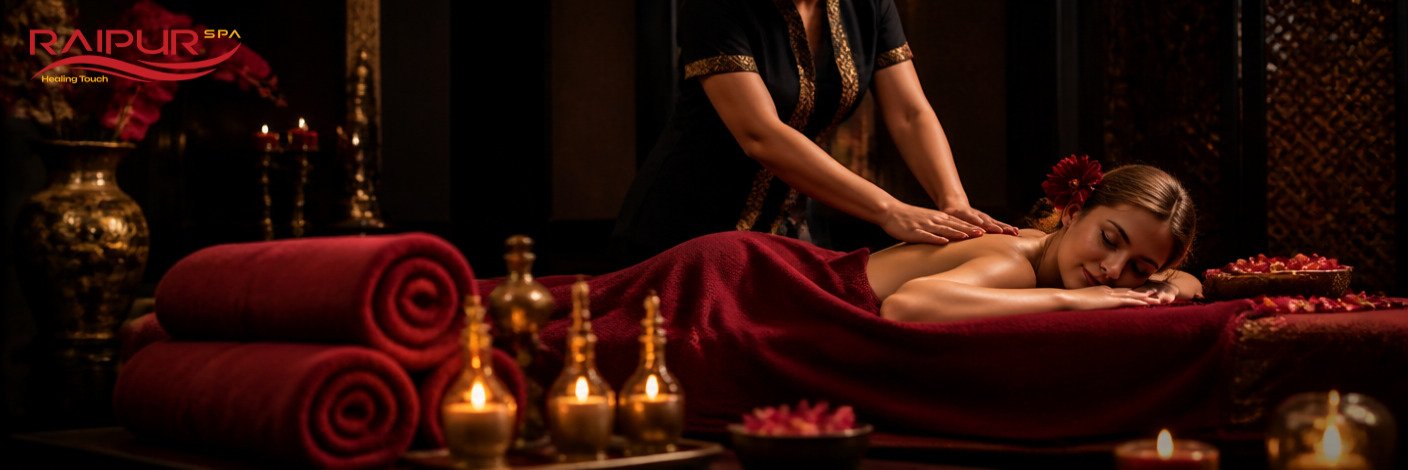
What is the best massage for sciatica, back pain, and neck stiffness in Raipur?
Deep tissue and therapeutic massages are commonly used for sciatica, back pain, and neck stiffness in Raipur. These techniques target muscle tension and improve circulation. Many spas in Raipur offer customized sessions based on individual needs. Consult a healthcare provider before booking if you have a medical condition.
Key Takeaways
- • Deep tissue massage targets deeper muscle layers to relieve chronic tension.
- • Sciatica pain often benefits from massage focusing on lower back and glutes.
- • Neck stiffness can be eased with gentle stretching and trigger point therapy.
- • In Raipur, many spas offer specialized pain relief massage packages.
- • Always consult a doctor before massage if you have a medical condition.
- • Regular massage can complement other treatments for musculoskeletal pain.
Pain relief massage in Raipur is a targeted therapeutic service designed to ease sciatica, lower back pain, and neck stiffness using a blend of deep tissue, trigger point, and gentle stretching techniques. At Raipur SPA in Samta Colony, trained therapists tailor each session to your specific condition, helping reduce muscle tension, improve mobility, and calm nerve irritation. Sessions start from ₹999, open daily 11 AM to 9 PM.
Key Takeaways
- Pain relief massage targets the root cause of sciatica, back pain, and neck stiffness through deep tissue and trigger point therapy.
- Sessions at Raipur SPA start from ₹999, with customized pressure and duration to suit your pain level.
- Regular massage can improve blood circulation, reduce inflammation, and release endorphins that naturally dull pain.
- Sciatica relief focuses on glutes, piriformis, and lower back; neck stiffness work addresses trapezius and cervical muscles.
- Benefits are often felt after the first session, but lasting relief comes from consistent care and posture correction.
- Book via WhatsApp or call +91 7987 303 127 to schedule your assessment and session.
Why Pain Relief Massage Is Different from a Regular Spa Massage
A standard relaxation massage feels nice, but it doesn't always solve stubborn pain. Pain relief massage in Raipur is more clinical. Therapists assess your posture, ask where the pain travels, and then work on specific muscle groups. The difference lies in intent, assessment, and technique. A relaxation massage follows a predictable sequence designed to calm the whole body. A therapeutic pain relief session follows a diagnostic trail — your therapist is hunting for the source of your symptoms, not just the spot that hurts.
For sciatica, that might mean releasing the piriformis and glutes. For neck stiffness, it's about the upper traps and levator scapulae. The goal isn't just to relax you — it's to reduce the compression and tension causing your symptoms. This is why a good pain relief therapist will spend the first ten minutes asking questions: Where does it hurt? Does the pain radiate? Is it worse in the morning or after sitting? What makes it better? These answers shape the entire session.
At Raipur SPA, we combine deep tissue techniques with myofascial release and gentle joint mobilization. It's a structured approach, not a random rubdown. We also document your progress so that each follow-up session builds on the last. If you've ever had a massage that felt great for a day and then the pain returned, you've experienced the difference between relaxation and treatment. Therapeutic work aims for cumulative change — less pain, more range of motion, and better posture over time.
Another key difference is communication during the session. In a relaxation massage, you might drift off. In a pain relief session, your therapist will check in — asking you to rate the pressure, describe the sensation, and tell them if pain is referring to another area. That feedback loop is what makes the work precise. It also prevents injury. You should never leave a therapeutic massage feeling bruised or worse than when you came in.
Understanding Sciatica: When the Nerve Gets Pinched
Sciatica isn't a condition itself — it's a symptom. The sciatic nerve runs from your lower back through your hips and down each leg. It's the longest and thickest nerve in the body, roughly the width of your thumb at its origin. When something presses on it, you feel sharp, shooting pain, numbness, or tingling. The pain can travel all the way to your foot, and it often follows a specific path: from the buttock, down the back of the thigh, into the calf, and sometimes into the toes.
Common culprits include herniated discs, spinal stenosis, and tight gluteal muscles. Sitting for long hours — common among IT professionals in Raipur — makes it worse. Add a long commute on two-wheelers over uneven roads, and the lower back takes a double hit from compression and vibration. Pregnant women are also prone to sciatica as the uterus presses on the nerve, and the hormone relaxin loosens ligaments, changing pelvic stability.
It's important to know that sciatica is not always caused by a disc. In many cases, the nerve is being compressed by a muscle — most commonly the piriformis, a small muscle deep in the buttock. This is called piriformis syndrome, and it mimics disc-related sciatica so closely that even doctors sometimes need imaging to tell them apart. The good news for massage therapy is that muscular causes respond very well to hands-on treatment.
How Massage Helps Sciatica
Massage can't fix a herniated disc, but it can reduce the muscular tension that aggravates nerve pain. By releasing the piriformis, glutes, and lower back muscles, therapists create more space and reduce pressure on the nerve. Think of it like a garden hose that's been stepped on — the water flow is restricted not because the hose is damaged, but because something is pressing on it. Release the pressure, and flow returns.
Many clients report that leg pain and tingling decrease after 2–3 sessions. Combined with stretching and better sitting habits, results last longer. We often teach clients a simple piriformis stretch to do at home — lying on their back, crossing one ankle over the opposite knee, and gently pulling the knee toward the chest. Done daily, it extends the benefits of the massage significantly.
One important note: if your sciatica is accompanied by loss of bladder control, severe weakness in the leg, or numbness in the saddle area, seek emergency medical care immediately. These are signs of cauda equina syndrome, a rare but serious condition. Massage is for musculoskeletal sciatica, not for neurological emergencies.
Back Pain: More Than Just a Sore Spot
Lower back pain is one of the most common complaints we hear. It can come from poor posture, long hours at a desk, heavy lifting, or even emotional stress that manifests as muscle tightness. The lower back is a structural crossroads — it carries the weight of the upper body, connects to the pelvis, and houses the lumbar spine, which bears the most load of any spinal region. It's no wonder that around 80% of adults experience back pain at some point.
Pain relief massage for back pain focuses on the erector spinae, quadratus lumborum, and latissimus dorsi. Therapists use slow, sustained strokes and trigger point release to break the pain-spasm cycle. That cycle works like this: an area gets injured or overloaded, muscles tighten to protect it, the tightness reduces blood flow, waste products build up, pain increases, and the muscles tighten further. Massage interrupts this loop by manually flushing the area and signaling the nervous system to stand down.
Different types of back pain need different approaches. A sudden strain from lifting something heavy responds well to gentle work and heat. Chronic, dull ache from desk work needs deeper work on the quadratus lumborum and hip flexors. Sharp, localized pain near the spine may need referral to a doctor before massage. Your therapist should be able to tell the difference and will ask detailed questions to make sure you get the right care.
What to Expect in a Back Pain Session
Your therapist will start with a brief assessment — where it hurts, what makes it worse, and how long it's been going on. Then they'll use a combination of deep tissue, hot towel application, and gentle stretching. Hot towels are particularly useful because heat relaxes superficial muscle fibers and makes deeper work more comfortable and effective.
Pressure is adjusted to your comfort. You should feel a 'good hurt' — never sharp pain. After the session, you'll get simple stretches to do at home. These might include a cat-cow movement for spinal mobility, a child's pose for lower back release, and a figure-four stretch for the glutes. We also recommend a few minutes of walking after the massage to help the muscles settle into their new length.
One thing we often tell clients: don't rush back to the same chair and posture that caused the pain. Massage creates an opportunity for change. If you return to eight hours of slouched sitting immediately, the muscles will tighten again within days. Small adjustments — a lumbar cushion, a footrest, standing up every 45 minutes — make the relief last much longer.
Neck Stiffness: The Silent Productivity Killer
Neck stiffness often creeps up slowly. You wake up with a kink, or you notice you can't turn your head fully while driving. It's usually caused by poor sleep posture, staring at screens, or stress. In Raipur, where many people work long hours on laptops and phones, we see a steady stream of clients with what's commonly called 'tech neck' — the forward head posture that puts excessive strain on the cervical spine.
For every inch your head moves forward from its neutral position, the weight your neck muscles must support increases by roughly 10 pounds. That means a two-inch forward posture adds about 20 pounds of extra load. Over months and years, this leads to tightness, trigger points, and sometimes headaches. Massage for neck stiffness targets the trapezius, sternocleidomastoid, and suboccipital muscles. Releasing these areas can also reduce tension headaches and improve sleep.
Neck pain is also closely linked to stress. When we're anxious, we tend to raise our shoulders and clench our jaw. This sustained contraction exhausts the neck muscles and creates tender knots. Many clients don't realize how much tension they're holding until the therapist finds a trigger point and they feel a familiar ache radiate. That recognition — 'oh, that's where it hurts' — is often the first step toward relief.
Techniques Used for Neck Relief
Therapists use gentle traction, kneading, and acupressure on specific points. For very stiff necks, we may use moist heat first to relax the muscles before deeper work. Traction involves a gentle, sustained pull that decompresses the cervical vertebrae and gives the discs a chance to rehydrate. It's a slow, subtle technique that feels wonderful when done correctly.
Acupressure points around the base of the skull — particularly the suboccipital muscles — can release headaches that originate at the back of the head and travel forward. Many clients describe a 'melting' sensation as these small, deep muscles let go. We also work on the levator scapulae, a muscle that connects the neck to the shoulder blade and is a common culprit in that 'can't turn my head' feeling.
If your neck stiffness is accompanied by dizziness or arm numbness, please consult a doctor first. Massage is complementary, not a replacement for medical diagnosis. Similarly, if you've had a recent accident or whiplash, get cleared by a medical professional before any bodywork.
The Science Behind Massage for Pain Relief
Massage isn't just feel-good therapy. Research shows it can reduce cortisol (the stress hormone), increase serotonin and dopamine, and improve local blood flow. A landmark study from the Buck Institute for Research on Aging found that massage actually changes gene expression — reducing inflammatory pathways and increasing the production of mitochondria, the energy factories of cells. That's a biological effect, not just a psychological one.
It also stimulates the parasympathetic nervous system — your 'rest and digest' mode — which helps muscles release tension. For chronic pain, this combination can be more effective than painkillers alone, without the side effects. Painkillers mask the signal; massage addresses the source. When you reduce muscle tension, improve circulation, and calm the nervous system, you're changing the environment that created the pain in the first place.
Another mechanism is the gate control theory of pain. According to this theory, the spinal cord can only process a limited amount of sensory information at once. By introducing pleasant, firm pressure signals, massage effectively 'closes the gate' on pain signals traveling to the brain. This is why rubbing a stubbed toe actually helps — and why skilled therapeutic touch can reduce chronic pain perception.
At Raipur SPA, we've seen clients reduce their dependency on daily pain medication after regular sessions. That's not a claim — it's their feedback. We always encourage clients to discuss any medication changes with their doctor, but the pattern is consistent: when pain is managed holistically, the need for chemical relief often decreases.
What to Expect During Your Session at Raipur SPA
When you arrive at our Samta Colony location, you'll be offered a consultation. We ask about your pain history, lifestyle, and any medical conditions. This helps us choose the right techniques and pressure. You'll also be asked about your preferences — do you like firm pressure or gentle? Are there areas you'd rather not have worked on? Do you have any allergies to oils or fragrances?
Sessions typically last 60 or 90 minutes. You'll be draped professionally, and only the area being worked on is exposed. Oils used are warm and hypoallergenic. We maintain a quiet, warm room because relaxation is part of the therapeutic process — a tense body doesn't release easily. Soft lighting, calm music, and a comfortable table all contribute to the outcome.
After the massage, you'll receive a glass of warm water and a few minutes to rest. We'll also share simple ergonomic tips — like adjusting your chair height or taking micro-breaks — to prevent pain from returning. You'll leave with a clear idea of what to do next: how many sessions to book, what stretches to practice, and what warning signs to watch for.
We also offer packages for clients who need ongoing care. If you're dealing with chronic sciatica or recurring back pain, a structured plan is more effective — and more economical — than sporadic sessions. Our team will map out a schedule that fits your condition and your budget.
How Often Should You Get a Pain Relief Massage?
For acute pain, once or twice a week for 2–3 weeks can bring significant relief. For chronic conditions, a maintenance session every 2–4 weeks works well. The key is to match frequency to the stage of healing. In the early phase, we're trying to break the pain cycle and retrain muscles. In the maintenance phase, we're keeping the gains and preventing relapse.
Listen to your body. If you're sore for more than a day, the pressure was too deep. If you feel no change, we may need to adjust the approach. Everyone responds differently. Some clients feel dramatic relief after one session; others need several weeks of consistent work. Age, fitness level, how long you've had the pain, and your daily habits all influence the timeline.
We also recommend combining massage with gentle stretching, hydration, and posture awareness. Massage opens a window — your daily habits keep it open. Drinking enough water helps flush out metabolic waste released during deep tissue work. Light movement, like walking or swimming, keeps muscles supple. And sleep position matters: side sleepers should place a pillow between their knees; back sleepers should use a pillow that supports the natural curve of the neck.
If you're unsure how often to come, start with a single session and see how your body responds. We'll give you an honest recommendation — not a sales pitch. Sometimes the best advice is to come less often and do more at home.
Why Choose Raipur SPA for Pain Relief
We're not a generic spa. Our therapists have specific training in therapeutic and deep tissue massage. We keep our therapy rooms quiet, warm, and hygienic. Every session begins with a conversation, not a stopwatch. We want to understand your pain before we touch it.
Pricing is transparent — therapies start from ₹999. We're open daily from 11:00 AM to 09:00 PM, so you can come after work or on weekends. We accept walk-ins when possible, but appointments are recommended because therapeutic sessions need dedicated time and focus.
Whether you're dealing with sciatica, back pain, or neck stiffness, we'll create a plan that fits your body and your schedule. We also serve a wide range of clients — from IT professionals and business owners to homemakers and athletes. Each person gets the same level of attention and care.
Frequently Asked Questions
What is pain relief massage in Raipur?
It's a therapeutic massage focused on reducing pain from sciatica, back pain, and neck stiffness. Therapists use deep tissue, trigger point, and stretching techniques to release tension and improve mobility. At Raipur SPA, sessions are customized to your specific condition.
Can massage cure sciatica permanently?
Massage can significantly reduce sciatic pain by relieving muscle tension around the nerve, but it may not cure the underlying cause like a herniated disc. It works best as part of a broader plan including stretching, posture correction, and medical advice.
How many sessions do I need for back pain relief?
Many clients feel improvement after 1–2 sessions, but lasting relief usually takes 4–6 sessions depending on the cause and severity. We recommend a maintenance schedule every 3–4 weeks to prevent recurrence.
Is deep tissue massage safe for neck stiffness?
Yes, when performed by a trained therapist. Deep tissue work on the neck must be done carefully to avoid injury. We adjust pressure based on your comfort and may use heat therapy first to relax muscles.
What does a pain relief massage cost in Raipur?
At Raipur SPA, therapies start from ₹999. The final price depends on session duration and the techniques used. We offer 60-minute and 90-minute options, with packages available for regular clients.
Do I need a doctor's referral for pain relief massage?
No referral is needed for general muscle pain. However, if you have a diagnosed condition like a slipped disc, recent injury, or nerve damage, please consult your doctor first and inform your therapist.
Can I get a pain relief massage if I'm pregnant?
Yes, but with precautions. Prenatal massage can help with lower back pain and sciatica, but it should be performed by a therapist trained in prenatal techniques. Avoid deep pressure on the abdomen and lower back, and always consult your doctor first.
What should I do after a pain relief massage to make it last?
Drink water, avoid heavy lifting for the rest of the day, do the stretches your therapist recommends, and pay attention to your posture. A warm shower or a heating pad on the treated area can extend the benefits. Most importantly, address the daily habits that caused the pain.
Final Thoughts
Living with sciatica, back pain, or neck stiffness drains your energy and focus. Pain relief massage in Raipur offers a safe, drug-free way to manage symptoms and feel like yourself again. It's not a luxury — it's a practical investment in your daily comfort and long-term mobility.
At Raipur SPA, we combine skilled hands with genuine care. Book your session today and take the first step toward a pain-free day. Call or WhatsApp us at +91 7987 303 127 — we're open daily from 11:00 AM to 09:00 PM.
Frequently Asked Questions
Which massage is best for sciatica in Raipur?
Deep tissue massage and trigger point therapy are often recommended for sciatica. These techniques help release tension in the piriformis and lower back muscles. Many Raipur spas offer customized sessions for sciatic pain.
Can massage help with chronic back pain?
Massage can help reduce muscle tension and improve blood flow, which may alleviate chronic back pain. It is often used alongside other treatments like physiotherapy. Consult a doctor to ensure massage is safe for your condition.
How often should I get a pain relief massage?
Frequency depends on your pain level and response to treatment. Some people benefit from weekly sessions, while others may need monthly maintenance. A therapist can help create a schedule based on your needs.
Is pain relief massage safe for neck stiffness?
Yes, gentle massage can help relieve neck stiffness by relaxing tight muscles. However, if you have an injury or underlying condition, consult a healthcare provider first. A trained therapist can adjust pressure to your comfort.
What should I expect during a pain relief massage in Raipur?
You can expect a consultation to discuss your pain points, followed by a customized massage. Therapists may use deep tissue, trigger point, or stretching techniques. Sessions typically last 60 to 90 minutes.
Are there any risks associated with pain relief massage?
Massage is generally safe, but may cause temporary soreness. Avoid massage if you have fractures, severe osteoporosis, or skin infections. Always inform your therapist about any medical conditions.
Book Your Session
Book Your SessionPeople Also Ask
Related Articles
Massage Therapy
Best Massage in Raipur: 10 Reasons Our Premium Spa Stands Out
12 min read · 21 Sep 2026
Massage Therapy
Thai Massage in Raipur: Flexibility, Energy, and Stress Relief Explained
13 min read · 20 Sep 2026
Massage Therapy
Hot Stone Massage in Raipur: Benefits, Process, and Where to Book
15 min read · 20 Sep 2026
Enjoyed This Article?
Stop reading about relaxation — come experience it firsthand at Raipur SPA.