What is the best massage for post-workout recovery in Raipur?
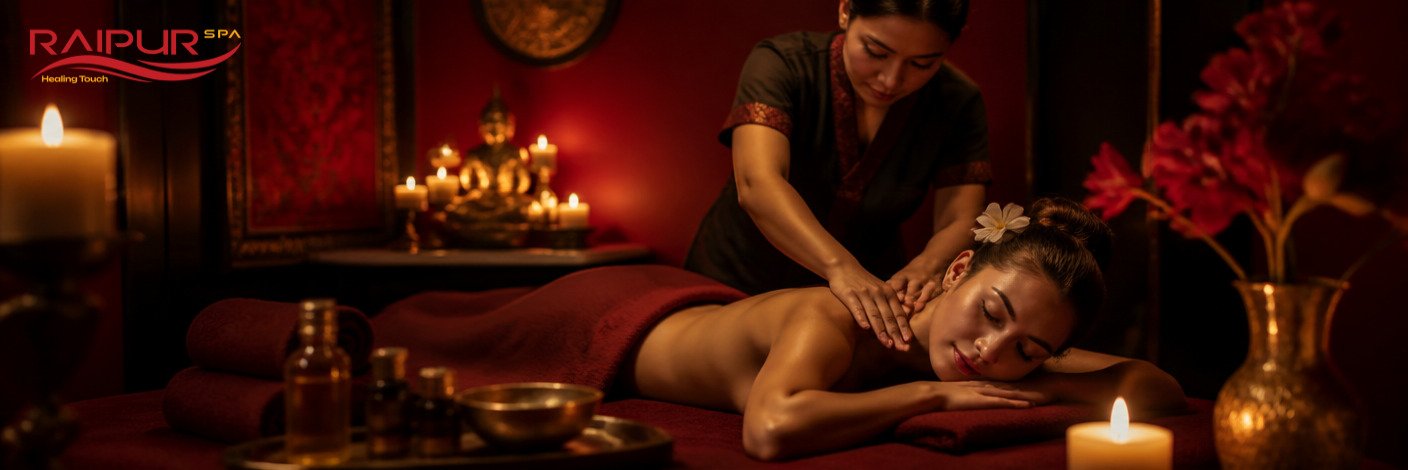
Sports massage is the most effective for post-workout recovery in Raipur. It combines deep tissue techniques, stretching, and trigger point therapy to reduce muscle soreness, improve flexibility, and speed up recovery. Many Raipur spas offer sports massage, often alongside therapies like hot stone or aromatherapy for enhanced relaxation and circulation.
Key Takeaways
- • Sports massage targets muscle recovery by reducing soreness and improving flexibility.
- • Deep tissue massage helps break down knots and relieve tension after intense workouts.
- • Hot stone therapy can relax muscles and improve blood flow for faster recovery.
- • Aromatherapy massage reduces stress and promotes relaxation, aiding overall recovery.
- • Hydration and rest are essential complements to any post-workout massage.
- • Consult a professional therapist to choose the right therapy based on your workout intensity.
Post-workout recovery in Raipur means using guided bodywork — sports massage, deep tissue therapy, stretching and heat-based treatments — to ease muscle soreness, restore mobility and cut down injury risk after training. At Raipur SPA in Samta Colony, these therapies start from ₹999 and are built around how your body actually heals.
If you train at a gym in Shankar Nagar, run along the Marine Drive stretch, play cricket at a local ground or cycle the Ring Road early morning, you already know the pattern. The workout feels great. The next two days don't. That stiffness in your calves, the tight lower back, the shoulders that won't rotate fully — it isn't weakness. It's your body asking for recovery, and most of us simply skip it.
Recovery isn't a luxury for professional athletes. It's the part of training that decides whether you improve or break down. Here's what actually works, and where to get it in Raipur.
Key Takeaways
- Sports massage after training reduces delayed onset muscle soreness (DOMS) and helps flush metabolic waste from tired muscles.
- Deep tissue and trigger point work target specific problem areas — hamstrings, calves, lower back, shoulders and neck.
- Heat therapies like steam and warm oil treatments improve circulation, which speeds up tissue repair.
- Recovery sessions are best done 12–48 hours after intense training, not immediately after a heavy session.
- At Raipur SPA, sports and recovery therapies start from ₹999 and are available daily from 11:00 AM to 09:00 PM.
- Consistency matters more than intensity — one recovery session a week beats a single marathon massage once a month.
- Massage works best when paired with sleep, hydration, protein and light movement — it supports recovery, it doesn't replace it.
Why Recovery Deserves a Place in Your Training Plan
When you train hard, you create micro-tears in muscle fibres. That's normal and necessary — it's how muscle adapts and grows. But adaptation happens during rest, not during the workout. If you keep training without giving tissue time to repair, you accumulate fatigue. Performance drops, sleep worsens, joints ache and injuries become a matter of when, not if.
Most gym-goers in Raipur focus entirely on the training side: sets, reps, protein, supplements. Recovery gets whatever time is left over. That's backwards. A structured recovery routine — sleep, hydration, mobility work and periodic bodywork — is what lets you train consistently for years instead of burning out in months.
There's a concept coaches call the "training-recovery balance." Every hard session is a withdrawal from your body's reserves. Every good night's sleep, every proper meal, every recovery session is a deposit. If you keep withdrawing without depositing, you eventually go into the red — and that's when plateaus, nagging injuries and motivation crashes show up together. The athletes who stay in the game for decades aren't the ones who train the hardest. They're the ones who recover the smartest.
Massage and body therapies are one of the most underused tools in that routine. They don't replace rest, but they make rest more effective. Think of them as a way to clear the backlog — the tight spots, the restricted joints, the tissue that's been working overtime — so your body can do its repair work with less interference.
In Raipur specifically, there's a cultural push toward pushing through. Gyms reward intensity. Group classes reward sweat. Nobody hands out applause for taking a recovery day. But the people who last — the ones still training at 50 without wrecked knees — are almost always the ones who learned to respect recovery early.
What Is Sports Massage and How Does It Help?
Sports massage is a targeted form of bodywork designed for people who train, play or move regularly. It combines deep tissue techniques, trigger point release, myofascial work and assisted stretching. The pressure is firmer than a relaxation massage and the therapist works with your training history in mind.
A good session starts with a short conversation — what you train, how often, where it hurts, what's tight. From there, the therapist focuses on the areas doing the most work. Runners usually need calves, hamstrings and IT bands addressed. Gym-goers with heavy lifting routines often carry tension in the upper back, traps and hips. Cricketers and racquet sport players tend to have one-sided tightness that needs balancing.
What separates sports massage from a standard spa massage is intent. A relaxation massage aims to calm you down. A sports massage aims to change something — restore range, release a specific restriction, reduce tightness that's limiting your movement. The strokes may be slower and deeper, and the therapist will often ask you to move a joint while they work on the tissue around it. That active participation is part of what makes it effective.
Benefits You'll Actually Notice
- Less soreness in the 24–72 hours after a hard session
- Better range of motion in hips, shoulders and ankles
- Reduced muscle tightness and knot formation
- Improved circulation to recovering tissue
- Better sleep quality on training days
- Lower risk of overuse injuries when combined with proper programming
- A clearer sense of where your body is holding tension, which helps you correct your training before it becomes a problem
None of this is magic. It's mechanical. Hands-on pressure helps move fluid, break down adhesions and calm an overactive nervous system. That's why it works.
One underrated benefit is feedback. A therapist's hands find things you don't notice until they press on them. That tight left hip you've been ignoring for weeks? It shows up on the table. Knowing about it early is often the difference between a minor correction and a months-long injury.
Deep Tissue Therapy vs Sports Massage: Which Do You Need?
People often use these terms interchangeably, but they serve slightly different purposes.
Sports massage is broader and often more functional. It's about preparing the body for activity or helping it recover from it. The therapist may use faster strokes, joint movement and stretching alongside deeper pressure. It's a good all-round choice if you train regularly and want to keep your whole body moving well.
Deep tissue therapy is more focused. It targets specific layers of muscle and connective tissue, usually where chronic tension has built up. If you have a stubborn knot in your upper back that's been there for months, or a hamstring that always feels tight no matter how much you stretch, deep tissue is usually the better fit. The work is slower and more concentrated, and it often feels more intense in the moment.
In practice, most recreational athletes benefit from a mix. A sports massage every couple of weeks, with deep tissue work layered in when a specific area needs attention. If you're unsure which you need, describe your training and your symptoms to the therapist — a good one will recommend the right approach rather than upsell you.
There's also a third category worth knowing: trigger point therapy. This targets specific knots — hyperirritable spots in muscle that refer pain elsewhere. A trigger point in your glute can cause pain down your leg. One in your upper back can cause headaches. If you have pain that shows up far from where you feel the tightness, trigger point work is often the missing piece.
Body Therapies That Support Recovery
Massage isn't the only option. Several other therapies complement it well, and combining them often gives better results than doing just one.
Warm Oil and Abhyanga-Style Treatments
Warm oil applied with long, rhythmic strokes does two things: it improves surface circulation and it calms the nervous system. For anyone dealing with training stress plus work stress, this combination is hard to beat. The warmth helps stiff tissue relax before deeper work begins.
This style of treatment is especially useful if you're new to bodywork or sensitive to pressure. The oil and warmth make the whole experience gentler, so you can still get circulation benefits without the intensity of deep tissue work. Many people book a warm oil session the day before a big training week — it leaves the body feeling loose and ready rather than beaten up.
Steam and Heat Therapy
Steam increases blood flow and helps muscles relax. It's particularly useful before a massage session, when tissue is tight and resistant, or on rest days when you just want the body to unwind. Twenty minutes of steam after a light stretch can do more for tight hips than an hour of foam rolling.
Heat therapy also has a psychological component that matters more than people admit. Training stress keeps your nervous system in a low-grade alert state. Steam forces you to slow down, breathe, and let your guard drop. That shift — from fight-or-flight to rest-and-repair — is when a lot of the actual healing happens.
Assisted Stretching
Passive stretching guided by a trained therapist reaches angles you can't get on your own. It's excellent for hamstrings, hip flexors and the thoracic spine — areas that get compressed by long hours at a desk and then loaded heavily in the gym.
The key difference from self-stretching is that you can fully relax. When you stretch yourself, part of your nervous system stays engaged to protect the muscle. When someone else guides the stretch, that protective tension releases, and you often gain range you didn't think you had. It's not permanent on its own, but repeated sessions combined with your own mobility work create real change.
Foot and Leg Recovery Work
Runners, walkers and anyone on their feet all day benefit from focused lower-limb work. Calves, arches and the plantar fascia carry enormous load. Regular attention here prevents the kind of chronic foot pain that quietly derails training for weeks.
If you've ever had plantar fasciitis, you know how stubborn it is. It rarely comes from the foot alone — tight calves and weak hips usually contribute. A therapist who understands the chain will work up the leg, not just on the sore spot. That's the difference between temporary relief and actual resolution.
How Often Should You Get a Recovery Massage?
The honest answer depends on your training volume.
- Training 2–3 times a week: one session every 2–3 weeks is plenty.
- Training 4–5 times a week: weekly sessions work well, especially during heavy blocks.
- Training daily or preparing for an event: twice a week, with lighter pressure closer to competition.
- Recovering from a niggle: follow your physiotherapist's guidance and use massage as support, not a substitute for treatment.
Timing matters too. The best window is usually 12 to 48 hours after a hard session. Right after training, tissue is inflamed and deep pressure can do more harm than good. A day later, when the acute soreness has settled, the body responds much better.
It also helps to think in blocks rather than one-off sessions. During a deload week or a lighter training phase, a deeper session makes sense. In the middle of a heavy block, keep the pressure moderate so you're supporting recovery rather than adding stress. And if you're tapering for a race or event, go lighter still — the goal then is circulation and relaxation, not deep remodeling.
If you're new to regular bodywork, start with one session and see how your body responds over the following week. Most people find they sleep better, move more freely and feel less beaten up after training. From there, you can dial in the frequency that fits your schedule and budget.
Recovery Habits That Work Alongside Massage
Bodywork supports recovery. It doesn't replace the basics.
Sleep is the single biggest factor. Seven to nine hours of quality sleep does more for muscle repair than any therapy. If you're sleeping five hours and booking massages to compensate, you're treating the symptom, not the cause. Fix sleep first — everything else gets easier.
Hydration keeps circulation efficient and helps clear metabolic byproducts. Most active people are mildly dehydrated without realizing it. Aim for pale-yellow urine through the day and add electrolytes on heavy training days, especially in Raipur's summer heat.
Protein intake gives the body material to rebuild tissue. A common guideline is roughly 1.6 to 2.2 grams per kilogram of body weight per day for people training regularly. Spread it across meals rather than loading it all at dinner.
Light movement — walking, easy cycling, mobility drills — keeps blood flowing without adding training stress. A 20-minute walk the day after a hard leg session often does more for soreness than lying on the couch.
Stack these consistently and a monthly massage becomes a genuine performance tool. Skip them and no amount of bodywork will fix a body that isn't being allowed to rest.
Common Recovery Mistakes to Avoid
Even people who take recovery seriously make a few predictable errors. Avoiding them can save you weeks of frustration.
Going too deep too soon. A very intense massage right after a hard session can leave you sorer than before. Start moderate, especially if it's your first session in a while.
Using massage as a substitute for diagnosis. If something hurts sharply, swells, or doesn't improve with rest, see a doctor or physiotherapist. Massage is not a diagnostic tool.
Skipping hydration before and after. Bodywork moves fluid and metabolic waste. If you're dehydrated, you'll feel it. Drink water before your session and after.
Training hard right after a deep session. Give yourself at least a few hours, ideally a day, before heavy loading the same muscles. The tissue needs time to settle.
Treating recovery as an event rather than a habit. One great massage a month won't undo four weeks of poor sleep and no stretching. Recovery is cumulative, like training.
Where to Get Post-Workout Recovery in Raipur
Raipur has plenty of gyms and fitness communities, but dedicated recovery-focused bodywork is still uncommon. Most spas lean toward relaxation treatments, which are lovely but not built for people carrying training load.
At Raipur SPA in Samta Colony, the focus is on therapies that actually address muscle tension, restricted movement and post-exercise soreness. Therapists are trained to work with athletes and active individuals, adjusting pressure and technique based on what your body needs that day. Sessions start from ₹999, and the spa is open daily from 11:00 AM to 09:00 PM — convenient whether you train in the morning or evening.
Samta Colony is easy to reach from most parts of the city, whether you're coming from Shankar Nagar, Devendra Nagar, Telibandha or the Ring Road side. If you're local, this is the practical option. No travel to another city, no guesswork about whether the therapist understands training load. Just consistent, competent recovery work you can build into your week.
If you're unsure what to book, describe your training and your problem areas when you call or message. A short conversation before your session usually leads to a much better outcome than picking a treatment at random.
Frequently Asked Questions
What is post-workout recovery and why does it matter?
Post-workout recovery is everything you do after training to help your body repair and adapt — rest, nutrition, hydration and therapies like massage. It matters because muscle growth and performance gains happen during recovery, not during the workout itself.
Is sports massage painful?
It can feel intense, especially on tight or overworked areas, but it shouldn't be unbearable. Good therapists adjust pressure to your comfort level. Mild soreness for a day afterward is normal; sharp or lasting pain is not.
How soon after training should I get a massage?
Ideally 12 to 48 hours after a hard session. Immediately after intense training, muscles are inflamed and deep pressure may slow healing rather than help it. A day's gap usually gives the best results.
Can massage replace stretching or foam rolling?
No, it complements them. Massage reaches tissue and angles you can't access alone, but daily mobility work and stretching still matter. Think of massage as periodic deep maintenance, not a replacement for routine habits.
How much does a recovery massage cost in Raipur?
At Raipur SPA, sports and recovery-focused therapies start from ₹999. Final pricing depends on the duration and type of treatment you choose. Sessions are available daily between 11:00 AM and 09:00 PM.
Do I need to be an athlete to benefit?
Not at all. Anyone who exercises regularly, sits for long hours, or carries physical tension can benefit. Gym-goers, runners, cyclists, dancers and desk workers all respond well to recovery-focused bodywork.
How long does a sports massage session take?
Most recovery sessions run between 45 and 90 minutes, depending on the areas you want addressed. A focused session on one problem area may take 45 minutes, while a full-body recovery session usually needs 60 to 90 minutes to be thorough.
What should I do before and after a recovery massage?
Drink water before and after, avoid a heavy meal in the hour leading up to your session, and skip intense training on the same muscles for the rest of the day. A light walk or gentle stretching afterward helps the effects settle in.
The Bottom Line
Training hard is only half the equation. The other half is giving your body what it needs to rebuild — and that includes hands-on recovery work, not just rest days.
If you're in Raipur and your muscles have been asking for attention, don't wait until something hurts badly enough to force the issue. Book a session, see how you feel the next day, and decide from there. Most people notice the difference within one visit.
To book a sports massage or recovery therapy at Raipur SPA, Samta Colony, message or call +91 7987 303 127 on WhatsApp. Open daily, 11:00 AM to 09:00 PM.
Frequently Asked Questions
How soon after a workout should I get a sports massage?
Ideally, wait 24 to 48 hours after intense exercise to allow initial inflammation to subside. For mild soreness, a light massage within a few hours can help. Always listen to your body and avoid massage on acute injuries.
What are the benefits of sports massage for athletes in Raipur?
Sports massage in Raipur helps reduce muscle tension, improve range of motion, and decrease recovery time. It also enhances blood circulation and can prevent future injuries by addressing muscular imbalances.
Can I combine sports massage with other therapies like hot stone?
Yes, many Raipur spas offer combination therapies. Hot stone can be added to sports massage to further relax muscles and promote circulation. However, consult your therapist to ensure it suits your needs.
How often should I get a sports massage for recovery?
Frequency depends on your workout intensity and goals. Athletes in training may benefit from weekly sessions, while casual exercisers might opt for bi-weekly or monthly massages. Your therapist can recommend a schedule.
Are there any risks or contraindications for sports massage?
Sports massage is generally safe, but avoid it if you have acute injuries, skin infections, or certain medical conditions. Always inform your therapist about any health issues or medications before the session.
What should I do after a sports massage to maximize recovery?
Drink plenty of water to flush out toxins, rest, and avoid strenuous activity for at least 24 hours. Light stretching and a warm bath can further enhance the benefits of your massage.
Book Your Session
Book Your SessionPeople Also Ask
Related Articles
Health & Wellness
Head Massage in Raipur: Benefits for Migraine, Hair Fall & Sleep
16 min read · 06 Oct 2026
Health & Wellness
Ayurvedic Herbs Used in Raipur Spas: Benefits for Skin and Body
16 min read · 05 Oct 2026
Health & Wellness
Relieve Joint and Muscle Pain with Expert Spa Therapies in Raipur
12 min read · 05 Oct 2026
Enjoyed This Article?
Stop reading about relaxation — come experience it firsthand at Raipur SPA.