Spa Therapies for New Parents and Sleep Recovery — The Case of Rahul and Sneha
When Rahul and Sneha became parents for the first time, they were prepared for sleepless nights, endless feedings, and the general chaos that comes with a newborn. What they weren't prepared for was the complete breakdown of their own nervous systems.
"By week six, I didn't recognize myself anymore," Sneha told me during her first visit to Raipur SPA. "I was irritable with everyone, including Rahul. I'd cry for no reason. I couldn't sleep even when the baby slept. My entire body felt like it was vibrating with exhaustion."
Rahul nodded beside her. "I thought I was handling it okay, but I fell asleep driving home from work one day. Fortunately, it was just a red light — I jerked awake before anything happened. That's when we realized we needed help."
Their story is not unusual. New parenthood is one of the most physically and psychologically demanding transitions a person can experience. Yet society treats it as something parents should just "get through." The result: chronic sleep deprivation, accumulated physical tension, and in many cases, postpartum depression or anxiety disorders.
Understanding the New Parent Physiology
To design effective spa therapy for new parents, we need to understand what's happening in their bodies:
Sleep architecture destruction. New parents experience fragmented sleep — waking every 2-3 hours for feedings, diaper changes, and soothing. This prevents them from entering the deeper stages of sleep (stages 3 and REM) that are critical for physical and mental restoration. The result: chronic fatigue that isn't relieved by light sleep.
Forward posture from carrying and nursing. Both breastfeeding and bottle-feeding involve prolonged forward flexion of the upper back and neck. Over weeks and months, this creates a pronounced forward-head, rounded-shoulder posture that leads to upper back pain, neck stiffness, and tension headaches.
Carpal tunnel and wrist strain. The repetitive motion of holding, lifting, and feeding a growing baby places enormous strain on the wrists and hands. Many new parents develop de Quervain's tenosynovitis (sometimes called "mommy thumb") or carpal tunnel syndrome.
Lower back strain. The mechanical demands of lifting a baby from a crib, car seat, or floor, combined with weakened core muscles postpartum, put the lower back under significant stress. This is one of the most common complaints among new parents.
Hormonal disruption. Postpartum hormonal shifts affect everything from mood to joint laxity to metabolism. For breastfeeding mothers, the prolactin and oxytocin cycles further complicate sleep and stress regulation.
The Spa Recovery Protocol for New Parents
Based on work with dozens of new parents at Raipur SPA, including Rahul and Sneha's story, here's what we've found effective:
Phase 1: Acute Recovery (First 3 months postpartum)
During this phase, the priority is nervous system reset and targeted pain relief. Sleep is so fragmented that any intervention that improves sleep quality — even by 20-30% — has outsized benefits.
Therapy 1: Gentle full body Swedish massage (60 min). Light to medium pressure only. The goal is not deep tissue work but rather promoting relaxation, reducing cortisol, and improving sleep quality. A 2016 study in the Journal of Clinical Nursing found that postpartum women who received 3 sessions of Swedish massage over 2 weeks showed significant improvements in sleep quality scores and reduced Edinburgh Postnatal Depression Scale (EPDS) scores.
For Sneha, her first session was emotional. She cried within the first 10 minutes — not from sadness, but from the relief of being touched without being needed. "For six weeks, every time someone touched me, they wanted something from me — the baby wanted milk, Rahul wanted to talk, the pediatrician wanted to examine. This was the first time someone touched me just to help me relax. I couldn't stop crying."
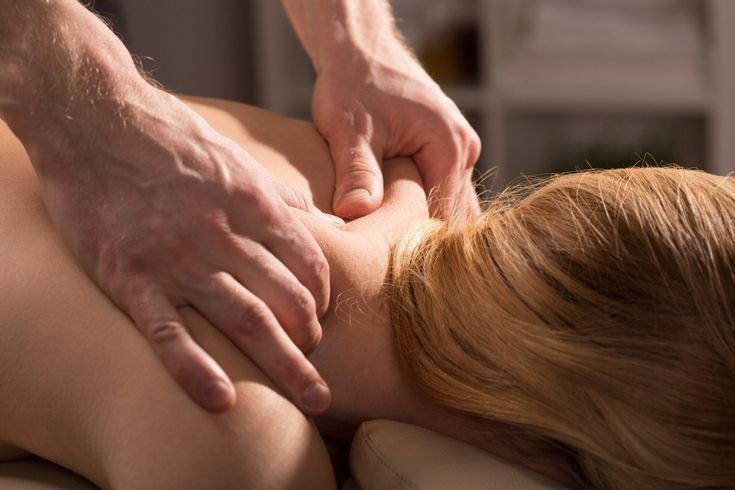
Therapy 2: Targeted neck and shoulder work (30 min). This can be added to the full body session or done separately. Focus on the upper trapezius, levator scapulae, and suboccipital muscles — all of which become chronically tight from nursing and carrying.
Therapy 3: Hand and wrist massage (20 min). Often overlooked but critically important. The repetitive strain of holding and feeding a baby creates micro-trauma in the wrist extensors and thumb muscles. Gentle myofascial release and cross-fiber friction to the wrist and hand muscles can provide significant relief.
Phase 2: Structural Recovery (3-6 months postpartum)
As sleep gradually improves (most babies start sleeping in longer stretches by month 4), the focus shifts to addressing the accumulated postural and biomechanical issues.
Therapy 4: Postural correction massage (60 min). This combines Swedish techniques with specific myofascial release for the chest (tight pectorals from forward posture), upper back release, and glute activation work. The therapist can also provide guidance on simple at-home stretches that support the corrections made during the session.
Rahul was skeptical about this phase. "I thought massage was just for relaxation. But when the therapist released my chest muscles — which I didn't even know were tight — and I felt my shoulders drop back, I literally felt taller. I hadn't realized how hunched I'd become."
Therapy 5: Lower back and hip release (45 min). The combination of carrying, lifting, and weakened core muscles creates specific patterns of lower back and hip tightness. Targeted work on the quadratus lumborum, piriformis, and gluteal muscles can provide significant relief.
Phase 3: Maintenance (6 months +)
Once the acute phase has passed and structural issues are addressed, the goal shifts to maintenance — monthly sessions to prevent tension from re-accumulating. Many parents continue regular sessions at this frequency indefinitely, finding that the investment in their well-being benefits their whole family.
"I used to think spa treatments were selfish," Sneha said. "But Rahul pointed out — if I'm a better parent when I've had rest and body care, then it's not selfish. It's good parenting."
Beyond Massage: Complementary Spa Therapies for New Parents
Steam therapy (10-15 min before massage): A brief steam session warms the muscles, making the subsequent massage more effective. It also provides a moment of sensory isolation — a rare treat for parents who are constantly being touched, grabbed, and clung to.
Foot reflexology (30 min): The feet bear the weight of added pregnancy pounds and the constant movement that comes with newborn care. Gentle reflexology can provide relief while stimulating relaxation responses. It's also a treatment that can be done fully clothed — useful for parents who are self-conscious about their postpartum bodies.
Aromatherapy (incorporated into any session): Lavender for sleep promotion, chamomile for nervous system calming, and clary sage for hormonal support (in non-breastfeeding parents). The therapist can customize the oil blend based on the parent's specific needs.
Gentle stretching (15-20 min guided): Not a standalone service, but a valuable add-on. A therapist can guide a parent through simple stretches that address the common postural patterns of new parenthood. The parent can then practice these at home between sessions.
Practical Considerations for New Parents Considering Spa Therapy
Timing: Schedule sessions during times when you can reliably have childcare — during a partner's off time, a grandparent's visit, or a trusted babysitter. The relaxation benefits are undermined if you're worried about the baby the whole time.
Feeding schedule: For breastfeeding parents, pump or feed immediately before the session. Full breasts are uncomfortable and can make lying face-down difficult. Arranging the session to be 2-3 hours after the last feed usually works well.
Communication: Tell your therapist you're a new parent. They need to know about any physical changes (diastasis recti, perineal healing from birth, C-section scar sensitivity) to adjust the session appropriately. A good therapist will also avoid certain pressure points that could be too stimulating.
Managing expectations: Your first post-baby spa session might be emotional. You might cry. You might fall asleep. You might feel anxious. All of this is normal. The therapist has seen it before.
Partner sessions: For couples, a couple spa session can be a powerful way to reconnect after the baby-induced distance that naturally occurs. Both parents get care simultaneously, and the shared experience reinforces that you're in this together.
The Evidence: What Research Shows About Spa Therapy for New Parents
The available evidence strongly supports spa therapy as a component of postpartum care:
- Sleep quality: A 2015 randomized trial in the Journal of Obstetric, Gynecologic & Neonatal Nursing found that postpartum women who received weekly massage showed significant improvements in sleep efficiency and reduced nighttime awakenings compared to standard care.
- Pain reduction: A 2018 study in the Journal of Bodywork and Movement Therapies found that a series of 6 postpartum massage sessions reduced lower back pain by an average of 60% and improved functional mobility scores.
- Mood and anxiety: A 2020 meta-analysis of 12 studies found that massage therapy in the postpartum period reduced depressive symptoms with a moderate to large effect size, comparable to some psychological interventions.
- Parent-child bonding: A fascinating 2017 study found that parents who received regular massage reported higher oxytocin levels and improved bonding behaviors with their infants. The relaxation seemed to enhance their capacity for attuned caregiving.
The Outcome: Rahul and Sneha's Recovery
Rahul and Sneha completed 12 sessions over 4 months. By the end, Rahul described feeling like a different person: "I'm more patient with the baby. I'm more present with Sneha. I don't feel like I'm just surviving anymore."
Sneha's sleep had improved dramatically. "I still wake up when the baby needs me, but I fall back asleep quickly. I feel rested. The chronic ache in my shoulders is gone. I stopped needing painkillers for my wrists."
They now maintain monthly couples massage sessions. "It's our thing," Sneha said. "We pass the baby to my mom for two hours and just take care of each other."
At Raipur SPA, we offer specific packages designed for new parents, with flexible scheduling, shorter session options, and therapist training in postpartum considerations. Our sessions are designed to work with your body's current state — not where it was before pregnancy, but where it is now.
Whether you're 6 weeks postpartum or 6 months in, your body has been through an extraordinary journey. It deserves care that acknowledges that journey.
People Also Ask
Related Articles
Wellness Guides, Pricing & FAQs
Benefits of Monthly Massage: Why Consistency Matters More Than You Think
8 min read · 05 May 2026
Wellness Guides, Pricing & FAQs
How Massage Improves Blood Circulation: The Science, Benefits and Best Techniques
8 min read · 05 May 2026
Wellness Guides, Pricing & FAQs
Massage for Diabetes Management: How Therapeutic Massage Supports Blood Sugar Control and Wellness
9 min read · 05 May 2026
Enjoyed This Article?
Stop reading about relaxation — come experience it firsthand at Raipur SPA.