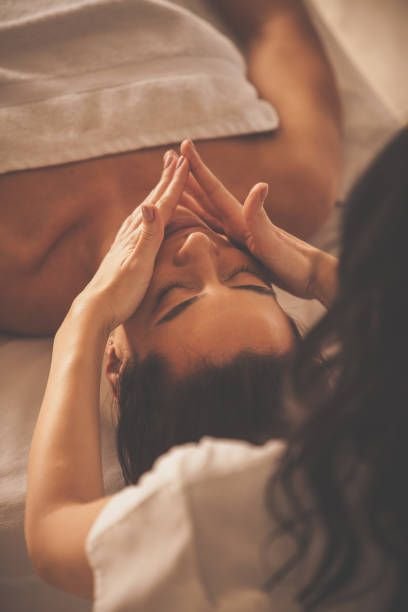
Sports culture in Raipur is serious. Cricket has been embedded in the city's identity for decades, with local clubs running competitions across multiple formats throughout the year. The gym culture in Raipur has grown significantly over the past five years — there are now well-equipped fitness centres across Civil Lines, Shankar Nagar, Devendra Nagar, and the newer developing areas. The Raipur running community holds regular morning runs along the Marine Drive stretch and organized events including half-marathons. All of these sports create specific physical demands, specific injury patterns, and a genuine need for structured recovery. Sports massage, properly understood, is not an add-on luxury for serious athletes — it is a functional part of a training and competition system.
What Sports Massage Actually Is
Sports massage is not simply a harder version of a regular massage. It is a distinct discipline with specific techniques applied to specific muscle groups based on the athlete's sport, training phase, and physical condition. The therapist needs to understand the biomechanics of the sport involved — how the muscles are loaded during play, which structures are vulnerable to overuse, how fatigue accumulates across a training cycle. Without this understanding, sports massage becomes guesswork. At Raipur Spa, our sports massage therapists are trained in sport-specific muscle mapping and work with athletes from Raipur's cricket, gym, and running communities regularly.
Cricket Athletes — The Raipur Context
Cricket is arguably the most physically demanding sport in ways that its leisurely reputation does not capture. Bowlers in particular accumulate enormous repetitive stress: a medium-pacer bowling 15 to 20 overs per match is performing a complex rotational movement through the spine and shoulder hundreds of times in a session. The follow-through of a bowling action loads the lower back in a very specific and asymmetric way that leads to predictable injury patterns over time.
Shoulder and rotator cuff: The rotator cuff — the group of four muscles (supraspinatus, infraspinatus, teres minor, subscapularis) that stabilize the shoulder joint — is the most chronically stressed structure for bowlers. Sports massage targeting the rotator cuff involves slow, sustained friction work across the muscle bellies, active release technique as the shoulder moves through range of motion, and specific stretching of the posterior capsule. This is different from a general shoulder massage and significantly more effective for bowlers.
Hamstrings: Batsmen and fielders in explosive running between wickets, and bowlers in their run-up, load the hamstrings heavily. The proximal hamstring — the attachment point at the sitting bone — is particularly vulnerable and is the site of most hamstring injuries in cricket. Sports massage addresses both the muscle belly and the proximal attachment, using deep longitudinal stripping and cross-fiber friction.
Lumbar spine and supporting musculature: The asymmetric nature of cricket (most players are either predominantly right-handed or left-handed) creates predictable imbalances in the musculature on either side of the lower back. Sports massage for cricketers always includes an assessment of this asymmetry and targeted work to address the side that is overworking.
Runners — Raipur's Growing Running Community
Running seems simple but creates a complex and specific pattern of muscular stress. In Raipur, where road surfaces vary considerably — smooth in some areas, uneven and cambered in others — and where running happens in significant heat for much of the year, the physical demands on the runner's body are amplified.
Calves and Achilles: The gastrocnemius and soleus muscles (calves) are the primary propulsive muscles in running and absorb significant impact with every footstrike. Chronic tightness here affects running economy and, if not addressed, can progress to Achilles tendinopathy — a notoriously stubborn injury. Sports massage of the calves involves careful deep longitudinal work along the muscle belly, specific friction at the musculo-tendinous junction (where muscle becomes tendon), and active stretching techniques.
IT band and lateral thigh: The iliotibial band (IT band) runs from the hip to just below the knee on the outer thigh. In runners, it becomes tight and can create the classic "runner's knee" — a sharp pain on the outer side of the knee that arrives predictably at a certain distance into a run and then eases when running stops. The IT band itself is fascia, not muscle, and cannot be stretched in the conventional sense. Sports massage addresses the muscles that tension the IT band — primarily the tensor fasciae latae at the hip and the vastus lateralis — to reduce the pull on the band itself.
Hip flexors: The psoas and iliacus (collectively the iliopsoas) are the primary hip flexors and are chronically shortened in anyone who also sits for long periods, which includes most Raipur runners who have desk jobs. Tight hip flexors alter running gait, increase lumbar load, and reduce stride length. Sports massage to the hip flexors, combined with specific stretching, is one of the most impactful interventions for improving a runner's comfort and efficiency.
Gym Athletes — Strength Training and Recovery
The gym culture in Raipur has produced a community of serious strength athletes and fitness enthusiasts who train at high intensity three to six times per week. The accumulation of training stress in gym athletes is different from endurance athletes — it is more localized (specific muscle groups worked on specific days) and more intense in shorter periods.
Chest and anterior shoulder: Bench pressing and push-up variations create significant development in the pectorals and anterior deltoid, but without equal attention to the opposing muscles (rhomboids, rear deltoids), this creates a forward-pulling imbalance at the shoulder that contributes to posture problems and anterior shoulder pain. Sports massage to the chest and anterior shoulder releases this pull and helps restore balance.
Back and latissimus dorsi: Heavy pulling movements (deadlifts, rows, pull-ups) load the entire posterior chain and latissimus dorsi. The lats attach broadly and their chronic tightness can limit shoulder range of motion overhead — a problem for anyone performing overhead pressing movements. Deep tissue work to the lats, combined with specific stretching, is a key component of sports massage for gym athletes.
Quads and rectus femoris: Squatting and leg pressing create enormous demand on the quadriceps. The rectus femoris, which crosses both the hip and the knee, is particularly prone to adaptive shortening in heavy squatters. This affects both squatting depth and hip extension in movements like deadlifts and lunges. Sports massage to the quads and specific release of the rectus femoris attachment at the hip addresses this.
Injury Prevention vs Injury Treatment — An Important Distinction
Sports massage serves two quite different functions, and understanding which you need at any given time matters.
Preventive sports massage is given to healthy, training athletes as part of their regular recovery routine. The goal is to maintain muscle extensibility, identify areas of developing tightness before they become injuries, and reduce the overall accumulation of training stress. This type of massage should feel like significant but manageable pressure — productive discomfort rather than pain.
Treatment sports massage addresses an existing injury or chronic problem. This requires a different approach: lighter initial work to assess the tissue, specific techniques to the injured structure and surrounding compensating muscles, and careful communication about sensation throughout. Some injured structures require modified or avoided direct pressure — the massage may need to work around the injury rather than directly on it, particularly in the acute phase (first 48 to 72 hours).
At Raipur Spa, we always ask about your current injury status before beginning a sports massage session. If you have an acute injury (less than 72 hours old, with swelling and heat), we will modify the treatment significantly or, in some cases, recommend that you see a physiotherapist or doctor first.
Pre-Competition vs Post-Competition Massage Protocols
The timing of sports massage relative to competition matters more than many athletes realize.
Pre-competition massage: Should be done 24 to 48 hours before competition, not immediately before. The goal is to optimize muscle readiness — releasing significant restrictions and ensuring full range of motion. Immediately before a competition, only very light, stimulating massage (brisk effleurage, light tapotement) should be used, and only for 10 to 15 minutes maximum. Deep work close to competition time can reduce muscle activation and response speed.
Post-competition massage: The timing depends on the intensity of the competition. For moderate-intensity events, massage can be done 12 to 24 hours after. For very high-intensity competitions, waiting 48 hours is more appropriate to allow the initial inflammatory response to begin resolving on its own. Post-competition massage focuses on flushing metabolic waste from working muscles, addressing acute restrictions that developed during competition, and facilitating the recovery process.
How Many Sessions and Pricing
For athletes in active training phases, we recommend one sports massage session per week or every ten days as a baseline. During competition periods, this can be adjusted around event schedules. Off-season is an excellent time for deeper work addressing chronic restrictions that accumulate across a competitive season.
Sports massage (60 minutes): Rs. 1,200. Sports massage (90 minutes): Rs. 1,600. Sports massage with stretching protocol (90 minutes): Rs. 2,000. Pre-competition preparation session (30 minutes): Rs. 600. Post-competition recovery session (60 minutes): Rs. 1,200.
We also offer discounted multi-session packages for athletes who commit to regular treatment. Training consistently is what produces athletic results — recovering consistently is what makes that training sustainable. Come in and let us be part of your training system.
Enjoyed This Article?
Stop reading about relaxation — come experience it firsthand at Raipur SPA.
People Also Ask
Related Articles
Sports, Fitness & Weight Management
Sports Massage for Athletes and Fitness Enthusiasts – Performance, Recovery, and Injury Prevention
9 min read · 05 May 2026
Sports, Fitness & Weight Management
Massage Before And After Gym Raipur: Performance Aur Recovery Ka Complete Guide
8 min read · 01 May 2026
Sports, Fitness & Weight Management
Sports Massage Raipur: Athletes Aur Active People Ke Liye Performance Recovery Guide
8 min read · 01 May 2026
Enjoyed This Article?
Stop reading about relaxation — come experience it firsthand at Raipur SPA.
Sports Massage for Athletes and Fitness Enthusiasts – Performance, Recovery, and Injury Prevention
Massage Before And After Gym Raipur: Performance Aur Recovery Ka Complete Guide
Sports Massage Raipur: Athletes Aur Active People Ke Liye Performance Recovery Guide
 Chat on WhatsApp
Chat with us
Chat on WhatsApp
Chat with us
DeepSeek AI · Raipur SPA