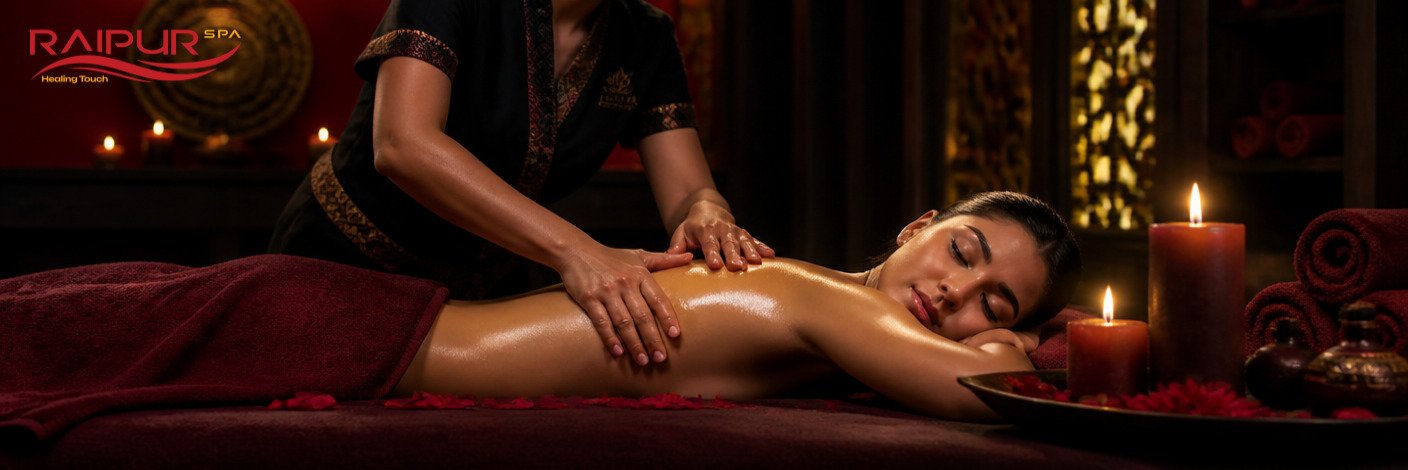
What should I expect during a Thai massage in Raipur?
A Thai massage in Raipur at a premium studio typically involves assisted stretching, rhythmic pressure, and gentle rocking along energy lines. Sessions last 60-90 minutes, performed on a mat with loose clothing. Expect improved flexibility and relaxation. Therapists are trained in traditional techniques. No oils are used, and pressure is adjusted to comfort.
Key Takeaways
- • Thai massage combines assisted stretching, acupressure, and gentle rocking.
- • Sessions are performed on a mat with loose, comfortable clothing.
- • A typical session lasts 60 to 90 minutes.
- • No oils or lotions are used, so you remain fully clothed.
- • Therapists adjust pressure and stretches to your comfort level.
- • Benefits include increased flexibility, reduced tension, and relaxation.
Thai Massage in Raipur is a fully clothed, oil-free bodywork session where a trained therapist uses rhythmic pressure, gentle stretching and supported yoga-like movements to release tension and improve flexibility. At a premium studio like Raipur SPA, a session typically lasts 60–90 minutes, starts from ₹999, and is tailored to your comfort level from gentle to firm. If you have been dealing with a stiff neck after long hours at a laptop, heaviness in your legs after driving across the city, or a lower back that feels locked by evening, this therapy is designed exactly for those everyday problems. It is not a luxury gimmick — it is structured bodywork with a clear purpose: help you move more freely and feel lighter.
Key Takeaways
- Thai massage is done on a firm mat, fully clothed, without oil — it blends acupressure, compression and assisted stretching.
- Expect a short consultation first so the therapist can adjust pressure and avoid sensitive areas.
- Sessions at Raipur SPA start from ₹999, open daily 11:00 AM to 09:00 PM.
- Wear loose, comfortable clothing; you do not need to undress for this therapy.
- Mild soreness for a day is normal — it usually fades and leaves you feeling lighter.
- Tell your therapist about injuries, pregnancy or recent surgery before the session begins.
- The 90-minute format is best for full-body stiffness; 60 minutes works well for a first visit.
- You control the pressure at all times — good therapists check in and adjust in real time.
What Thai Massage Actually Feels Like (Not What You Might Expect)
Many people assume Thai massage is either painful or just a fancy word for a regular oil massage. It is neither.
The therapist uses palms, thumbs, forearms, elbows and even feet to apply steady pressure along energy lines called sen. You stay fully clothed on a padded mat. There is no oil, so there is no slippery glide — instead, you feel firm, deliberate pressure and slow, controlled stretches. The rhythm matters as much as the force: a skilled therapist rocks your body gently between compressions, which is why the session feels flowing rather than mechanical.
If you have had a deep tissue massage before, Thai bodywork feels more like a guided stretch session combined with acupressure. Done well, it is deeply relaxing rather than aggressive. Most first-timers are surprised by how much of the session feels like assisted yoga — your therapist may lift your legs, rotate your hips, or support your back into a gentle arch while you simply breathe and let go.
Here is a simple way to picture the difference:
- Oil massage: long gliding strokes, warm oil, focus on relaxation and circulation.
- Deep tissue massage: slow, targeted pressure into specific knots and muscle layers.
- Thai massage: compression along lines, joint mobilization, and stretches that you hold for several breaths.
Because there is no oil, you never feel exposed or slippery, and you can get up and leave without needing a shower. That convenience alone makes it popular with people who book a session between work and home.
Why Thai Massage Is Gaining Popularity in Raipur
Raipur has changed. More people work desk jobs, spend hours on laptops and phones, and drive long distances across the city. The result is familiar: stiff necks, tight lower backs, heavy shoulders and a general feeling of fatigue that sleep does not fix.
Thai massage addresses this directly. Its combination of stretching and pressure works on both muscles and joints, which is why it appeals to people who sit for long hours or train at the gym. A software professional in Shankar Nagar who spends nine hours at a desk has a very different problem from a gym-goer in Devendra Nagar who lifts weights four times a week — yet both benefit from the same core approach: release tight tissue, then restore range of motion.
It is also a practical choice for first-time spa visitors. Because you remain clothed and no oil is used, it feels less intimidating than a full-body oil massage — especially if you are new to wellness therapies. Many people in Raipur try Thai massage as their very first professional bodywork session simply because it feels more comfortable and familiar.
There is another reason: results you can feel quickly. A single well-done session often improves how easily you can turn your neck or bend forward. That immediate feedback builds trust, and it is why regulars keep coming back instead of treating a spa visit as a one-time indulgence.
What to Expect at a Premium Wellness Studio
1. A Short Consultation Before You Begin
A good therapist never starts without asking questions. You will be asked about problem areas, past injuries, surgeries, pregnancy and your preferred pressure level.
This is not formality. Thai massage involves stretching, so the therapist needs to know what to avoid. Be honest — it makes the session far better. If you had a knee injury two years ago, say so. If you sit with a wallet in your back pocket all day and your hip aches, mention it. If you are recovering from a fever or feeling unusually tired, tell them.
Expect questions like:
- Where do you feel the most stiffness right now?
- Have you had any injury, surgery or fracture in the last year?
- Are you pregnant, or is there any chance you might be?
- Do you prefer lighter pressure or something firmer?
- Is there any area you would rather we avoid today?
Answering these takes two minutes and can completely change the quality of your session. A therapist who skips this step is a red flag, no matter how attractive the price looks.
2. A Calm, Clean, Private Space
At a premium studio, the room is dimly lit, quiet and temperature-controlled. You get a clean mat, fresh linens and privacy throughout. The lighting is usually warm rather than bright, and there is often soft music or complete silence, depending on your preference.
Raipur SPA in Samta Colony follows this standard — private therapy rooms, sanitised linens and a calm environment designed to help you switch off from the city's noise. Cleanliness is not a small detail in bodywork. Fresh linens, sanitised mats and clean hands protect you, and they signal that the studio takes its work seriously.
Notice small things on your first visit: Does the room smell fresh? Is the mat wiped down? Does the therapist wash their hands before starting? These details tell you more about a studio than any advertisement.
3. The Sequence of the Session
Sessions usually begin at the feet and move upward — legs, hips, back, shoulders, neck, arms and head. Each area gets a mix of compression, rocking movements and stretches.
You may be asked to lie on your back, stomach or side. The therapist will guide you through each position. Nothing is sudden; good practitioners move slowly and check in with you. If you have never had bodywork before, the transitions can feel unusual at first — your arm might be lifted and gently rotated, or your leg might be bent and pressed toward your chest. This is normal, and it is always done with your comfort in mind.
A typical sequence looks like this:
- Feet and calves: thumb pressure along the soles, stretches for the ankles.
- Legs and hips: compression along the thighs, gentle hip rotations, hamstring stretches.
- Back: palm and forearm pressure along the spine's sides, supported arching.
- Shoulders and neck: focused work on the trapezius, slow neck traction.
- Arms and hands: stretching the wrists, forearms and fingers.
- Head and face: light pressure on the scalp and temples to close the session.
The order is not random. Working from the feet upward helps the body settle before deeper back and shoulder work begins.
4. Pressure That You Control
Here is the most important thing to know: you decide the intensity. If something feels too strong, say so. If you want more pressure on your shoulders, ask.
Premium studios train therapists to adjust in real time. A session should feel like productive tension — never like pain you have to endure. The old idea that "no pain, no gain" does not apply here. When you tense up against pain, your muscles guard themselves and the therapy becomes less effective, not more.
Use simple words to communicate: "lighter," "a little more," "that's perfect," "please avoid that spot." You do not need technical language. A good therapist will read your breathing too — if you hold your breath, they will ease off.
5. How Long It Takes
Most sessions run 60 or 90 minutes. The 90-minute version allows more time for full-body stretching and is the better choice if you have widespread stiffness.
If it is your first time, start with 60 minutes. You can always go longer next visit. A 60-minute session is enough to cover the major areas, while 90 minutes lets the therapist slow down, spend more time on problem zones, and include more detailed work on the hips and shoulders.
Arrive a few minutes early so the session does not start late, and plan a relaxed hour afterward if possible. Rushing straight back into traffic undoes part of the benefit.
6. What Happens Right After
Once the session ends, you will usually be given a few minutes to lie still and breathe before getting up. Some studios offer warm water or herbal tea. Take your time standing up — your body has just been stretched and compressed, and a slow rise prevents dizziness.
Many people feel loose, warm and slightly drowsy immediately after. Others feel energized. Both are normal. Drink water through the rest of the day, and avoid heavy lifting or intense workouts for at least a few hours.
Thai Massage vs Oil Massage: Which Should You Choose?
Choose Thai massage if you want flexibility work, relief from deep muscular tightness, or a session without oil. It suits people who sit for long hours, athletes, and anyone who prefers not to undress.
Choose an oil-based therapy if you want a slower, more soothing experience focused on relaxation and skin care. Many regulars alternate between both depending on how their body feels.
Neither is better. They simply solve different problems. A useful way to decide:
- You feel stiff and restricted: Thai massage.
- You feel stressed and want to switch off: oil massage.
- You have one specific knot: deep tissue or targeted oil work.
- You want to avoid oil and showering afterward: Thai massage.
- You want a gentle first experience: Thai massage, because you stay clothed.
If you are unsure, tell the studio what you are feeling and let them recommend. Good therapists care more about matching you with the right therapy than upselling the most expensive one.
Benefits You Can Realistically Expect
- Improved flexibility and range of motion after a few sessions
- Reduced stiffness in the neck, shoulders and lower back
- Better circulation and a lighter feeling in the legs
- Lower stress levels and improved sleep quality
- Relief from tension headaches linked to tight shoulders and neck
- Greater body awareness — you notice tightness earlier and correct your posture sooner
One session helps. Consistent sessions — once or twice a month — help more. It is fair to expect that your neck will turn more easily, your lower back will feel less compressed, and your overall movement will feel smoother after a session. What it will not do is replace medical treatment for an injury or a chronic condition. Think of it as maintenance and prevention, not a cure.
Realistic expectations matter. If you have had stiffness for two years, one hour will not erase it. But most people notice a clear difference the same day, and that difference grows with regular sessions.
Who Should Avoid or Modify Thai Massage
Thai massage is generally safe, but it is not for everyone without adjustments.
Avoid or consult a doctor first if you are pregnant, have a recent fracture or surgery, suffer from osteoporosis, have a herniated disc, or experience uncontrolled high blood pressure. In these cases, gentler therapies or a modified routine are a better fit.
Other situations that need caution:
- Recent sprains or strains: work around the area, not on it.
- Varicose veins: avoid deep pressure directly over affected veins.
- Skin infections or open wounds: postpone until healed.
- Fever or acute illness: reschedule; bodywork is not appropriate when you are unwell.
- Blood thinners: mention them, since you may bruise more easily.
- Cancer treatment: get clearance from your doctor first.
Always disclose your condition during the consultation. Reputable therapists will adjust or recommend an alternative. If a studio pressures you to proceed despite a clear contraindication, walk away.
How to Prepare for Your Session
- Wear loose, comfortable clothing — track pants and a t-shirt work well
- Avoid a heavy meal within an hour of your appointment
- Arrive 10 minutes early so you can settle in without rushing
- Skip it if you have a fever or are unwell
- Keep your phone on silent once inside the room
- Avoid alcohol before your session
- Bring a hair tie if you have long hair, so it stays out of the way
- Use the washroom before you begin — you will be lying down for an hour
Small preparations make a noticeable difference. Wearing clothing that lets your legs move freely means better stretches. Skipping a heavy meal means you can lie on your stomach comfortably. Arriving early means you are not still tense from traffic when the session starts.
How Often Should You Get Thai Massage?
For general maintenance, once or twice a month is plenty. If you are dealing with persistent stiffness or recovering from intense physical activity, weekly sessions for a few weeks can help, after which you can taper down.
Listen to your body. If you feel noticeably better and your movement improves, you are on the right schedule. If you feel sore for more than two days after every session, the pressure is too strong or the frequency is too high — reduce one of them.
A practical guideline:
- Desk worker with mild stiffness: once a month.
- Active gym-goer: every two to three weeks.
- Recovering from a stiff phase: weekly for three to four weeks, then reduce.
- General wellness: once a month is enough to maintain mobility.
What It Costs in Raipur
Pricing in Raipur varies by studio, duration and therapist experience. As a reference, therapies at Raipur SPA start from ₹999, with longer or more specialised sessions priced higher.
Be cautious of unusually cheap offers. Proper training, clean facilities and skilled therapists cost money — and that difference shows up in how your body feels afterwards. A cheap session that leaves you bruised or does nothing at all is not a bargain; it is wasted time and money.
When comparing prices, ask:
- How long is the actual hands-on time?
- Are the therapists trained and experienced?
- Are the rooms private and the linens fresh?
- Is there a consultation before the session?
A studio that answers these clearly is usually worth the extra cost.
Common Mistakes First-Timers Make
Most disappointing first sessions come down to a few avoidable mistakes.
- Staying silent about pain: enduring pressure does not make the therapy better. Speak up early.
- Wearing tight jeans: they restrict movement and make stretching difficult.
- Eating a heavy meal right before: it makes lying on your stomach uncomfortable.
- Booking a long session on the first visit: 60 minutes is plenty; 90 can feel long if you are new.
- Rushing back to work immediately: give yourself a buffer to enjoy the effects.
- Hiding medical history: it puts you at risk and limits what the therapist can safely do.
Avoid these and your first experience will almost certainly be a good one.
Frequently Asked Questions
What is Thai massage and how is it different from regular massage?
Thai massage is a fully clothed, oil-free therapy that combines acupressure, compression and assisted stretching on a mat. Regular oil massage focuses on gliding strokes with oil, while Thai bodywork focuses more on pressure points and flexibility.
Do I need to remove my clothes for Thai massage?
No. You remain fully clothed throughout the session, which is one reason many first-timers prefer it. Loose, comfortable clothing is ideal so the therapist can move your limbs freely.
Is Thai massage painful?
It should not be painful. You will feel firm pressure and deep stretches, but the intensity is always within your control. Tell your therapist if anything feels uncomfortable and they will adjust immediately.
How long does a Thai massage session last?
Most sessions are 60 or 90 minutes. First-timers usually start with 60 minutes, while the 90-minute format allows more thorough full-body stretching.
How much does Thai massage cost in Raipur?
Prices depend on the studio and duration, but therapies at Raipur SPA start from ₹999. Premium studios charge more for trained therapists, private rooms and longer sessions.
Who should not get a Thai massage?
Pregnant women, people with recent fractures or surgeries, osteoporosis, herniated discs or uncontrolled blood pressure should consult a doctor first. In many cases, a gentler modified therapy is a safer option.
Will I feel sore after a Thai massage?
Mild soreness for a day is normal, similar to how you feel after a good workout. It usually fades within 24 hours and leaves you feeling lighter. If soreness lasts more than two days, the pressure was too strong — mention it next time.
Can I get a Thai massage if I am pregnant?
Not without medical clearance. Pregnancy requires modified positioning and gentler techniques, and many studios will recommend a prenatal-appropriate therapy instead. Always consult your doctor and inform the therapist before booking.
Final Thoughts
Thai massage is one of the most effective ways to undo the stiffness that builds up from desk work, long commutes and everyday stress. It is not about enduring pressure — it is about restoring movement and helping your body feel lighter.
If you are ready to try it in Raipur, book a session at Raipur SPA in Samta Colony. Open daily from 11:00 AM to 09:00 PM, with therapies starting from ₹999. Call or WhatsApp +91 7987 303 127 to check availability and reserve your slot.
Frequently Asked Questions
What should I wear for a Thai massage in Raipur?
Wear loose, comfortable clothing that allows easy movement. Most premium studios provide loose pants and a top if needed. Avoid tight jeans or restrictive garments.
Is Thai massage painful?
Thai massage should not be painful. You may feel deep stretching or pressure, but it should be within your comfort. Communicate with your therapist to adjust intensity.
How long does a Thai massage session last?
Sessions typically range from 60 to 90 minutes, with 90 minutes being common for a full-body routine. Some studios offer 120-minute extended sessions.
Do I need to be flexible for Thai massage?
No, you do not need to be flexible. The therapist adapts stretches to your current range of motion. Flexibility can improve over time with regular sessions.
What are the benefits of Thai massage?
Thai massage can help improve flexibility, reduce muscle tension, and promote relaxation. It may also enhance circulation and body awareness. Results vary by individual.
How often should I get a Thai massage?
Frequency depends on your goals and lifestyle. Some people benefit from weekly sessions, while others prefer monthly. Consult with your therapist for a personalized schedule.
Book Your Session
Book Your SessionPeople Also Ask
Related Articles
Massage Therapy
Full Body Massage in Raipur: Swedish vs Deep Tissue vs Aroma Therapy
12 min read · 06 Oct 2026
Massage Therapy
Back Pain Relief in Raipur: How Deep Tissue & Hot Stone Massage Help
12 min read · 06 Oct 2026
Massage Therapy
Post-Workout Recovery Massage in Raipur: Reduce Soreness Fast
14 min read · 05 Oct 2026
Enjoyed This Article?
Stop reading about relaxation — come experience it firsthand at Raipur SPA.