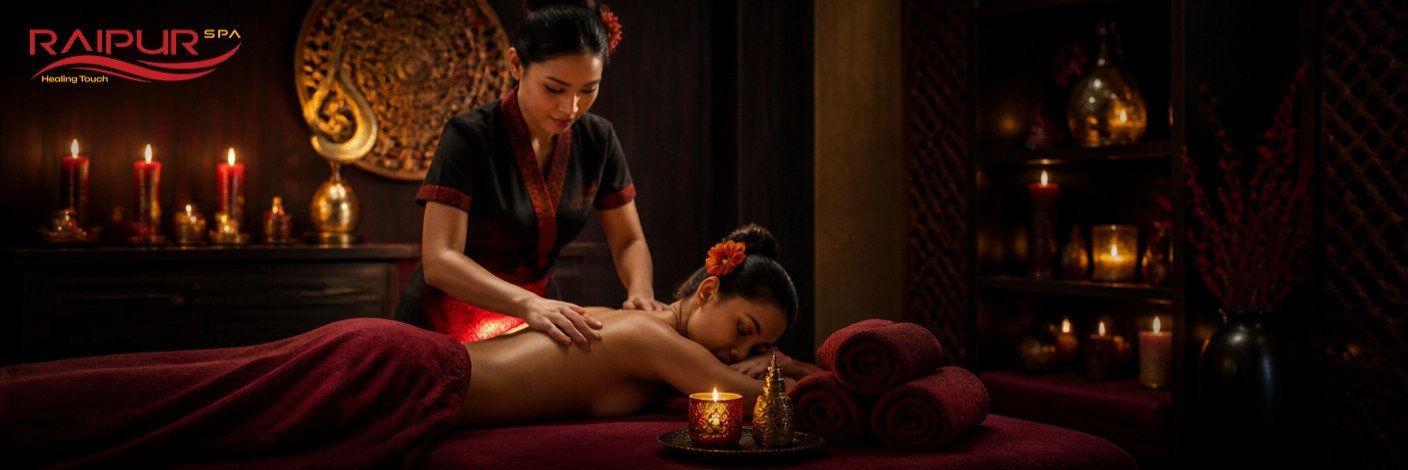
How do I choose the right essential oils for aromatherapy during a spa day in Raipur?
Choose essential oils based on your goal and scent preference. Lavender and chamomile suit relaxation, peppermint and eucalyptus feel refreshing, and citrus oils lift mood. Ask your Raipur spa therapist about dilution, patch-test on skin, and avoid strong oils if pregnant or sensitive. Confirm the spa uses quality oils and lets you smell options before your session begins.
Key Takeaways
- • Match the oil to your goal: lavender for calm, citrus for energy, eucalyptus for freshness.
- • Always ask about dilution ratios and request a patch test before use.
- • Smell two or three options before your session to confirm personal preference.
- • Avoid strong oils during pregnancy or with sensitive skin unless cleared by a professional.
- • Ask the spa whether oils are pure or blended, since this affects scent strength.
- • Request a lighter oil if you are prone to headaches or migraines.
Aromatherapy in Raipur means using concentrated plant oils — lavender, eucalyptus, lemongrass, sandalwood and more — during your spa session to shift your mood, calm your nervous system and deepen relaxation. Choosing the right oil depends on what your body needs that day: rest, relief from aches, clearer breathing, or simply a lift in energy.
Key Takeaways
- Pick your oil by intention, not by smell alone — calm, relief, focus or energy.
- Lavender suits most people and is the safest first choice for a relaxing massage.
- Eucalyptus and peppermint help with congestion and heavy, tired muscles.
- Citrus oils like lemongrass and orange lift mood but can make skin sun-sensitive.
- Always tell your therapist about allergies, pregnancy or sensitive skin before oils are blended.
- A quality spa dilutes oils properly — never apply undiluted essential oil to skin.
Why Scent Changes Your Entire Spa Experience
Smell reaches the brain faster than touch or sound. A single breath of lavender can slow your heart rate before the massage even begins. That is not poetry — it is anatomy. Olfactory nerves connect almost directly to the limbic system, the part of the brain handling emotion and memory. Unlike the other senses, which route through the thalamus first, scent takes a shortcut straight into the areas that govern mood, stress response and long-term memory. That is why a familiar fragrance can pull up a memory from twenty years ago in an instant, and why a well-chosen oil can settle your mind before your therapist has even warmed the oil.
In a city like Raipur, where summer heat and traffic noise follow you indoors, scent becomes a shortcut to calm. Your therapist can use it to signal your body that the next sixty minutes belong to you. Think of the diffuser running in the reception area, the faint trace of eucalyptus in the corridor, the moment the bowl of essential oils is presented to you — each of these is a small cue telling your nervous system to downshift.
There is also a physical layer beyond the scent itself. During massage, diluted essential oils absorb slowly through the skin while the therapist's hands work them into tired muscles. The warmth of the oil, the friction of the strokes and the rising aroma combine into a single experience. This is why the same oil can feel different on a cool winter morning in Raipur than on a humid July afternoon.
This is why we treat oil selection as a real conversation at Raipur SPA, not a menu item you skim past. The right oil makes a good massage feel exceptional. The wrong one can leave you restless or irritated — too sweet, too sharp, or simply not what your body wanted that day.
How to Choose Your Essential Oil by Intention
Forget browsing a list of twenty fragrances. Start with one question: what do you want to feel when you walk out? Answer that honestly and the shortlist becomes obvious. Below are the four most common intentions we see at our Samta Colony studio, with practical guidance on each.
If you want deep calm and better sleep
Lavender is the workhorse here, and it earns its reputation. It pairs beautifully with chamomile, bergamot or vetiver. Choose this blend for evening appointments or if you have been sleeping poorly. Lavender is one of the most studied essential oils in the world, and its gentle profile means it rarely overwhelms even people who usually dislike strong fragrances.
Sandalwood works well for people who find floral scents too sweet. It is warm, grounding and popular in Indian wellness traditions for a reason — it has been used in meditation and ritual for centuries, and the association itself adds a layer of calm. If you want a slightly richer experience, ask for sandalwood with a touch of vetiver; the earthy base note keeps the blend from feeling heavy.
For people who carry tension in the jaw and shoulders, a lavender-chamomile blend paired with slow, deliberate strokes works better than a strong fragrance. The goal is not to be overpowered by scent but to let it sit quietly in the background while your body unwinds.
If your body is sore and heavy
Eucalyptus, peppermint and rosemary are your allies. They feel cool and expansive, which helps when muscles are tight from desk work or long drives. A deep tissue session with a eucalyptus blend feels like a reset button — the cooling sensation on the skin, the clearing effect on the breath, and the deep pressure all work together.
Rosemary deserves a special mention for anyone who sits at a desk all day. It has a slightly camphor-like sharpness that many people find clarifying, and it pairs well with peppermint for a blend that feels both cooling and stimulating. If you often leave work with a stiff neck and a foggy head, this combination is worth trying.
Avoid peppermint if you have very sensitive skin — ask for a milder dilution. Peppermint can also feel intense near the eyes and on the face, so it is best reserved for back, shoulder and leg work rather than a facial.
If you feel foggy or low on energy
Citrus oils — lemongrass, sweet orange, grapefruit — wake up the senses quickly. They are excellent for morning appointments or a mid-week slump. Lemongrass in particular has a bright, almost lemony-green sharpness that many people find refreshing without being cloying.
One caution: citrus oils can increase skin sensitivity to sunlight. If you are booking a daytime massage and heading straight out into Raipur's afternoon sun, mention it so your therapist can adjust the blend or use a lower concentration. This is not a reason to avoid citrus — it is simply a detail worth flagging during your consultation.
If you want an energy lift without the sun-sensitivity concern, ask about a blend built on rosemary and a light touch of grapefruit, or request that citrus oils be used in the diffuser rather than on the skin.
If you are congested or seasonal allergies are bothering you
Eucalyptus, tea tree and camphor-based blends clear the sinuses and make breathing easier. A steam-assisted facial or a chest-friendly massage with these oils can feel genuinely therapeutic, especially during Raipur's dusty months or when the weather shifts between seasons.
Tea tree is a useful addition when the goal is clearing and cleansing, but its scent is medicinal and strong. Ask for it in a lower proportion, balanced with lavender or lemon, so it does not dominate the blend.
Skip strong eucalyptus if you have asthma without checking with your doctor first. Similarly, if you are prone to headaches from strong smells, ask for a gentler diffusion rather than a direct application.
Essential Oil Pairings That Work Well Together
Good blends follow a simple logic: one base note to ground, one middle note to comfort, one top note to lift. Here are combinations our therapists return to often.
- Lavender + bergamot + cedarwood — soft, sleep-friendly, ideal for a late session.
- Eucalyptus + peppermint + rosemary — cooling and clearing, best for tired muscles.
- Lemongrass + sweet orange + ginger — bright and warming, good for sluggish mornings.
- Sandalwood + jasmine + ylang-ylang — rich and romantic, a favourite for couples.
- Tea tree + lemon + lavender — clean and clarifying, useful for oily or breakout-prone skin.
You do not need to memorise these. Tell your therapist your goal and they will build something close to it. What matters is the balance: a blend that is all top notes feels sharp and fleeting, while one that is all base notes can feel heavy and flat. A good therapist adjusts the proportions based on your feedback during the consultation.
If you have a favourite fragrance from home — say, the smell of your grandmother's sandalwood soap — mention it. Personal associations often make a blend feel more grounding than any textbook recommendation.
Carrier Oils Matter as Much as the Essential Oil
Essential oils are never used neat. They are diluted in a carrier oil, and that carrier shapes how the massage feels on your skin. The typical dilution for a full-body massage is around 1 to 3 percent essential oil in carrier oil, which means the carrier is doing most of the physical work.
Coconut oil absorbs fast and suits Raipur's humid months. Sesame oil is heavier and warming — lovely in winter, when the skin is drier and the weather calls for something richer. Jojoba and sweet almond are lighter and better for sensitive or acne-prone skin. Mustard oil, though common in traditional Indian massage, is warming and pungent; many modern spas prefer lighter carriers for a more neutral fragrance base.
If you have a nut allergy, say so clearly; almond oil is common in spa menus, and cross-contamination is a real concern in shared preparation areas. A well-trained therapist will always confirm your carrier preference before the session starts, and a good spa will keep separate bottles and tools for clients with known allergies.
Carrier oils also affect how the essential oil releases its scent. A heavier carrier holds the aroma closer to the skin, while a lighter one lets it rise more freely. If you want a subtle, intimate fragrance, a richer carrier works well; if you want the scent to fill the room, a lighter carrier paired with a diffuser is better.
Safety: What Every First-Timer Should Know
Aromatherapy is gentle, but it is not risk-free. A few sensible rules keep it that way.
- Patch test first. A drop of diluted oil on the inner wrist, twenty minutes before, tells you plenty. If the area reddens, itches or tingles, ask for a different blend.
- Pregnancy needs care. Some oils, including rosemary and certain clary sage blends, are best avoided. Always inform your therapist early — ideally when you book, not when you arrive.
- Skin conditions. Eczema, psoriasis or recent waxing means gentler, lower-dilution blends. Avoid strong citrus and peppermint on freshly waxed or exfoliated skin.
- Children and elders need lower concentrations, not the same blend as an adult. A blend that feels mild to you may be intense for a child or an older person with thinner skin.
- Never ingest essential oils sold for massage. They are for external use only. Keep bottles away from children at home too.
- Store oils properly. Essential oils degrade with heat and light. A spa that stores its bottles in a cool, dark place is telling you something about its standards.
Honest disclosure is not awkward — it is what lets your therapist do their best work. If you are unsure whether something matters, mention it anyway. A good therapist would rather adjust the blend than have you leave uncomfortable.
Where to Experience Aromatherapy in Raipur
Raipur has no shortage of massage studios, but oil quality varies widely. Synthetic fragrance oils cost a fraction of true essential oils and smell sharper and flatter — they may last longer on the skin but lack the subtle complexity of real plant oils. If a spa cannot tell you what is in the blend, that is worth noticing.
Ask a few simple questions before you book: Are the oils pure essential oils or fragrance oils? Are blends prepared fresh or pre-mixed in bulk? What is the dilution ratio? A spa that answers these comfortably is usually one that takes its craft seriously.
At Raipur SPA in Samta Colony, Raipur, every aromatherapy blend is prepared fresh and matched to your intention for the day. Therapies start from ₹999, and we are open daily from 11:00 AM to 09:00 PM — convenient whether you are squeezing in a lunch-hour session or unwinding after work.
Ask for the oil menu when you arrive. Smell two or three options. Your nose usually knows before your mind does. And if you are booking for two — a couple's session, a mother-daughter afternoon — let us know in advance so the blends can be prepared to suit both people.
Making Your Choice in Under Two Minutes
Still undecided? Use this quick filter.
- Stressed and sleepless → lavender or sandalwood.
- Aching from desk or gym → eucalyptus or peppermint.
- Low energy, dull mood → lemongrass or sweet orange.
- Blocked nose, heavy head → eucalyptus or tea tree.
- Date night or anniversary → sandalwood, jasmine or ylang-ylang.
- First time, unsure → lavender. It rarely disappoints.
And if you change your mind halfway through the consultation, that is completely fine. The blend should serve you, not the other way around. Many regulars switch oils seasonally — cooling eucalyptus in the hot months, warming sesame-based blends in winter — and that is exactly the right way to use aromatherapy as a living practice rather than a fixed menu.
Frequently Asked Questions
What is aromatherapy and how does it work in a spa?
Aromatherapy uses diluted essential oils, applied through massage or diffused into the air, to influence mood and relaxation. The scent travels to the brain's emotional centre, while the oil absorbs through skin during massage.
Which essential oil is best for a first aromatherapy session?
Lavender is the safest starting point — it is well tolerated, calming and pairs with almost everything. If you prefer something warmer, sandalwood is a gentle alternative.
Can I choose my own essential oil at Raipur SPA?
Yes. You can smell a few options and pick what appeals to you, or describe your goal and let the therapist recommend a blend. Either way, allergies and skin sensitivities are checked first.
Is aromatherapy safe during pregnancy?
Some oils are safe at low dilution, but several — including rosemary and certain clary sage blends — should be avoided. Always tell your therapist you are pregnant so they can adjust the blend or skip aromatherapy entirely.
How long does the effect of aromatherapy last?
The calming effect typically lasts a few hours after your session, and regular visits can build a longer-lasting sense of calm. Sleep quality often improves the same night.
Do essential oils cause allergies or skin reactions?
Reactions are uncommon when oils are properly diluted, but they can happen. A patch test before your massage is the simplest way to check, especially if you have sensitive skin.
Can I bring my own essential oil to a spa session?
Many spas, including ours, are happy to accommodate this if the oil is genuine and the bottle is labelled. Tell your therapist what it is and how it has been stored. Bringing your own oil is a good option if you have a fragrance you associate with relaxation or if you have had reactions to other blends before.
How do I know if a spa is using real essential oils?
Real essential oils usually smell layered and slightly complex, and the scent fades gradually rather than hitting you sharply and then vanishing. Ask directly whether the oils are pure essential oils or fragrance oils, and whether blends are prepared fresh. A spa that answers clearly and without hesitation is usually trustworthy.
Final Word
Choosing an essential oil is less about finding the "best" one and more about matching scent to what your body is asking for. Calm, relief, energy, clarity — each has an oil that does the job well. The best session is the one where you leave feeling that the hour was designed for you, not selected from a standard list.
Book your aromatherapy session at Raipur SPA by calling or messaging +91 7987 303 127 on WhatsApp. Tell us how you want to feel when you leave, and we will take care of the rest.
Frequently Asked Questions
Which essential oil is best for relaxation during a spa massage in Raipur?
Lavender and chamomile are commonly chosen for relaxation because of their soft, calming scent. Tell your therapist your preference so they can adjust the blend and strength.
Can I bring my own essential oil to a spa in Raipur?
Many spas allow this, but policies vary, so call ahead and confirm. Bring a sealed, labeled bottle and mention any allergies before the session.
Are essential oils safe for sensitive skin?
Diluted oils are generally used in spa treatments, but sensitivity varies by person. Request a patch test and inform your therapist about allergies or skin conditions.
How long before a spa appointment should I choose my oil?
Choose at the start of your visit, usually during consultation, so the therapist can prepare the blend. Arriving 10 to 15 minutes early gives you time to smell options.
Do aromatherapy oils help with stress?
Aromatherapy is used for relaxation and ambiance, not medical treatment. Many guests find familiar, pleasant scents make the experience more calming.
What should I avoid if I am pregnant and booking aromatherapy in Raipur?
Consult your doctor first and inform the spa about your pregnancy. Some spas offer gentler blends or skip aromatherapy entirely for expectant guests.
Book Your Session
Book Your SessionPeople Also Ask
Related Articles
Health & Wellness
Pregnancy-Safe Spa Treatments in Raipur: What Expecting Mothers Should Know (2027 Guide)
14 min read · 22 Nov 2026
Health & Wellness
Detox Body Wraps and Cleansing Treatments at Raipur Spas (2027 Guide)
14 min read · 22 Nov 2026
Health & Wellness
How to Relieve Joint and Muscle Pain with Ayurvedic Spa Therapy in Raipur (2027 Guide)
11 min read · 22 Nov 2026
Enjoyed This Article?
Stop reading about relaxation — come experience it firsthand at Raipur SPA.