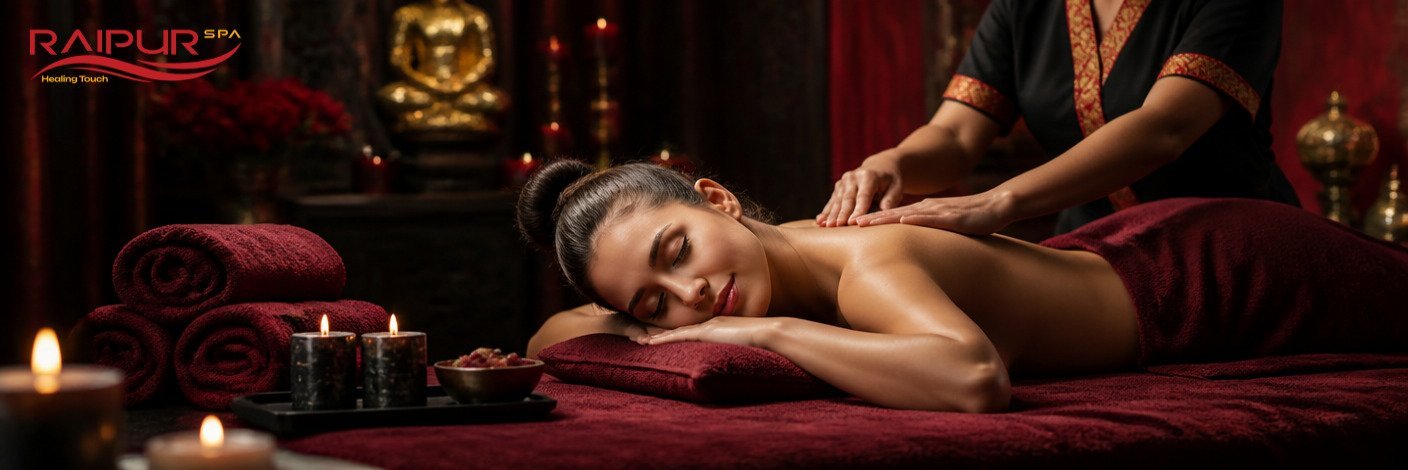
Which essential oils are best for relaxation and better sleep in aromatherapy?
Lavender, chamomile, and sandalwood are commonly used in aromatherapy for relaxation and sleep support. Lavender is the most studied for calming effects, while chamomile and vetiver are popular for winding down at night. Oils are typically used via diffusers, massage blends, or pillow sprays, always diluted before skin contact.
Key Takeaways
- • Lavender is the most widely used essential oil for relaxation and sleep support.
- • Chamomile, sandalwood, and vetiver are popular calming alternatives to lavender.
- • Essential oils should always be diluted in a carrier oil before skin application.
- • Diffusion and pillow sprays are simple ways to use oils at home.
- • Aromatherapy works best as part of a consistent bedtime routine.
- • Professional spa sessions in Raipur often combine aromatherapy with massage for deeper relaxation.
Aromatherapy in Raipur: Essential Oils for Relaxation and Better Sleep
Aromatherapy in Raipur means using pure plant essential oils through massage, diffusion or inhalation to calm the nervous system, ease stress and improve sleep quality. At a professional spa, a trained therapist blends oils like lavender, chamomile and sandalwood to suit your body and mood, helping you relax deeply and rest better.
Key Takeaways
- Aromatherapy uses concentrated plant oils to support relaxation, mood and sleep — it is a complementary practice, not a medical treatment.
- Lavender, chamomile, sandalwood and bergamot are the most reliable oils for calming the mind and preparing the body for sleep.
- Always use essential oils diluted in a carrier oil; never apply them neat to the skin.
- An evening session with slow massage strokes and calming oils works best for sleep-related concerns.
- In Raipur, professional aromatherapy sessions start from ₹999, and a good spa will tailor the blend to your needs.
- Consistency matters more than intensity — a weekly ritual often helps more than a single long session.
Why Aromatherapy Makes Sense for Raipur Residents
Raipur has grown quickly. Traffic on the main roads, long work hours, screens late into the night and the dry summer heat all add up. Many people here sleep late, wake up tired and carry a low hum of stress through the day.
Think about a typical weekday for someone living between Shankar Nagar and Telibandha. The morning starts with a rushed commute, the afternoon disappears into meetings or household work, and by 10 PM the only quiet moment is a phone screen in a dark room. That blue light and mental stimulation push melatonin later, so sleep gets shorter and lighter. Over weeks, the body forgets what deep rest feels like.
Aromatherapy offers something simple and drug-free: a way to signal to your body that it is safe to slow down. Scent travels directly to the limbic system, the part of the brain tied to emotion and memory. That is why a familiar calming fragrance can settle your breathing before you have even consciously decided to relax.
There is also a cultural comfort to it. Many Indian households already know the smell of camphor, sandalwood paste, incense and warm sesame oil. Aromatherapy is not an alien import — it is a more structured, safer version of rituals our grandmothers used. That familiarity makes it easier to build into daily life here.
It is not a cure for insomnia or anxiety. Think of it as a supportive ritual — one that works best alongside good sleep habits, movement and, when needed, professional medical advice.
How Essential Oils Actually Work on the Body
Essential oils are highly concentrated plant extracts. When you inhale them, molecules reach the olfactory nerve and then the limbic system. When they are massaged into the skin (always diluted), some compounds absorb slowly while the scent continues to work through inhalation.
The result is usually subtle but real: slower breathing, looser muscles, a quieter mind. Many people notice the difference most clearly after a full session rather than a quick sniff, because touch and scent reinforce each other.
It helps to understand the two pathways separately, because they suit different situations.
Inhalation vs. topical use
Inhalation gives quick, short-lived calm — useful before bed or during a stressful afternoon. A drop on a tissue, a diffuser in the bedroom or a pillow mist all work through this route. The effect arrives within a minute or two and fades within an hour or so.
Topical use through massage gives slower, longer-lasting relaxation and also eases muscle tension. The oil is absorbed through the skin while the therapist's hands work on tight shoulders and a stiff lower back. This is why a massage feels more complete than simply smelling an oil — you are calming the body and the mind at the same time.
A good aromatherapy session combines both. You smell the blend as it is prepared, feel it on your skin during the massage, and continue to inhale traces of it as you drift off afterwards.
Why the quality of the oil matters
Not all bottles labelled "essential oil" are equal. Cheap versions are often diluted with synthetic fragrance or a cheap carrier, which means you get the smell but not the plant compounds. A pure oil lists the botanical name (for example, Lavandula angustifolia), has a batch number and is sold in a dark glass bottle. If a spa cannot tell you where its oils come from, that is a warning sign.
The Best Essential Oils for Relaxation and Better Sleep
Not every oil suits every person. Scent is personal, and what feels soothing to one person can feel heavy to another. Still, a few oils have strong traditional and research-backed reputations for calm.
Lavender
The most studied oil for sleep and the safest starting point. Its soft floral scent lowers arousal and helps people fall asleep faster. If you are new to aromatherapy, begin here. A few drops on the pillowcase or a 2% blend for a shoulder massage is enough. Lavender also blends well with almost everything, so it is a good base for a custom mix.
Roman Chamomile
Gentle, apple-sweet and especially good for people who feel restless or irritable at night. It pairs beautifully with lavender in a diffuser blend. Roman chamomile is milder than German chamomile and better suited to sleep and stress, while German chamomile is more often used for skin and inflammation.
Sandalwood
Warm and woody, and deeply grounding. Sandalwood is a favourite in Indian wellness traditions and works well for people who find floral scents too light or sweet. It is also one of the more expensive oils, so a little goes a long way. A single drop blended with a carrier oil can transform a massage.
Bergamot
A citrus oil that lifts mood without being stimulating. Useful if your sleeplessness comes from an overactive, worried mind rather than physical tension. Bergamot is a good choice for the late afternoon or early evening, when you want to shift out of work mode without feeling drowsy. Note that it is phototoxic — avoid strong sun on treated skin for 12 hours.
Ylang Ylang and Vetiver
Ylang ylang is floral and sensual, often used in couples massage. Vetiver is earthy and heavy — a small amount can be very settling for people who struggle to switch off. Both are strong, so use them sparingly; too much ylang ylang can cause headaches, and vetiver can overpower a blend if you are not careful.
Frankincense
Resinous and steadying. It is a good choice for slow, meditative breathing and for anyone who wants a quieter, less sweet aroma. Frankincense works well in a diffuser during evening reading or gentle stretching, and it pairs nicely with sandalwood for a grounding, almost meditative blend.
Other oils worth knowing
Clary sage can help with hormonal restlessness, particularly around monthly cycles. Sweet marjoram is warming and soothing for tight muscles. Neroli is expensive but wonderfully calming for anxious minds. Cedarwood is a budget-friendly alternative to sandalwood with a similar dry, woody character.
How a Professional Aromatherapy Session Works
A proper session begins with a short conversation. Your therapist asks about your sleep, stress levels, any allergies and what scents you enjoy or dislike. From there, a blend is created — usually two to four oils in a carrier like sesame, coconut or jojoba.
For sleep support, the massage tends to be slow and rhythmic, with long strokes and gentle pressure on the shoulders, back, neck and scalp. Fast, deep tissue work is better for muscle pain; for relaxation, slower is almost always better.
Many guests at Raipur SPA in Samta Colony choose an evening slot for exactly this reason — going straight home to bed after a calming session helps the effect last through the night.
What happens step by step
- Consultation: A brief chat about your sleep pattern, stress, health conditions and scent preferences.
- Blend creation: The therapist selects two to four oils and mixes them in a carrier oil, often letting you smell the blend before use.
- Preparation: A patch test on the inner arm if you have sensitive skin, then settling onto a clean, warm massage table.
- The massage: Slow strokes on the back, shoulders, neck and scalp, with steady breathing cues and dim lighting.
- Wind-down: A few minutes of quiet rest with a warm towel, a glass of water and no rush to leave.
A session usually lasts 45 to 75 minutes. Do not plan to run errands immediately afterwards — the point is to carry that calm state home with you.
Building a Simple Aromatherapy Routine at Home
You do not need a spa visit every week to benefit. A few small habits make a difference.
- Diffuse for 20–30 minutes before bed rather than all night. Three to four drops in water is enough.
- Dilute before skin use. A safe starting ratio is roughly 1–2% essential oil in a carrier oil, which means about 6–12 drops per 30 ml.
- Keep a pillow mist. Ten drops of lavender in 100 ml of water, shaken well, sprayed lightly on the pillowcase.
- Pair scent with routine. Use the same oil every night at the same time; your brain starts linking that smell with sleep.
- Store oils dark and cool. Heat and light degrade them, and Raipur summers are not kind to a bottle left on a windowsill.
A sample week of aromatherapy
If you want a structure to follow, try this gentle rhythm:
- Monday: Lavender pillow mist at bedtime to ease into the week.
- Wednesday: A 20-minute diffuser session with bergamot and lavender after work, while you unwind.
- Friday: A warm sesame oil foot massage with two drops of sandalwood before bed.
- Sunday: A professional aromatherapy session, or a longer home ritual with a bath and diffuser.
Making it work in a small apartment
Many homes in Raipur have one main bedroom and a shared living space, so a full diffuser can scent the whole house. In that case, use a smaller diffuser in the bedroom, or simply place a drop on a cotton ball near the pillow. If you share a room with someone who dislikes strong smells, a pillow mist on your side of the bed is a polite compromise.
Safety Notes You Should Not Skip
Essential oils are potent. Never swallow them, never apply them undiluted, and keep them away from the eyes and broken skin. Pregnant women, children, people with asthma and anyone on medication should check with a doctor first.
Do a patch test on the inner forearm 24 hours before a full massage, especially with citrus oils, which can make skin sensitive to sunlight. If a scent gives you a headache, trust that reaction and choose something else.
A few more practical cautions:
- Keep bottles out of reach of children and pets; some oils are toxic to cats and dogs.
- Do not add essential oils to drinking water or food unless a qualified practitioner advises it.
- Avoid using strong oils on the face or near the eyes; keep them to the body and pillow.
- If you have a skin condition like eczema or psoriasis, ask your dermatologist before regular use.
- Stop using an oil if you notice redness, itching or irritation, and wash the area with a carrier oil, not water.
Choosing the Right Spa for Aromatherapy in Raipur
Ask three questions before you book. First, are the oils pure and properly stored? Second, will the therapist customise the blend or use a fixed one? Third, is the environment genuinely quiet — dim lighting, soft music, no phone chatter at the reception?
Price is a useful filter too. In Raipur, aromatherapy therapies typically start from ₹999, and reputable spas are open daily from 11:00 AM to 09:00 PM. A spa that explains its oils clearly and asks about your preferences before the session is usually the one worth returning to.
Red flags to watch for
- Oils stored in clear plastic bottles or left in direct sunlight.
- A therapist who cannot name the oils in a blend.
- Pressure to buy a package before you have tried a single session.
- A rushed consultation with no questions about allergies or health.
- Strong-smelling incense or air fresheners that mask the actual oils.
Frequently Asked Questions
What is aromatherapy and how does it help with sleep?
Aromatherapy uses diluted plant essential oils through inhalation or massage. Calming oils like lavender and chamomile help lower physical and mental arousal, which makes it easier to fall asleep and stay asleep.
Which essential oil is best for relaxation in Raipur's climate?
Lavender is the safest all-round choice, while sandalwood and vetiver feel grounding in the heat. In summer, lighter blends with bergamot or chamomile tend to feel more comfortable than heavy, sweet oils.
How much does an aromatherapy session cost in Raipur?
Professional aromatherapy therapies in Raipur start from ₹999, with prices rising for longer durations or premium oil blends. Most spas are open daily between 11:00 AM and 09:00 PM.
Can I use essential oils directly on my skin?
No. Essential oils should always be diluted in a carrier oil before touching the skin. A 1–2% dilution is a safe starting point for adults, and a patch test is advisable.
How often should I get an aromatherapy massage for better sleep?
Once a week or once a fortnight works well for most people, supported by simple home habits like diffusing lavender before bed. Consistency matters more than session length.
Is aromatherapy safe during pregnancy?
Some oils are not recommended during pregnancy, so always consult your doctor first. A trained therapist can suggest a safe, gentle blend once you have medical clearance.
Can aromatherapy replace medication for insomnia or anxiety?
No. Aromatherapy is a complementary practice that supports relaxation; it does not treat medical conditions. If sleep problems persist for more than a few weeks or affect your daily functioning, speak to a doctor.
What is the best time of day for an aromatherapy session?
For sleep support, the evening is best — ideally a few hours before bed so you can go home and wind down. For stress relief, a late afternoon or early evening slot helps you transition out of work mode.
Final Thoughts
Good sleep rarely comes from one big fix. It comes from small, repeated signals that tell your body the day is over — dim lights, a warm shower, a familiar scent. Aromatherapy fits neatly into that routine, and a professional session can give you a strong start.
If you would like to try a customised blend for relaxation or better sleep, Raipur SPA offers aromatherapy therapies from ₹999, open daily from 11:00 AM to 09:00 PM. To book your slot, call or WhatsApp +91 7987 303 127.
Frequently Asked Questions
What is aromatherapy and how does it work?
Aromatherapy uses concentrated plant oils, called essential oils, inhaled or applied diluted to the skin. The scent is believed to influence mood and relaxation through the sense of smell. It is generally used as a complementary wellness practice, not a medical treatment.
Which essential oil is best for sleep?
Lavender is the most commonly recommended oil for sleep support. Chamomile and sandalwood are also popular choices for evening routines. Individual preferences vary, so trying a few scents can help you find what feels most calming.
Can I use essential oils directly on my skin?
Most essential oils should be diluted in a carrier oil such as jojoba or coconut oil before skin contact. Undiluted oils can cause irritation for some people. A patch test on a small area is a sensible first step.
How do I use aromatherapy for better sleep at home?
Add a few drops of a calming oil to a diffuser in the bedroom before bedtime, or use a diluted blend in a pillow spray. Keeping the routine consistent helps signal wind-down time. Avoid strong scents if you are sensitive to fragrance.
Is aromatherapy available in Raipur spas?
Yes, several premium spas in Raipur offer aromatherapy treatments, often combined with massage. Sessions typically let you choose a preferred oil blend for relaxation. It is worth confirming the oils used and any allergies beforehand.
Are there any precautions with essential oils?
Essential oils are not recommended for ingestion unless supervised by a qualified professional. Pregnant women, children, and people with sensitive skin or respiratory conditions should consult a healthcare provider first. Keep oils away from pets and store them out of sunlight.
Book Your Session
Book Your SessionPeople Also Ask
Related Articles
Health & Wellness
Ayurveda Spa Treatments in Raipur 2027: Ancient Rituals, Modern Luxury
13 min read · 23 Nov 2026
Health & Wellness
Pregnancy-Safe Spa Treatments in Raipur: What Expecting Mothers Should Know (2027 Guide)
14 min read · 22 Nov 2026
Health & Wellness
Detox Body Wraps and Cleansing Treatments at Raipur Spas (2027 Guide)
14 min read · 22 Nov 2026
Enjoyed This Article?
Stop reading about relaxation — come experience it firsthand at Raipur SPA.