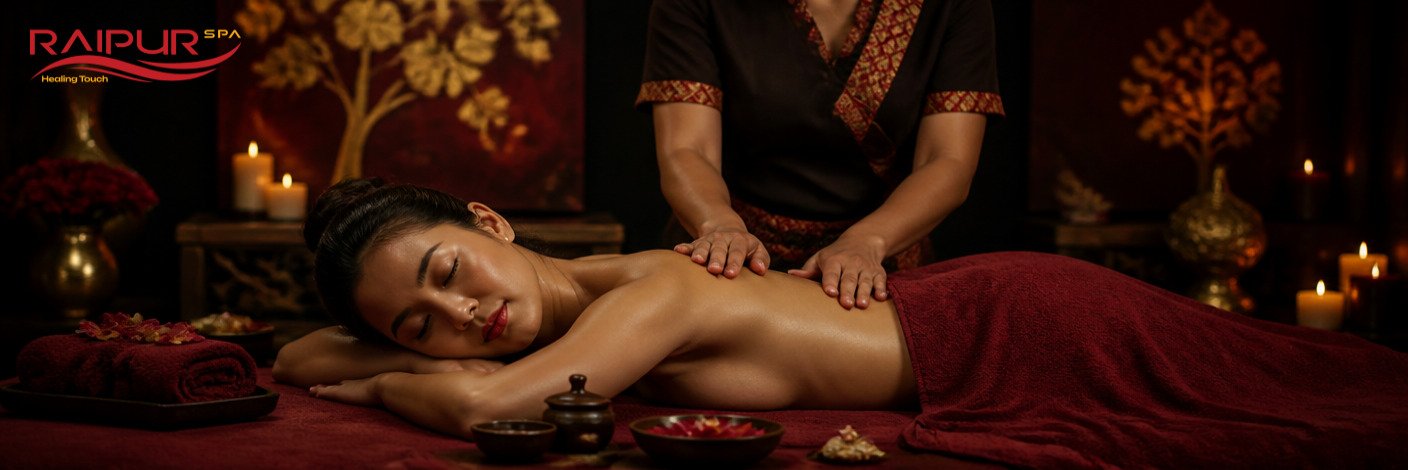
What is the best massage for office workers in Raipur?
Deep tissue massage is highly effective for office workers in Raipur who experience muscle tension from prolonged sitting and screen use. This technique targets deep layers of muscle and connective tissue to relieve chronic pain, improve posture, and reduce stress. Regular sessions can help alleviate back, neck, and shoulder discomfort, enhancing overall well-being and productivity.
Key Takeaways
- • Deep tissue massage targets chronic muscle tension common in office workers.
- • It can alleviate pain in the neck, shoulders, and lower back from prolonged sitting.
- • Regular sessions improve posture and reduce stress levels.
- • This massage uses slow, firm strokes to reach deeper muscle layers.
- • It is recommended to communicate with your therapist about pressure preferences.
- • Hydration and rest after the session enhance recovery and benefits.
If you're an office worker in Raipur dealing with stiff shoulders, a tight lower back, or that nagging neck pain from hunching over a laptop, deep tissue massage might be exactly what you need. This guide explains how deep tissue massage works, why it's perfect for desk-bound professionals, and how to get the most out of your session at Raipur SPA in Samta Colony.
Key Takeaways
- Deep tissue massage targets chronic tension in the deeper layers of muscle and fascia.
- Office workers benefit from reduced neck, shoulder, and back pain, plus improved posture.
- Unlike a relaxing Swedish massage, deep tissue uses slower, more intense strokes.
- Regular sessions can lower stress hormones and increase productivity.
- Hydration, stretching, and communication with your therapist enhance results.
- At Raipur SPA, sessions start at ₹999, and we're open daily from 11 AM to 9 PM.
What Is Deep Tissue Massage?
Deep tissue massage is a type of massage therapy that focuses on realigning deeper layers of muscles and connective tissue. It's especially helpful for chronic aches and pains, like those from sitting at a desk for hours. The therapist uses slow, firm strokes and deep finger pressure to release tension in specific areas, such as the neck, shoulders, and lower back.
Unlike a gentle Swedish massage, deep tissue isn't about relaxation alone. It's targeted, therapeutic work that can feel intense at times, but the payoff is lasting relief from muscle tightness and improved mobility.
Deep tissue massage works by applying sustained pressure to areas of muscle that are tight, knotted, or in spasm. The pressure breaks down adhesions (bands of painful, rigid tissue) and helps to restore normal movement and function. It's not just about pushing hard; it's about working with the body's natural structure to release tension and promote healing.
For office workers, the benefits are particularly profound. Sitting for prolonged periods, often in less-than-ideal postures, causes muscles to become chronically shortened and tight. This leads to a host of issues, including back pain, neck stiffness, and even headaches. Deep tissue massage addresses these root causes, not just the symptoms.
Why Office Workers in Raipur Need Deep Tissue Massage
Working in an office in Raipur—whether you're at a tech hub, a government office, or a startup—often means long hours in front of a computer. You might not realize it, but your body is under constant strain. Sitting for hours, staring at a screen, and using a mouse can cause your muscles to shorten and tighten, especially in the chest, shoulders, and hips.
That's why so many office workers in Raipur are turning to deep tissue massage. It's not a luxury; it's a way to counter the physical toll of desk work.
Let's delve into the specifics. When you sit at a desk, your head tends to drift forward, placing extra strain on the neck and upper back muscles. Your shoulders round forward, tightening the chest muscles and weakening the upper back. Your hip flexors shorten, pulling on your lower back and causing discomfort. Over time, these postural imbalances can lead to chronic pain and even injury.
Deep tissue massage is uniquely suited to address these issues. By focusing on the deeper muscle layers, it can release the chronic tension that has built up over months or years of desk work. It also improves circulation, which helps to deliver oxygen and nutrients to muscles while flushing out metabolic waste products.
The Desk-Bound Body
When you sit, your hip flexors shorten, your glutes weaken, and your shoulders round forward. This creates a chain reaction of tension that can lead to headaches, jaw clenching, and even sciatica. Deep tissue massage helps break this cycle by lengthening tight muscles and improving blood flow to areas that need it.
Let's take a closer look at the desk-bound body. The human body is designed for movement, not prolonged sitting. When we sit, the psoas muscle—the primary hip flexor—becomes shortened and tight. This can pull on the lumbar spine, causing lower back pain. Similarly, the hamstrings become tight, which can also contribute to back pain. The chest muscles, particularly the pectoralis minor, become tight and shortened, pulling the shoulders forward. This creates a rounded-shoulder posture that puts strain on the neck and upper back.
Deep tissue massage can help to release these tight muscles. By applying deep, sustained pressure, the therapist can lengthen the muscle fibers and improve their elasticity. This not only relieves pain but also helps to improve posture and prevent future issues.
Furthermore, sitting for long periods reduces blood flow to the muscles, which can lead to stiffness and discomfort. Deep tissue massage stimulates blood flow, bringing fresh oxygen and nutrients to the muscles and helping to remove toxins. This can leave you feeling more energized and less achy.
Top 5 Benefits for Desk Professionals
- Relieves neck and shoulder pain: The most common complaint among office workers. Deep tissue targets the upper trapezius and levator scapulae, releasing knots that cause pain.
- Improves lower back health: Prolonged sitting compresses the spine. Deep tissue massage can ease tension in the lumbar region, reducing chronic back pain.
- Enhances posture: By loosening tight chest muscles and strengthening awareness of your body, you're more likely to sit and stand taller.
- Reduces stress and anxiety: The massage stimulates the parasympathetic nervous system, lowering cortisol levels and boosting serotonin and dopamine.
- Boosts productivity: When your body feels good, your mind is sharper. You'll have more energy and focus for your work.
Let's explore each benefit in more detail.
1. Relieves neck and shoulder pain: Neck and shoulder pain is almost a given for office workers. Hours of typing and mousing can cause the muscles in your neck and shoulders to become tight and knotted. Deep tissue massage specifically targets these areas, using techniques like stripping and friction to break up adhesions and restore normal function. Many of our clients report significant reduction in pain after just one session.
2. Improves lower back health: Lower back pain is another common complaint. Sitting puts pressure on the intervertebral discs and can cause the muscles in the lower back to become fatigued and tight. Deep tissue massage helps to relax these muscles, improve blood flow, and reduce inflammation. This can provide both short-term relief and long-term benefits.
3. Enhances posture: Poor posture is a major issue for office workers. Deep tissue massage helps to release tight muscles that pull your body out of alignment, such as the chest muscles and hip flexors. By loosening these muscles, your body can naturally return to a more upright posture. Additionally, massage increases body awareness, making you more mindful of your posture throughout the day.
4. Reduces stress and anxiety: The physical effects of deep tissue massage are well-documented, but the mental benefits are equally important. Massage has been shown to reduce cortisol (the stress hormone) and increase serotonin and dopamine (the feel-good neurotransmitters). This can help to alleviate anxiety and improve your mood, making it easier to cope with the demands of your job.
5. Boosts productivity: When you're in pain, it's hard to concentrate. Deep tissue massage can help to alleviate pain and improve your overall sense of well-being, allowing you to focus better on your work. Many of our clients report feeling more energetic and productive after a session.
How It Works: Techniques and What to Expect
During a deep tissue session, your therapist will use a combination of techniques, including:
- Stripping: Gliding along the length of a muscle fiber to break up adhesions.
- Friction: Applying pressure across the grain to release knots.
- Myofascial release: Stretching the fascia that surrounds muscles to ease tightness.
- Trigger point therapy: Applying pressure to specific points that refer pain to other areas.
- Cross-fiber friction: Using the thumbs or fingers to work across the muscle fibers to break down scar tissue and adhesions.
You'll stay clothed except for the area being worked on, and you can ask for more or less pressure at any time. It's normal to feel some soreness after, but that should fade within a day or two.
Let's break down these techniques further.
Stripping involves applying deep, gliding pressure along the length of a muscle. The therapist uses their thumbs, knuckles, or elbows to gradually work through the layers of muscle, releasing tension and realigning the fibers. It's particularly effective on the back, shoulders, and legs.
Friction is a technique where the therapist uses their fingers or thumbs to apply pressure across the grain of the muscle. This helps to break up adhesions and scar tissue that can form as a result of chronic tension or injury. It can be a bit uncomfortable, but it's highly effective for releasing stubborn knots.
Myofascial release focuses on the fascia, the connective tissue that surrounds and supports muscles. When fascia becomes tight or restricted, it can cause pain and limit movement. The therapist uses sustained pressure and gentle stretching to release tension in the fascia, helping to restore flexibility and reduce pain.
Trigger point therapy targets specific points in the muscle that are hyperirritable and refer pain to other parts of the body. For example, a trigger point in the shoulder can cause headaches. By applying pressure to these points, the therapist can help to relieve the referred pain.
Cross-fiber friction is a technique used to break down adhesions and scar tissue. The therapist applies pressure across the muscle fibers, rather than along them, using their fingers or thumbs. This helps to realign the fibers and promote healing.
Your therapist will likely use a combination of these techniques, tailoring the session to your specific needs. It's important to communicate openly with your therapist about your comfort level and any areas of concern.
What to Expect During Your First Session
When you arrive at Raipur SPA in Samta Colony, you'll fill out a brief health history. Your therapist will ask about your problem areas and daily routine. Then you'll lie on a comfortable table, and the therapist will focus on the areas you've identified. Don't hesitate to communicate—if something feels too intense, just say so. The goal is to work with your body, not against it.
Here's a typical timeline for a first session:
- Arrival and consultation (10 minutes): You'll be greeted by our friendly staff and asked to fill out a health questionnaire. Your therapist will review it with you and discuss your specific concerns and goals.
- Getting comfortable (5 minutes): Your therapist will leave the room while you undress to your comfort level and lie on the massage table, covered with a sheet. You'll be positioned comfortably, with pillows or bolsters as needed.
- The massage (45-75 minutes): Your therapist will begin with lighter pressure to warm up the muscles, then gradually increase to deeper pressure. They will focus on the areas you've identified, using a variety of techniques. You can ask for adjustments at any time.
- Aftercare (5 minutes): After the massage, your therapist will leave the room so you can dress. They will then provide you with aftercare advice, such as drinking plenty of water and gentle stretching.
The entire experience is designed to be relaxing and therapeutic. You should leave feeling refreshed and with a greater sense of well-being.
Deep Tissue vs. Other Massage Types
If you're new to massage, you might wonder how deep tissue compares to other popular types.
Swedish Massage
Swedish massage uses long, flowing strokes and light-to-medium pressure. It's ideal for relaxation and improving circulation, but it doesn't address deep-seated tension. If you have chronic pain, deep tissue is a better choice.
Swedish massage is often what people think of when they imagine a massage. It's gentle, soothing, and great for relieving stress. However, it works on the superficial layers of muscle and doesn't provide the same level of therapeutic benefit for chronic tension. If you're looking for a purely relaxing experience, Swedish is great. But if you have specific pain or tightness, deep tissue is more effective.
Sports Massage
Sports massage is similar to deep tissue but focuses on areas that are overused during athletic activities. It's great for athletes, but office workers can benefit just as much from deep tissue.
Sports massage is designed to help athletes prepare for and recover from training and competition. It uses many of the same techniques as deep tissue, but with a focus on sports-specific muscle groups. If you're not an athlete, deep tissue is still an excellent choice for addressing desk-related tension.
Aromatherapy Massage
Aromatherapy adds essential oils to a Swedish or deep tissue massage. It enhances relaxation and mood, but if you need to fix a specific problem, deep tissue on its own is more effective.
Aromatherapy uses essential oils, such as lavender or eucalyptus, to enhance the therapeutic benefits of massage. The oils are absorbed through the skin and inhaled, providing additional relaxation and mood-boosting effects. While aromatherapy can be combined with deep tissue, it's not a substitute for the deep, targeted work that deep tissue provides.
Hot Stone Massage
Hot stone massage uses heated stones placed on specific points of the body to warm and relax muscles. It can be very soothing, but it doesn't provide the deep pressure needed to release chronic tension. Deep tissue is more effective for addressing specific problem areas.
Hot stone massage is popular for its ability to promote deep relaxation. The heat from the stones helps to increase blood flow and relax muscles, but the pressure is generally lighter than deep tissue. If you have specific areas of tension, deep tissue is a better option.
How Often Should You Get a Deep Tissue Massage?
For office workers with moderate tension, a session every two to four weeks is usually enough to maintain relief. If you have chronic issues, you might need weekly sessions initially, then taper off. At Raipur SPA, our therapists can suggest a personalized plan based on your needs.
Consistency is key. Just like exercise, massage works best when it's part of a routine. Over time, you'll notice that your muscles stay looser, and you're less prone to pain.
The frequency of your massages will depend on several factors, including your level of pain, your activity level, and your stress levels. Here are some general guidelines:
- Acute pain: If you're experiencing severe pain or a recent injury, you may benefit from more frequent sessions, such as two to three times per week for a short period.
- Chronic tension: For long-standing issues, weekly or bi-weekly sessions can help to gradually release tension and retrain your muscles.
- Maintenance: Once you've achieved relief, you can maintain your results with a session every two to four weeks.
Your therapist will work with you to develop a plan that fits your needs and budget. Many of our clients find that regular deep tissue massage is a worthwhile investment in their health and well-being.
Tips to Maximize Your Deep Tissue Massage
- Hydrate: Drink plenty of water before and after to flush out toxins released during the massage.
- Don't eat a heavy meal: You'll be more comfortable on an empty stomach or after a light snack.
- Communicate: Tell your therapist exactly where you feel tight and how much pressure you prefer.
- Stretch after: Gentle stretching can prolong the benefits.
- Take it easy: Avoid intense exercise for the rest of the day.
- Use a foam roller: Between sessions, using a foam roller on tight areas can help maintain the benefits of your massage.
- Practice good posture: Pay attention to your posture at your desk. Set up an ergonomic workstation to prevent future issues.
- Take breaks: Stand up and stretch every 30-60 minutes to counteract the effects of sitting.
Let's expand on these tips.
Hydrate: Deep tissue massage can release toxins from your muscles into your bloodstream. Drinking plenty of water helps to flush these out and prevent dehydration. Aim to drink at least 2-3 glasses of water after your session.
Don't eat a heavy meal: A full stomach can make lying on your stomach uncomfortable. It's best to have a light snack an hour or two before your appointment.
Communicate: Your therapist relies on your feedback to ensure the massage is effective and comfortable. Don't be afraid to speak up. If you want more pressure in a specific area, or less pressure anywhere, just let them know.
Stretch after: Gentle stretching can help to lengthen the muscles that were just worked on and prevent them from tightening up again. Your therapist can recommend specific stretches for your problem areas.
Take it easy: After a deep tissue massage, your muscles may be sore and fatigued. Avoid intense exercise for the rest of the day to give your body time to recover.
Use a foam roller: Foam rolling is a form of self-myofascial release that can help to maintain the benefits of your massage. Focus on the areas that tend to get tight, such as your upper back, hips, and thighs.
Practice good posture: Your massage will help to release tension, but it's important to address the root cause of your pain. Make sure your workstation is ergonomically set up. Your monitor should be at eye level, your chair should support your lower back, and your feet should be flat on the floor.
Take breaks: Sitting for long periods is one of the worst things you can do for your body. Stand up, stretch, and walk around every 30-60 minutes. This will help to prevent muscles from becoming tight and stiff.
Deep Tissue Massage for Specific Office Injuries
Carpal Tunnel Syndrome
If you spend hours typing, you might experience tingling or numbness in your hands. Deep tissue massage on the forearms and wrists can relieve pressure on the median nerve.
Carpal tunnel syndrome is caused by compression of the median nerve as it passes through the wrist. This can lead to pain, tingling, and numbness in the hand and fingers. Deep tissue massage can help to release the tight muscles in the forearm and wrist that are contributing to the compression. The therapist may also use techniques to stretch the wrist and hand, which can help to relieve pressure on the nerve.
Tech Neck
Forward head posture from looking at screens can cause neck pain and headaches. Deep tissue massage to the suboccipital muscles at the base of the skull can work wonders.
Tech neck is a common condition in the digital age. When you constantly look down at your phone or laptop, the muscles in the front of your neck shorten, while the muscles in the back of your neck lengthen and weaken. This can lead to pain, stiffness, and headaches. Deep tissue massage can help to release the tight muscles in the upper back and neck, and also work on the suboccipital muscles at the base of the skull. This can relieve tension and reduce headaches.
Sciatica
Sitting on your wallet or just sitting too long can irritate the sciatic nerve. Deep tissue massage on the piriformis muscle in the buttocks can ease that shooting pain.
Sciatica is a condition where the sciatic nerve, which runs from the lower back down the leg, becomes irritated or compressed. This can cause pain, numbness, and tingling in the leg and foot. One common cause of sciatica is tightness in the piriformis muscle, which is located deep in the buttocks. When this muscle is tight, it can press on the sciatic nerve. Deep tissue massage can help to release the piriformis and other tight muscles in the hip and lower back, which can relieve sciatic pain.
Shoulder Impingement
Repetitive reaching and poor posture can lead to shoulder impingement, where the tendons in the shoulder become pinched. Deep tissue massage can help to release the muscles around the shoulder, improving mobility and reducing pain.
Shoulder impingement is a common issue for office workers who spend a lot of time reaching forward or typing. It occurs when the tendons of the rotator cuff become compressed between the bones of the shoulder joint. This can cause pain and limited range of motion. Deep tissue massage can help to relax the muscles around the shoulder, such as the deltoid and rotator cuff muscles, and improve the mechanics of the joint.
Frequently Asked Questions
Is deep tissue massage painful?
It can be uncomfortable, especially if you have knots, but it shouldn't be excruciating. You should always tell your therapist if the pressure is too much. They can adjust to a level that's challenging but tolerable.
Many people describe the feeling as a 'good pain'—you know it's working, but it's not unbearable. Your therapist will check in with you regularly to ensure you're comfortable. If you experience sharp or shooting pain, let them know immediately. That could be a sign of nerve compression, and they will adjust their technique.
How long does a session last?
Typically, deep tissue sessions run from 60 to 90 minutes. At Raipur SPA, we offer both options. The 90-minute session allows more time to focus on multiple areas, while 60 minutes is great for targeting one problem zone.
During a 60-minute session, your therapist can focus on one or two main areas, such as the neck and shoulders. A 90-minute session gives us time to address the entire back, neck, and shoulders, or to focus on multiple problem areas. If you're new to deep tissue, you might start with a 60-minute session and then decide if you want to extend it next time.
Can I get a deep tissue massage if I have a medical condition?
You should always consult your doctor first, especially if you have high blood pressure, blood clots, or are pregnant. During your booking, mention any health concerns so we can adapt the treatment accordingly.
Deep tissue massage is not recommended for people with certain medical conditions, such as uncontrolled high blood pressure, blood clotting disorders, or severe osteoporosis. If you have any health concerns, please consult your physician before booking. Our therapists are trained to work with a variety of conditions, but we always prioritize your safety.
What should I wear to my appointment?
Wear loose, comfortable clothing. You'll undress to your comfort level, and the therapist will only uncover the area being worked on. Most people leave their underwear on.
During the massage, you will be covered with a sheet or towel. The therapist will only uncover the area they are working on, so you never feel exposed. You can wear as little or as much as you like, as long as the therapist can access the muscles they need to work on.
How soon will I feel results?
Many people feel immediate relief, but it can take a few sessions to see lasting changes. Your therapist will give you an idea of what to expect based on your specific issues.
Some people feel a significant reduction in pain right after their first session. Others may feel sore for a day or two, and then notice improvement. Chronic tension often requires multiple sessions to fully release. Your therapist will provide a treatment plan based on your individual needs.
Do you offer any discounts for first-timers?
Yes, we occasionally run special offers. Check our website or call us at +91 7987 303 127 to ask about current promotions.
We value our clients and want to make deep tissue massage accessible to everyone. We often have introductory offers for new clients, as well as package deals for regular sessions. Call us to find out what's currently available.
What is the difference between deep tissue and a regular massage?
Deep tissue massage uses more pressure and focuses on the deeper layers of muscle, while a regular massage (like Swedish) uses lighter pressure and focuses on relaxation. Deep tissue is more therapeutic and is used to treat specific problems like chronic pain or injury.
Are there any side effects of deep tissue massage?
Some people may experience mild soreness, bruising, or fatigue after a deep tissue massage. These side effects are usually temporary and can be alleviated by drinking water and resting. If you experience severe pain or unusual symptoms, contact your therapist.
Conclusion
If you're an office worker in Raipur, deep tissue massage isn't just a treat—it's a smart investment in your health and well-being. By targeting the root causes of desk-related pain, you can work more comfortably and live more actively. At Raipur SPA, we're dedicated to helping you feel your best. Our experienced therapists are here to customize each session to your needs.
Ready to experience the benefits for yourself? Book your deep tissue massage today by calling or WhatsApp-ing us at +91 7987 303 127. We're open daily from 11:00 AM to 09:00 PM, and our therapies start from just ₹999. We're conveniently located in Samta Colony, Raipur. Your body will thank you.
Don't let desk-related pain hold you back. Take the first step towards a healthier, more comfortable work life. Visit Raipur SPA and discover the transformative power of deep tissue massage. Our skilled therapists are ready to help you feel your best. Book your appointment now!
Frequently Asked Questions
How often should office workers get a deep tissue massage?
It depends on individual needs, but once every two to four weeks is often recommended for maintaining muscle health and managing stress. For acute issues, more frequent sessions may be beneficial initially.
What should I expect during a deep tissue massage session?
Your therapist will use slow, firm pressure to target specific areas of tension. You may feel some discomfort during the massage, but it should not be painful. Communicate with your therapist to adjust pressure as needed.
Are there any side effects of deep tissue massage?
Some people may experience mild soreness or stiffness after the massage, similar to a workout. This usually subsides within a day or two. Drinking water and resting can help reduce these effects.
Can deep tissue massage help with headaches caused by screen time?
Yes, deep tissue massage can relieve tension in the neck and shoulders, which often contributes to tension headaches. By releasing muscle tightness, it may reduce the frequency and intensity of these headaches.
Is deep tissue massage suitable for everyone?
While generally safe, it may not be suitable for individuals with certain medical conditions like blood clots, fractures, or severe osteoporosis. Always consult with your doctor if you have health concerns before booking a session.
Book Your Session
Book Your SessionPeople Also Ask
Related Articles
Massage Therapy
Full Body Massage in Raipur: Swedish vs Deep Tissue vs Aroma Therapy Compared
12 min read · 20 Oct 2026

Massage Therapy
Pain Relief Massage in Raipur: How Deep Tissue Therapy Helps Back and Neck Pain
13 min read · 20 Oct 2026

Massage Therapy
Why Ayurvedic Massage Is the Best Natural Pain Relief in Raipur
14 min read · 19 Oct 2026
Enjoyed This Article?
Stop reading about relaxation — come experience it firsthand at Raipur SPA.