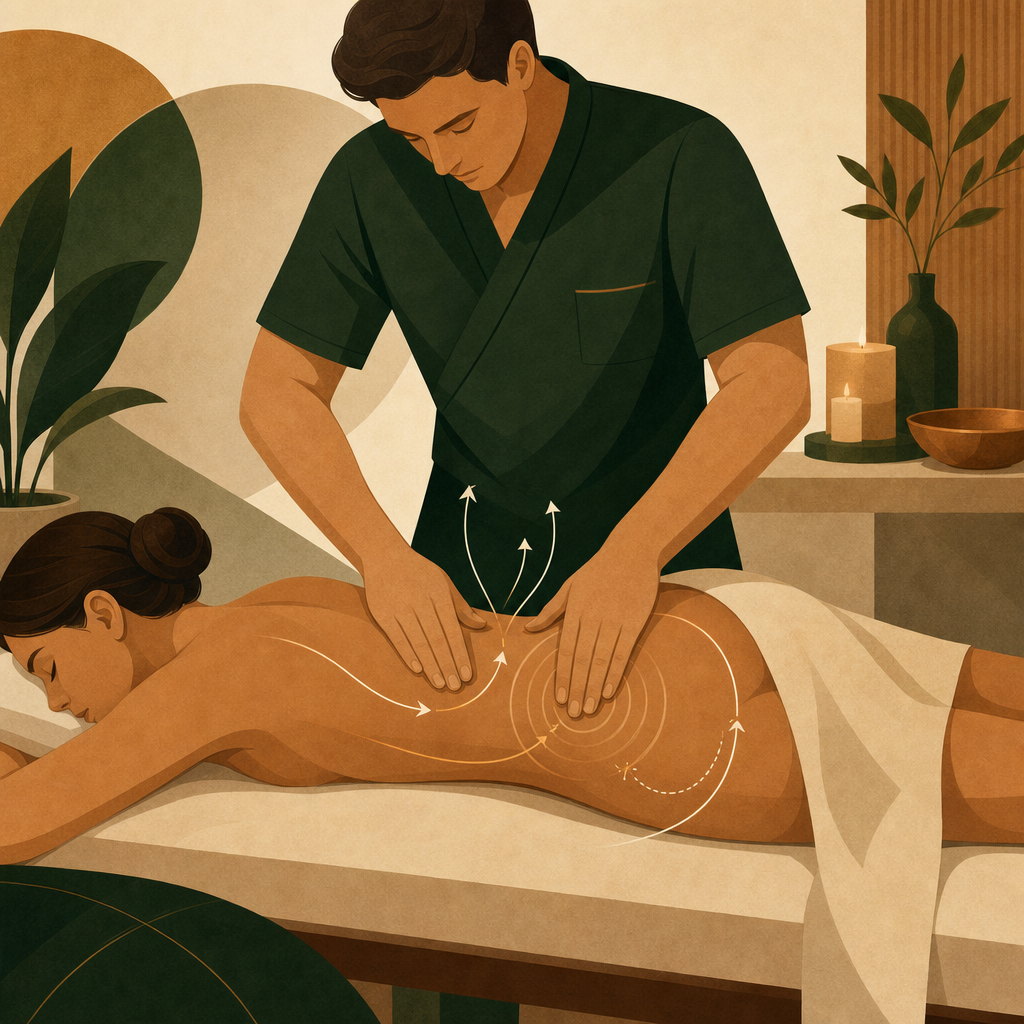
Hip Pain Relief: The Massage Techniques That Actually Work
Let me tell you something that surprised me when I first started working with clients at Raipur SPA in Samta Colony — almost everyone over thirty has some degree of hip tightness. Some people know it's there. Most people have learned to ignore it until one day they can't sit through a movie without shifting, or getting out of the car becomes a twenty-second operation involving grunts and hand-holds.
Hip pain is one of those problems that creeps up slowly. You don't wake up one morning with screaming hips. You wake up one morning and realize you haven't been able to cross your legs comfortably in three years. Or your lower back has been "a little off" for so long you've forgotten what normal feels like.
I've been working in bodywork for years now, and I can tell you with some confidence: most hip pain is fixable. Not "manageable." Not "something you learn to live with." Fixable. The right massage techniques, applied consistently, can change your relationship with your hips completely. Let me walk you through what actually works.
Why Your Hips Are Hurting — The Real Story
Before we talk about solutions, let's talk about why this happens. Because understanding the "why" makes the "how" so much more effective.
We are living through the greatest sedentary era in human history. I had a client last month — let's call him Rohan — who works at a software company in Raipur. He's thirty-four, reasonably active on weekends, but his day goes like this: commute to office (sitting), work at desk (sitting), lunch break (sitting), back to desk (sitting), commute home (sitting), dinner on the couch (sitting). That's roughly eleven hours of sitting every single day.
By the time he came to see me, his hip flexors were so tight they felt like guitar strings. His glutes had essentially gone on strike — they'd been compressed for so long they'd forgotten how to fire properly. And his piriformis, that deep little muscle buried under the glutes, was screaming.
The Piriformis Connection
If you haven't heard of the piriformis, you will. It's a small, flat muscle that runs from your sacrum to the top of your femur. Its job is to help rotate your hip outward. But here's the thing — the sciatic nerve runs either under, through, or over this muscle depending on your anatomy. When the piriformis gets tight, inflamed, or spasming, it can compress that nerve, causing pain that radiates down your leg.
This is what people often mistake for a disc problem. They panic, thinking they need surgery. But in many cases — and I mean a lot of cases — it's just the piriformis being a nuisance.
The classic signs of piriformis involvement:
- A dull ache in the buttock that gets worse with sitting
- Pain or tingling running down the back of your thigh
- Difficulty finding a comfortable sleeping position
- Pain when climbing stairs or walking uphill
- That "something's not right" feeling in the hip that you can't quite pin down
Deep Tissue Massage for Hip Relief — What to Expect
When people hear "deep tissue," they usually imagine someone digging an elbow into a knot while they try not to cry. That's not what I do, and it's not what any skilled therapist should do.
Real deep tissue work is about layers. You don't just attack the tight spot. You warm up the superficial muscles, then the intermediate ones, and only then do you address the deep layers. It's like peeling an onion, except the onion is your glute and the layers are all knotted up.
At Raipur SPA, our approach to hip pain involves three distinct phases in a session:
Phase 1: Preparation
We start with broad, flowing strokes to warm up the entire gluteal region. This increases blood flow and tells the nervous system, "Hey, we're about to do some work here, it's okay to let go." This phase usually takes ten to fifteen minutes. Most people are surprised at how good even this part feels — they didn't realize how much tension they were holding until it starts to release.
Phase 2: Targeted Work
This is where we address specific tight areas. For the piriformis, the technique is precise: we need to locate the muscle belly, apply sustained pressure in the direction of the muscle fibers, and wait. Not push harder — wait. Muscles release when they're ready, not when you're forceful.
I use a combination of thumb pressure, forearm work, and occasionally elbow (gently) for the deeper adhesions. Each hold is typically thirty to ninety seconds. You should feel a sensation that's intense but not sharp. There's a difference between "this is working" and "this is hurting," and a good therapist knows that line.
Phase 3: Stretching and Integration
After the release work, we move the hip through its full range of motion. This tells the brain that the new range is safe and available. We also incorporate some assisted stretches for the hip flexors, because tight hip flexors are almost always part of the picture.
The whole session is usually sixty to ninety minutes. And the first session? Most people feel noticeably better on the table. Some wake up sore the next day — that's normal, it's called a therapeutic response. But by day three, they're usually moving better than they have in months.
Self-Care Between Sessions
Massage is powerful, but it's not magic. What you do between sessions matters just as much. Here's what I tell my clients:
Stop Sitting On Your Wallet
This sounds silly, but I'm serious. A wallet, phone, or anything bulky in your back pocket tilts your pelvis when you sit. Over the course of a day, that's thousands of asymmetrical pelvic positions. Your piriformis on that side is working overtime just to keep you balanced. Take it out.
Get a Cushion
A good seat cushion — one with a cutout for the tailbone — can make a massive difference. It takes pressure off the piriformis and allows your hips to sit in a more neutral position. I tell all my clients with desk jobs to get one. It's a small investment that pays huge dividends.
Movement Snacks
Here's a concept I love: movement snacks. Every hour, do one minute of hip-related movement. It could be hip circles, glute squeezes, a standing figure-four stretch, or just walking around the room. One minute. Set a timer. The cumulative effect over a workday is enormous.
Stretching That Actually Helps
Not all stretches are created equal. The figure-four stretch is famous for a reason — it targets the piriformis beautifully. But people do it wrong. The key is to keep your back flat and lean forward from the hips, not curl your spine. If you're curling forward, you're stretching your lower back, not your hip.
Another one I love: the pigeon pose from yoga. It's intense but incredibly effective. If full pigeon is too much, do it lying on your back with your ankle crossed over the opposite knee.
What About Hip Bursitis?
A quick note on trochanteric bursitis, because it's common and frequently misdiagnosed. The bursa is a fluid-filled sac that reduces friction between the gluteal tendons and the bony prominence on the outside of your hip (the greater trochanter). When it gets inflamed, lying on that side hurts, and anything that presses on the outside of the hip is uncomfortable.
Massage can help, but the approach is different. You don't want to dig directly into the inflamed bursa — that will just make things worse. Instead, we work the surrounding muscles — the TFL, the glute medius, the IT band — to reduce tension on the area. We release the muscles that are pulling on the attachment points, and the bursa gets a chance to calm down.
I've seen people with bursitis who were told "just rest it" for months, only to have it come back the moment they resumed activity. That's because the underlying muscle tension never got addressed. Rest treats the symptom. Massage treats the cause.
When to See a Doctor First
I need to be responsible here. There are situations where massage isn't the right starting point:
- If you have sudden, sharp hip pain after a fall or injury
- If you can't bear weight on that leg
- If the area around your hip is red, hot, or swollen
- If you have a fever along with joint pain
- If you've been diagnosed with a hip fracture or severe osteoarthritis
In these cases, see a doctor first. But for the vast majority of chronic, nagging hip pain? Massage is not just helpful — it's often the most effective thing you can do.
Strengthening Exercises to Support Your Hip Recovery
Massage releases the tension, but strengthening ensures it doesn't come back. Here are the exercises I recommend most to my hip pain clients — and why they work:
Clamshells for Glute Medius Strength
The gluteus medius is one of the most important muscles for hip stability. It sits on the side of your hip and is responsible for lifting your leg out to the side and stabilizing your pelvis when you stand on one leg. When it's weak, your hips wobble — and everything down the chain compensates.
Lie on your side with your legs stacked and your knees bent at a 45-degree angle. Keep your feet touching and lift your top knee like a clamshell opening. Lower slowly. Do 15 repetitions on each side. Don't let your pelvis roll back — keep it stacked vertically. I had a client who did three sets of this every morning and noticed a difference in her hip stability within two weeks.
Glute Bridges for Posterior Chain Activation
Your glutes are designed to be powerful hip extensors, but sitting all day effectively puts them to sleep. Glute bridges wake them back up. Lie on your back with your knees bent and feet flat on the floor. Squeeze your glutes and lift your hips toward the ceiling. Hold for two seconds at the top, then lower. The key: actually squeeze your glutes at the top. Most people just lift with their lower back. Do three sets of 15, and you'll feel the difference in how your hips feel when you walk.
Hip Flexor Stretching with a Twist
Most people stretch their hip flexors in a standard lunge position, but they do it wrong — they lean forward and arch their lower back, which compresses the lumbar spine instead of stretching the hip. The correct way: kneel on one knee with the other foot flat in front. Keep your torso upright. Squeeze your glute on the kneeling leg side and gently press your hips forward. You should feel the stretch in the front of the kneeling hip, not in your lower back. Hold for 30 seconds on each side, and repeat two to three times.
Real Client Stories: Before and After Hip Massage
I want to share a few more stories from Raipur SPA that illustrate what's possible with consistent hip massage therapy:
Priya — The Yoga Teacher with Hip Impingement
Priya had been teaching yoga for eight years when she started feeling a sharp catching sensation in her right hip during certain poses — especially pigeon and triangle. Her doctor mentioned the possibility of femoroacetabular impingement (FAI), where there's abnormal bone growth around the hip socket. But an MRI showed her bones were fine. What she actually had was a chronically tight rectus femoris and TFL that were pinching her hip capsule in deep ranges of motion. After six sessions of deep tissue work on her hip flexors and TFL, combined with specific strengthening for her deep hip rotators, she could do full pigeon without any pinching. She still comes in every month for a tune-up, and she says her hips feel better now than they did in her twenties.
Vikram — The Truck Driver Who Couldn't Sit
Vikram drove a delivery truck for a living — six to eight hours behind the wheel every day. His hip pain had gotten so bad that he was considering quitting his job. His right hip ached constantly, his lower back was tight, and he felt a pins-and-needles sensation down his right leg after long drives. The issue: his piriformis was in full spasm from prolonged sitting, compressing his sciatic nerve. We worked on releasing his piriformis, hip rotators, and lower back muscles over four sessions. I also gave him a cushion with a coccyx cutout and taught him hip-opening stretches he could do at every fuel stop. Two months later, he told me he'd driven from Raipur to Nagpur and back without any leg symptoms for the first time in two years.
The Role of Sleep and Recovery in Hip Health
Your hips do a lot of work during sleep too — or rather, they're supposed to rest. But if you're sleeping in a position that strains your hips, you're undoing the benefits of your massage sessions. Here's what I tell my clients:
Side Sleepers
If you sleep on your side — and most people do — the top hip droops toward the bed, putting stress on the glute med and the joint capsule. The solution: put a pillow between your knees. It keeps your top hip aligned and takes the stretch off the piriformis and glutes. Not a small pillow. A proper, firm pillow that keeps your top knee level with your bottom knee.
Back Sleepers
A pillow under your knees reduces the pull on your hip flexors and lower back. Your hip flexors attach at the front of your pelvis, and when you lie flat, your legs tend to extend slightly, putting a gentle stretch on these muscles. A knee pillow keeps your hips in a more neutral, relaxed position.
Stomach Sleeping
This is the worst position for hip pain. Stomach sleeping extends the hips and rotates the spine, which can aggravate both hip and lower back issues. If you must sleep on your stomach, place a thin pillow under your lower abdomen to take some pressure off the hip joints.
Long-Term Maintenance: Keeping Your Hips Happy
Once you've gotten your hip pain under control, the goal shifts from treatment to maintenance. Here's what a sustainable hip health routine looks like:
- Monthly massage sessions — even when you feel good, maintenance work prevents the tension patterns from rebuilding. Most of our regular clients come in once a month for a 60-minute session focused on their hips and lower back.
- Daily movement variety — your hips are designed to move in multiple planes, not just forward and backward. Walk backwards sometimes. Side-step. Do hip circles. The more varied your movement diet, the healthier your hips stay.
- Standing desk time — if you have a desk job, alternate between sitting and standing. Your hips need the variety. Even 15 minutes standing every hour makes a difference.
- Hydration — the discs in your spine and the joint capsules in your hips are largely water. When you're dehydrated, they lose volume and become more prone to compression and irritation. Drink enough water that your urine is pale yellow.
Your hip health is not a one-time fix. It's a relationship you build over a lifetime with consistent care, attention, and the right professional support. But the return on investment is enormous: pain-free movement, better sleep, and the ability to do the things you love without thinking twice.
The Raipur SPA Difference
Over the years at Raipur SPA, located conveniently in Samta Colony, we've treated hundreds of people with hip problems. Office workers, athletes, retirees, new mothers — hip pain doesn't discriminate. What I've learned is that everyone's hip story is a bit different, but the path to relief follows the same general principles.
Our therapists are trained in multiple modalities — deep tissue, myofascial release, trigger point therapy, and sports massage — so we can adapt the approach to exactly what your body needs. Some people need more stretching. Some need more trigger point work. Some need gentler, longer holds. The skill is in knowing the difference.
If you're in Raipur and struggling with hip pain, I'd love to work with you. Come in, we'll talk through your symptoms, and I'll put together a plan that actually addresses the root cause. Not a band-aid. A real solution.
Your hips are designed to last a lifetime. They just need the right care.
Ready for real hip pain relief? Book a session at Raipur SPA, Samta Colony. Call us or visit raipurspa.com to schedule your appointment.
Keywords: hip pain massage, hip relief, piriformis massage, Raipur SPA, deep tissue massage Raipur
People Also Ask
Related Articles
Deep Tissue & Pain Relief Massage
Knee Pain After Running: Massage Therapy for Knee Recovery
13 min read · 12 May 2026
Deep Tissue & Pain Relief Massage
Hand and Wrist Massage for Gamers, Typists, and Artists
13 min read · 12 May 2026
Deep Tissue & Pain Relief Massage
TMJ Relief: Facial and Jaw Massage for Teeth Grinders
11 min read · 12 May 2026
Enjoyed This Article?
Stop reading about relaxation — come experience it firsthand at Raipur SPA.