
Hot Stone Massage: Benefits, Risks, and What Happens in a Session
There is something almost ceremonial about a hot stone massage. The therapist places smooth, dark stones on your back, their warmth seeping into muscles that have been braced against the world for weeks, and for a while, the whole idea of tension feels like a distant memory. It is one of the most popular treatments on any spa menu — and also one of the most misunderstood.
Some people assume it is just a gimmick, a fancy add-on to justify a higher price. Others assume the stones are dangerously hot or purely decorative. The truth sits somewhere more interesting: hot stone massage is a genuinely effective technique with real physiological effects, a long history, and a few important precautions that every client should know before booking.
What Is Hot Stone Massage?
Hot stone massage is a variation of Swedish massage in which smooth, flat stones — typically basalt, a volcanic rock that retains heat exceptionally well — are heated in water to a controlled temperature and then used in two ways. First, the therapist places the stones on specific points of the body, often along the spine, on the palms, or between the toes. Then, they use the stones as an extension of their hands, gliding them across oiled skin with long, slow strokes while also incorporating traditional hand massage.
The combination is what makes the treatment special. The heat does the initial work of relaxing the muscles, allowing the therapist to reach deeper tissue with less pressure and less discomfort than a traditional massage. It is, in many ways, a shortcut to deep relaxation — the warmth opens the door before the hands even arrive.
Where Hot Stone Massage Comes From
The modern hot stone massage is often credited to a Tucson-based therapist named Mary Nelson, who popularised the technique in the 1990s with her "LaStone Therapy" method. But the use of heated stones for healing is far older. Indigenous cultures around the world have used warm stones for comfort and medicine for centuries — from the Native American sweat lodge tradition to heated stone practices in parts of Asia and the Pacific.
What modern spas did was systematise the practice: controlling the temperature precisely, combining it with Swedish massage technique, and making it safe and repeatable for clients. That is the version you will find at Raipur SPA — the ancient comfort of heat, refined into a modern treatment.
The Real Benefits of Heat on Muscle
The benefits of hot stone massage are not mystical; they are grounded in how your body responds to heat. Here is what is actually happening under the surface:
- Muscle relaxation: Heat increases blood flow to the area and helps muscle fibres relax. Warm muscles are simply more pliable than cold ones, which is why heat is a standard recommendation for stiffness.
- Deeper work with less pressure: Because the heat pre-relaxes the tissue, the therapist can reach deeper muscles without needing to apply intense, potentially uncomfortable pressure.
- Stress reduction: The predictable warmth and slow rhythm help activate the parasympathetic nervous system — your body's rest-and-digest mode — lowering heart rate and reducing cortisol.
- Improved circulation: Heat dilates blood vessels, increasing blood flow, which helps deliver oxygen and nutrients to tissues and carry away metabolic waste.
- Pain relief: The warmth itself can provide temporary relief from chronic aches, and the combination of heat and massage often reduces pain more effectively than massage alone for some people.
What Actually Happens in a Session
If you have never had a hot stone massage, here is a realistic walkthrough so there are no surprises:
- Preparation: The stones are heated in a sanitised water bath, usually to between 54 and 57 degrees Celsius. The therapist tests the temperature on their own forearm before placing any stone on you.
- Placement: Warm stones are placed on key points — typically along both sides of the spine, on the palms, the stomach, or between the toes. This is the part that feels most luxurious.
- The massage: The therapist oils your skin and uses the warm stones to perform long, flowing strokes, alternating with their hands. The heat travels ahead of the pressure, melting tension before the stroke even lands.
- Adjustment: A good therapist checks in about temperature throughout. If a stone feels too hot, you speak up and they adjust. Comfort is the priority, not endurance.
Most people describe the feeling as deeply calming — a warmth that seems to reach parts of the muscle that normal massage cannot quite touch. It is common to feel very relaxed, even sleepy, afterward.
Who Should Be Careful
Heat is powerful, and it is not for everyone. Hot stone massage is generally not recommended for people with certain conditions, and a responsible therapist will always screen before starting:
- Pregnancy: Heat treatments are generally avoided during pregnancy, especially in the first trimester.
- Heart conditions or high blood pressure: Heat dilates blood vessels, which can affect blood pressure.
- Diabetes: Reduced sensation, particularly in the feet, can make it harder to detect if a stone is too hot.
- Skin conditions, open wounds, or sunburn: Heat on irritated or broken skin is a bad idea.
- Neuropathy or reduced sensation: If you cannot reliably feel temperature, hot stones are not safe.
None of this is meant to alarm you — it is simply the sign of a spa that takes your safety seriously. A therapist who asks about your health before placing hot stones on your skin is doing their job well.
Hot Stone vs Traditional Massage
How does hot stone massage compare to a standard Swedish massage? The simplest difference is the addition of heat. The heat allows for a deeper release with lighter pressure, which some people find more relaxing than firm hands. It also tends to feel more luxurious and indulgent, making it a popular choice for special occasions or when someone simply wants to be pampered.
The trade-off is that hot stone massage is slightly less targeted than deep tissue work. If you have a very specific, stubborn knot or a chronic injury, deep tissue may serve you better. But if your goal is overall relaxation, stress relief, and a feeling of deep warmth and calm, hot stone is hard to beat.
Getting the Most From Your Session
- Hydrate well before and after. Heat makes you sweat slightly, and hydration helps your body recover.
- Communicate about temperature. If a stone feels too hot, say so immediately. There is no prize for tolerating discomfort.
- Avoid heavy meals and alcohol beforehand. Both can make you feel sluggish or lightheaded during a heat-based treatment.
- Give yourself time after. Do not rush straight back to work. Let the relaxation settle in.
Frequently Asked Questions
How hot are the stones in a hot stone massage?
The stones are typically heated to between 54 and 57 degrees Celsius. The therapist always tests the temperature on their own arm before placing stones on your body, and they will adjust if it feels too warm.
Does hot stone massage hurt?
No. The pressure is usually lighter than deep tissue massage, and the heat is meant to be soothing, not painful. You should feel comfortably warm at all times, and you can always ask to adjust the temperature.
Is hot stone massage safe during pregnancy?
Generally no. Heat treatments are usually avoided during pregnancy, especially in the first trimester. If you are pregnant, consult your doctor and tell your therapist before booking any massage.
What should I wear for a hot stone massage?
The same as any massage — you undress to your comfort level and are draped with a sheet or towel. Only the area being worked on is uncovered at any time.
How often can I get a hot stone massage?
As often as you like, within reason. Many people enjoy it weekly or bi-weekly for stress management, while others save it for occasional deep relaxation.
Book Your Session
Book Your SessionPeople Also Ask
Related Articles
Massage Therapy
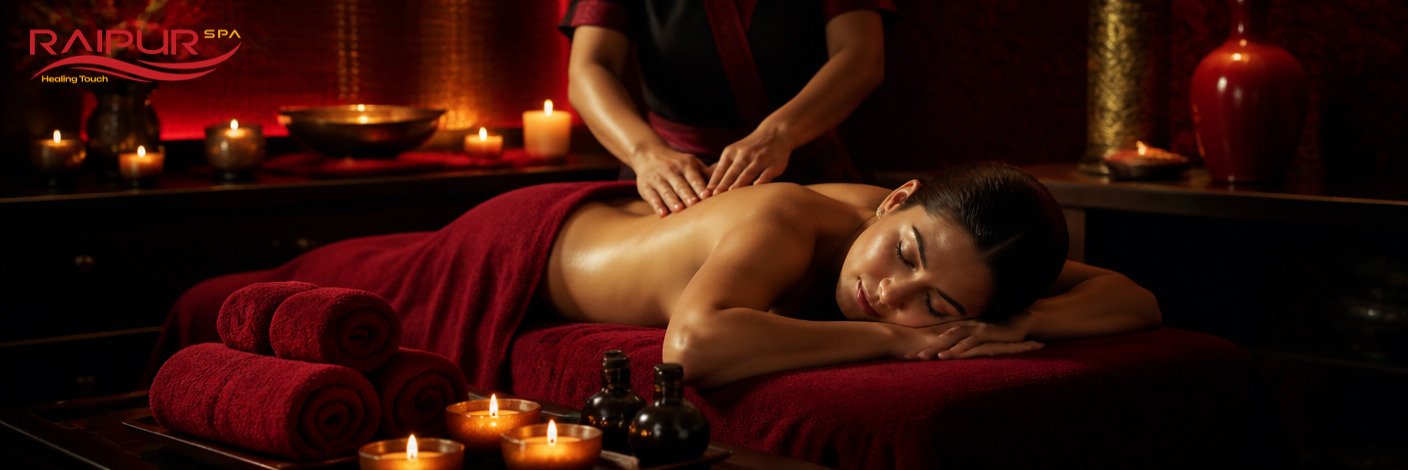
Full Body Massage in Raipur: Swedish vs Deep Tissue vs Aroma Therapy Compared
12 min read · 20 Oct 2026
Massage Therapy
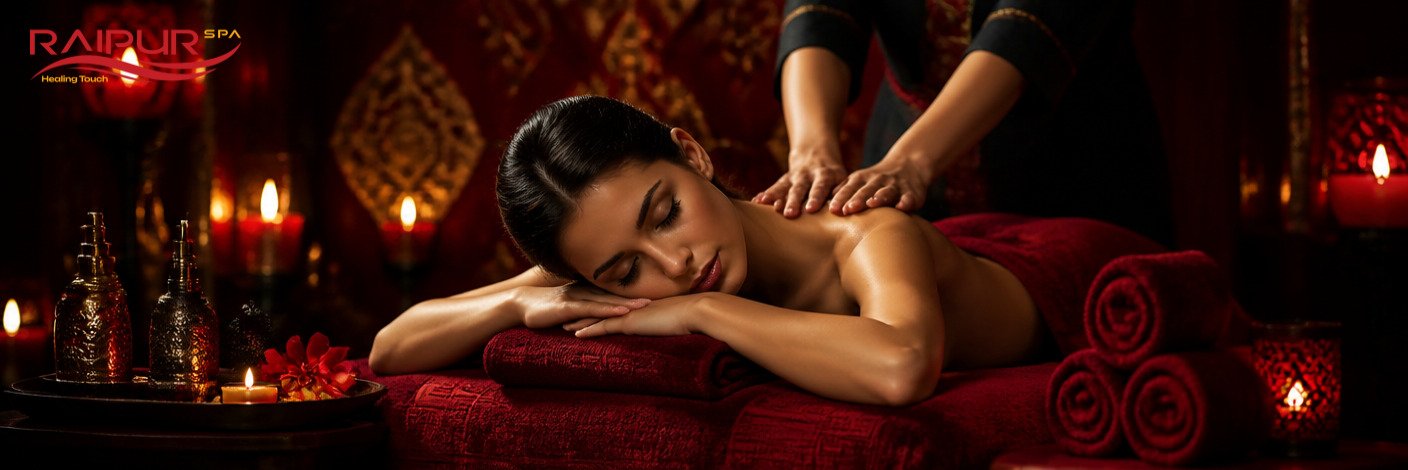
Pain Relief Massage in Raipur: How Deep Tissue Therapy Helps Back and Neck Pain
13 min read · 20 Oct 2026
Massage Therapy
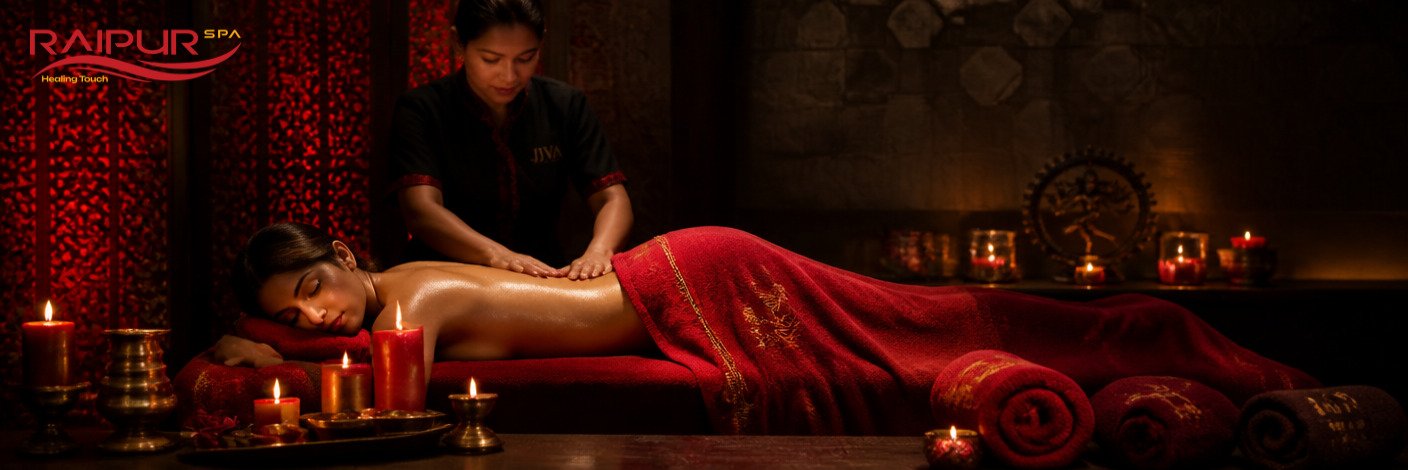
Why Ayurvedic Massage Is the Best Natural Pain Relief in Raipur
14 min read · 19 Oct 2026
Enjoyed This Article?
Stop reading about relaxation — come experience it firsthand at Raipur SPA.