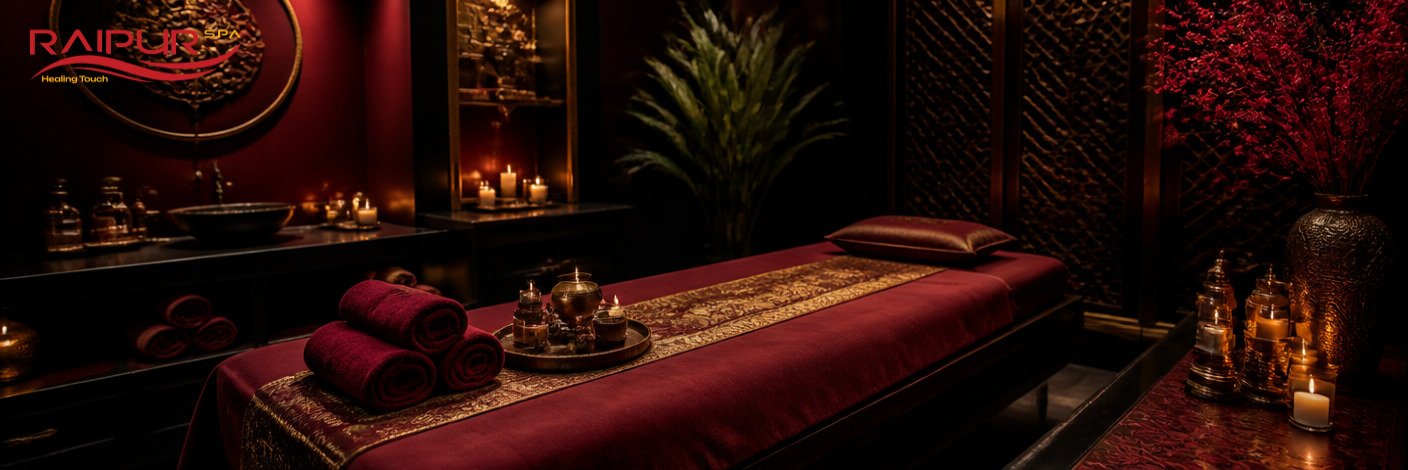
What is the best massage for pain relief in Raipur?
For pain relief in Raipur, therapeutic massages like deep tissue, sports, and trigger point therapy are commonly used. These techniques target muscle tension, improve circulation, and may help alleviate discomfort from sciatica, back pain, and joint issues. A qualified therapist can tailor the massage to your specific condition.
Key Takeaways
- • Deep tissue massage targets chronic muscle tension and back pain.
- • Sports massage helps with joint mobility and injury recovery.
- • Trigger point therapy can relieve referred pain from sciatica.
- • Always consult a healthcare provider before massage for medical conditions.
- • Choose a licensed spa with trained therapists for safe pain relief.
- • Massage therapy is complementary and not a substitute for medical treatment.
If you're searching for pain relief massage in Raipur to ease sciatica, back pain, or joint discomfort, you're in the right place. At its core, it's a therapeutic massage that targets deep muscle tension, nerve compression, and inflammation using techniques like deep tissue, trigger point release, and gentle stretching. Raipur SPA in Samta Colony offers customised sessions starting at ₹999, open daily from 11:00 AM to 09:00 PM.
But here's the thing most people don't realise: pain doesn't just happen overnight. It builds slowly—through months of sitting in the same chair, sleeping in the wrong position, or pushing through that nagging ache in your lower back. By the time you feel that sharp shooting pain down your leg or the stiffness in your knees that won't go away, your body has been sending signals for a while. A professional pain relief massage isn't just about temporary comfort. It's about resetting how your muscles, nerves, and joints work together so you can move without wincing.
In this guide, we'll walk you through everything you need to know about pain relief massage in Raipur—from how it helps sciatica and back pain to what happens during a session, how many you'll need, and how to choose the right therapist. Whether you're a desk worker in Raipur's busy commercial hubs or someone dealing with chronic joint pain, this article will help you make an informed decision.
Key Takeaways
- Pain relief massage in Raipur combines deep tissue, trigger point, and Swedish techniques to address sciatica, lower back pain, and joint stiffness.
- Sessions are customised after a brief consultation to match your pain pattern and comfort level.
- Most clients feel noticeable relief after 2–4 sessions, depending on the severity and duration of pain.
- Raipur SPA in Samta Colony offers therapies starting at ₹999, open daily 11 AM–9 PM.
- Massage is complementary care—it works best alongside medical advice, not as a replacement.
- Booking is easy via WhatsApp or call at +91 7987 303 127.
- Communicating during your session is key—good therapy is a two-way conversation, not a silent treatment.
- Consistency beats intensity: regular moderate-pressure sessions outperform one aggressive deep tissue session.
Why Pain Relief Massage Matters in Raipur
Raipur's lifestyle has changed. Long hours at desks, two-wheeler commutes on uneven roads, and limited movement have made back and joint pain common. Many people ignore early signs until the pain becomes chronic.
Think about a typical day for a working professional in Raipur. You wake up, sit through a 30–45 minute commute on roads that are anything but smooth, spend eight to nine hours at a desk with poor posture, then come home and collapse on a sofa. Your hip flexors stay shortened, your lower back muscles stay stretched, and your neck stays craned forward. Over weeks and months, this creates a pattern of tension that your body simply can't unwind on its own.
Add to that the fact that many people in Raipur don't have access to regular physiotherapy or simply don't prioritise it until the pain becomes unbearable. A targeted massage isn't just relaxation—it's therapy. It improves blood flow, releases muscle knots, and calms the nervous system. For sciatica and lower back pain, this can mean the difference between a restless night and proper sleep.
Here's a practical example: A 38-year-old IT professional from Shankar Nagar came to us complaining of lower back pain that had been building for six months. He'd tried painkillers, a heating pad, and even a chiropractor once. But what he hadn't addressed was the deep glute and hamstring tension that was pulling on his lower back. After three deep tissue sessions spaced a week apart, combined with simple stretching at home, he reported a 70% reduction in pain. That's the kind of difference targeted therapy can make.
Another factor unique to Raipur is the weather. The hot, humid summers and cooler winters can affect how your muscles feel. In winter, muscles tend to tighten up more, making pain worse. In summer, dehydration can make muscle cramps more likely. A good massage therapist will adjust pressure and technique based on the season and your body's response.
Understanding Sciatica and How Massage Helps
Sciatica isn't a disease—it's a symptom. The sciatic nerve runs from your lower back through the hips and down each leg. When it's compressed or irritated, you feel sharp, shooting pain, numbness, or tingling. It's one of the most frustrating types of pain because it travels. You might feel it in your lower back one day and your calf the next.
Common causes include a herniated disc, piriformis syndrome, or prolonged sitting. Massage can't fix a herniated disc, but it can relax the muscles around the nerve, reduce spasm, and ease pressure. Think of it like this: if a nerve is a garden hose and the muscles around it are hands squeezing it, massage loosens those hands. The hose itself might still have a kink (the disc issue), but at least it's not being strangled from the outside.
Piriformis syndrome is particularly common in people who sit for long hours. The piriformis muscle sits deep in your glutes and runs right next to the sciatic nerve. When it's tight, it compresses the nerve. Massage directly targeting the piriformis can bring almost immediate relief for some people.
Techniques Used for Sciatica
- Deep tissue massage on the glutes, hamstrings, and lower back
- Trigger point release to deactivate tight bands of muscle
- Myofascial release to soften connective tissue restrictions
- Gentle stretching to improve mobility without aggravating the nerve
- Heat application before deep work to relax superficial muscles and make deeper techniques more comfortable
If your sciatica is severe or you have numbness that won't go away, see a doctor first. Massage is best as part of a broader recovery plan. Red flags include loss of bladder control, severe weakness in your leg, or pain that wakes you up at night—these need immediate medical attention.
A Realistic Timeline for Sciatica Relief
Most people with mild to moderate sciatica notice improvement after two to three sessions. The first session often focuses on calming the nervous system and releasing superficial tension. The second and third sessions go deeper into the glutes and hamstrings. By the fourth session, many clients can sit for longer periods without pain and sleep through the night.
But here's the honest truth: if you go back to sitting for 10 hours a day without breaks, the pain will return. Massage buys you a window of relief. What you do during that window—stretching, improving your posture, taking walking breaks—determines whether the relief lasts.
Back Pain: When Massage Is the Right Choice
Not all back pain is the same. Postural back pain from sitting, muscle strain from lifting, and stress-related tension all respond well to massage. Sharp pain after an injury or with fever needs medical attention.
Let's break it down:
- Postural back pain: Dull ache in the lower back that worsens as the day goes on. Massage works very well here, especially when combined with ergonomic changes.
- Muscle strain: Sharp pain after lifting something heavy or twisting awkwardly. Gentle massage after the acute phase (48–72 hours) can speed recovery.
- Stress-related tension: Tightness in the upper back and shoulders that feels like a band pulling across your body. Swedish and trigger point massage are excellent for this.
- Medical emergencies: Pain with fever, unexplained weight loss, or pain that radiates below the knee with weakness—see a doctor immediately.
For chronic lower back pain, regular massage can reduce pain intensity and improve your range of motion. It also lowers cortisol, the stress hormone that keeps muscles tense. Studies have shown that massage therapy can be as effective as some medications for chronic low back pain, without the side effects.
One of our regular clients, a 52-year-old shop owner in Samta Colony, had been living with lower back pain for years. He'd tried everything from painkillers to Ayurvedic oils. What finally helped was a combination of deep tissue massage every two weeks and a simple routine of five minutes of stretching every morning. He told us, "I wish I'd started this years ago. I forgot what it felt like to stand up without pain."
What a Session Looks Like
At Raipur SPA, we start with a short consultation. You'll describe where it hurts, what makes it worse, and your medical history. Then we choose the right pressure and techniques.
You'll lie on a comfortable table, partially draped. The therapist works on your back, hips, and legs, checking in with you about pressure. Most sessions last 60–90 minutes.
Here's a more detailed breakdown of a typical 60-minute back pain session:
- 0–5 minutes: Consultation and assessment. We ask you to show us where it hurts and describe the pain (sharp, dull, shooting, burning).
- 5–10 minutes: Gentle warm-up with Swedish techniques to relax superficial muscles and prepare the deeper layers.
- 10–35 minutes: Deep tissue work on the lower back, glutes, and hamstrings. We use forearms, elbows, and thumbs to work through tight bands.
- 35–50 minutes: Trigger point release on specific knots that refer pain. This can feel intense but usually brings relief.
- 50–60 minutes: Gentle stretching and calming techniques to finish. You'll leave feeling looser and more relaxed.
After the session, we give you simple stretches to do at home. These are not complicated yoga poses—just basic movements that take five minutes a day. But they make a huge difference in how long the relief lasts.
Joint Care: Knees, Shoulders, and Hips
Joint pain often comes with muscle tightness around the joint. For example, knee pain may involve tight quadriceps and hamstrings. Shoulder pain may stem from neck and upper back tension.
Massage around the joint—not directly on it—can improve circulation, reduce swelling, and make movement less painful. It's especially helpful for people with arthritis, though pressure must be gentle.
Let's look at each joint in more detail:
Knee Pain
Knee pain is often a downstream problem. The knee itself might be fine, but tight quads, hamstrings, or IT bands can pull the kneecap out of alignment. Massage on the thigh muscles, combined with gentle stretching, can reduce pain and improve walking. For people with osteoarthritis, gentle massage around the knee can reduce stiffness and improve circulation without putting pressure on the joint itself.
Shoulder Pain
Shoulder pain is frequently caused by tension in the neck, upper back, and chest muscles. If your shoulders are rounded forward from hours of typing, the muscles in front of your shoulder get tight while the ones in back get weak. Massage can release the tight chest muscles and relax the overworked upper back, restoring better alignment.
Hip Pain
Hip pain can come from tight hip flexors, glutes, or lower back muscles. It's common in people who sit for long periods. Deep tissue massage on the glutes and hip flexors, combined with gentle stretching, can significantly improve hip mobility and reduce pain.
We also combine massage with passive stretching to keep joints mobile. This is not a replacement for physiotherapy, but it complements it well. If you're already seeing a physiotherapist, tell them you're getting massage—they can coordinate your care for better results.
Which Massage Style Is Right for You?
Different pains need different approaches. Here's a quick guide:
- Deep tissue: Best for chronic tightness, lower back pain, and sciatica. Uses slow, firm strokes and deep pressure to reach the inner layers of muscle.
- Trigger point therapy: Ideal for specific knots that refer pain elsewhere. A trigger point in your glute might cause pain in your calf, for example.
- Swedish massage: Great for stress-related pain and first-timers. Uses long, flowing strokes and kneading to relax the entire body.
- Hot stone therapy: Helps with stiffness and poor circulation. Heated stones are placed on specific points to warm and relax muscles.
- Aroma therapy: Adds relaxation for pain linked to anxiety. Essential oils are used to calm the nervous system while the therapist works on your muscles.
- Sports massage: Best for active individuals with muscle fatigue or minor injuries from exercise.
If you're unsure, our therapists will recommend a combination based on your assessment. For example, someone with sciatica might get a mix of deep tissue and trigger point therapy, while someone with stress-related back pain might benefit more from Swedish and aromatherapy.
Here's a simple rule of thumb: if your pain is sharp and specific, trigger point therapy or deep tissue is likely best. If your pain is dull and widespread, Swedish or aromatherapy might be more appropriate. If your pain is related to a specific activity or sport, sports massage is the way to go.
What to Expect During Your Visit
Your first visit includes a brief health intake. We ask about injuries, surgeries, medications, and areas to avoid. This ensures safety and better results.
We'll also ask about your daily routine. Do you sit for long hours? Do you exercise? How much water do you drink? These details help us understand the root causes of your pain, not just the symptoms.
During the massage, communicate. If pressure is too much or too little, say so. Good therapy is a conversation, not a silent treatment. Some people feel shy about speaking up, but remember: the therapist wants to help you, and they can only do that if they know what you're feeling.
Afterwards, drink water and avoid heavy lifting for the rest of the day. Mild soreness is normal for 24–48 hours, similar to after a workout. This is because massage releases toxins and metabolic waste from your muscles, and your body needs water to flush them out.
Here are some practical tips to get the most out of your session:
- Arrive 10 minutes early. Rushing in stressed defeats the purpose. Give yourself time to relax.
- Skip a heavy meal right before. A light snack is fine, but a full stomach can make lying on your front uncomfortable.
- Wear comfortable clothing. You'll be asked to remove some clothing, but you'll be properly draped at all times.
- Be honest about your pain. Don't downplay it. The more we know, the better we can help.
- Don't schedule anything strenuous after. Give your body time to absorb the benefits.
How Many Sessions Do You Need?
It depends on your pain. Acute muscle strain may improve in 1–2 sessions. Chronic sciatica or arthritis may need 4–6 sessions, spaced weekly, then monthly maintenance.
Consistency matters more than intensity. One deep session won't undo years of tension. Regular, moderate pressure works better. Think of it like brushing your teeth—you don't brush for an hour once a month; you brush for two minutes twice a day. Massage works the same way.
Here's a general guideline:
- Acute pain (less than 6 weeks): 1–2 sessions per week for 2–3 weeks, then reassess.
- Chronic pain (more than 3 months): 1 session per week for 4–6 weeks, then every 2–4 weeks for maintenance.
- Maintenance (after pain is managed): 1 session every 4–6 weeks to prevent recurrence.
Your therapist will adjust this based on your progress. If you're not seeing improvement after 4–5 sessions, it might be time to see a doctor or physiotherapist. Massage is powerful, but it's not a cure-all.
Safety and When to Avoid Massage
Massage is generally safe, but skip it if you have fever, skin infections, recent fractures, or blood clots. Pregnant women should consult their doctor first.
If you have cancer, heart conditions, or are on blood thinners, get medical clearance. Always inform your therapist about your health status.
Here's a more detailed list of situations where massage should be avoided or modified:
- Fever or acute infection: Massage can spread infection and make you feel worse.
- Blood clots: Deep pressure can dislodge a clot, which is dangerous.
- Recent fractures or surgery: Wait until your doctor clears you.
- Skin conditions: Rashes, wounds, or infections should be avoided.
- Pregnancy: Some techniques are safe, but others are not. Always consult your doctor and choose a trained prenatal massage therapist.
- Cancer: Some types of massage can be safe, but you need clearance from your oncologist.
- Blood thinners: You may bruise more easily. Gentle pressure is safer.
If you're unsure, just ask. We'd rather answer a few questions than put you at risk.
Why Choose Raipur SPA for Pain Relief
We're located in Samta Colony, Raipur, with a calm, clean environment and trained therapists. We don't rush sessions. We focus on understanding your pain and tailoring every massage.
Therapies start at ₹999, and we're open daily from 11:00 AM to 09:00 PM—convenient for working professionals and weekend visitors.
But what really sets us apart is our approach. We don't treat every back pain the same way. We ask questions, assess your movement, and adjust our techniques based on what we find. If you have sciatica, we focus on the glutes and hamstrings. If you have shoulder pain, we work on your neck and upper back. If you have knee pain, we address your quads and IT bands.
We also believe in education. After your session, we'll show you stretches and exercises you can do at home. We'll explain why your pain is happening and what you can do to prevent it from coming back. Our goal isn't just to give you a good massage—it's to help you live pain-free.
Frequently Asked Questions
What is pain relief massage in Raipur?
It's a therapeutic massage designed to reduce muscle tension, nerve pain, and joint stiffness. It uses techniques like deep tissue, trigger point release, and stretching. Raipur SPA offers customised sessions for sciatica, back pain, and joint care.
Can massage cure sciatica permanently?
Massage can significantly reduce sciatica symptoms by relaxing tight muscles around the nerve. However, it doesn't fix structural causes like herniated discs. It works best alongside medical treatment and lifestyle changes.
How often should I get a massage for back pain?
For acute pain, once or twice a week for a few weeks helps. For chronic pain, weekly sessions for 4–6 weeks, then monthly maintenance is common. Your therapist will suggest a plan based on your progress.
Is deep tissue massage painful?
It can feel intense, but it shouldn't be unbearable. You may feel soreness afterwards, similar to post-workout soreness. Always tell your therapist if the pressure is too much.
Do I need a doctor's note for a pain relief massage?
Not always, but if you have a medical condition, recent injury, or are pregnant, it's wise to consult your doctor first. We also ask about your health during intake.
How much does a pain relief massage cost in Raipur?
At Raipur SPA, therapies start from ₹999. The final price depends on the duration and type of massage you choose. Call or WhatsApp +91 7987 303 127 for current rates.
Can I get a pain relief massage if I have arthritis?
Yes, but with modifications. Gentle massage around the joint can reduce stiffness and improve circulation. Deep pressure directly on an arthritic joint should be avoided. Always inform your therapist about your condition.
What should I do after a pain relief massage?
Drink plenty of water, avoid heavy lifting or strenuous exercise for the rest of the day, and apply a warm compress if you feel mild soreness. Gentle stretching the next day can help maintain the benefits.
Final Thoughts
Living with pain drains your energy and mood. A professional pain relief massage in Raipur can be a turning point—not just for your muscles, but for how you feel daily.
If you're in Samta Colony or nearby, visit Raipur SPA. We'll assess your pain, explain your options, and design a session that actually helps.
Ready to feel better? Book your appointment via WhatsApp or call +91 7987 303 127. We're open daily from 11:00 AM to 09:00 PM.
Frequently Asked Questions
Can massage help with sciatica pain?
Massage may help relieve muscle tension and improve circulation, which can reduce sciatica discomfort. However, it should be part of a broader treatment plan. Consult a doctor before starting massage for sciatica.
What type of massage is best for lower back pain?
Deep tissue and trigger point massages are often recommended for lower back pain. These techniques target tight muscles and knots that contribute to discomfort. A therapist can customize the pressure to your comfort level.
Is massage safe for joint pain?
Massage can be safe for joint pain when performed gently and by a trained professional. It may help reduce stiffness and improve range of motion. Avoid massage during acute inflammation or if you have certain medical conditions.
How often should I get a pain relief massage?
Frequency depends on your condition and therapist's advice. Some people benefit from weekly sessions, while others need less frequent maintenance. Start with a consultation to determine a suitable schedule.
Do I need a doctor's referral for a pain relief massage?
In most cases, a referral is not required, but it's wise to consult your doctor if you have underlying health issues. A referral can ensure massage is appropriate for your condition. Always inform your therapist about your medical history.
What should I expect during a pain relief massage in Raipur?
Expect a consultation to discuss your pain points and health history. The therapist will use specific techniques like deep tissue or trigger point therapy. Sessions typically last 60 to 90 minutes, and you may feel soreness afterward.
Book Your Session
Book Your SessionPeople Also Ask
Related Articles
Health & Wellness
Aroma Therapy in Raipur: Best Essential Oils for Anxiety & Sleep
13 min read · 17 Sep 2026
Health & Wellness
Corporate Wellness in Raipur: Desk Job Pain & Posture Fix
12 min read · 17 Sep 2026
Health & Wellness
Top 7 Spa Experiences in Raipur for Stress Relief
14 min read · 17 Sep 2026
Enjoyed This Article?
Stop reading about relaxation — come experience it firsthand at Raipur SPA.