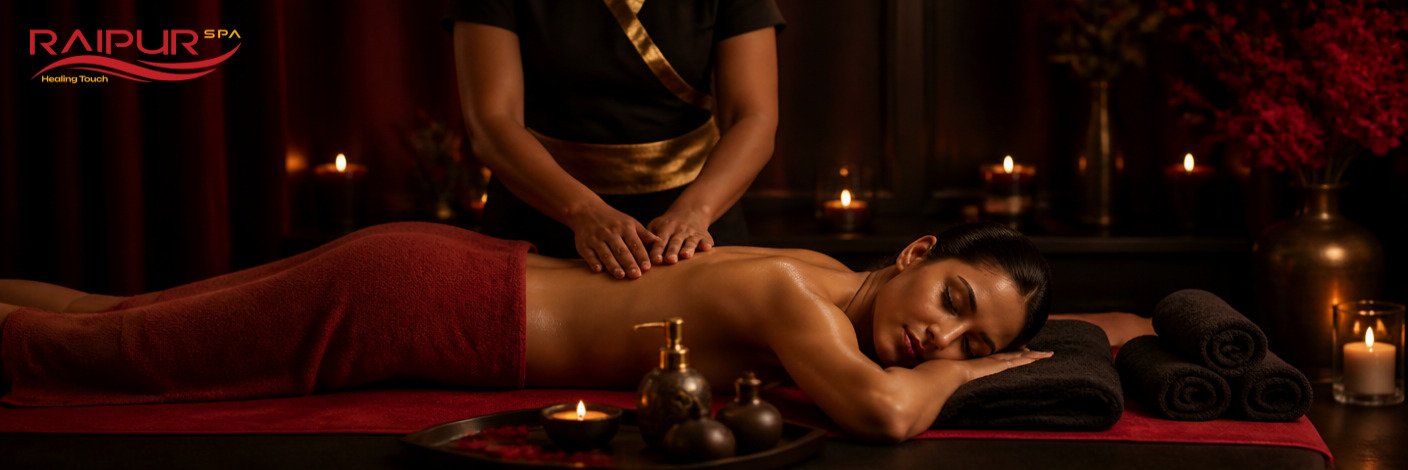
What is the best massage for post-workout recovery in Raipur?
Sports massage and deep tissue therapy are the most common choices for post-workout recovery in Raipur. Sports massage combines stretching and targeted pressure to ease muscle tightness after training, while deep tissue therapy applies slower, firmer pressure to deeper muscle layers. Many Raipur spas offer 60-90 minute sessions, ideally booked within 24-48 hours after intense exercise.
Key Takeaways
- • Sports massage focuses on muscle tightness and mobility after training.
- • Deep tissue therapy uses slower, firmer pressure on deeper muscle layers.
- • Booking within 24-48 hours of intense exercise is commonly recommended.
- • Sessions typically run 60-90 minutes depending on treatment area.
- • Hydration and light stretching after a session support recovery.
- • Inform your therapist about injuries or sore areas before the session begins.
A post-workout recovery massage in Raipur combines sports massage and deep tissue therapy to help tired muscles bounce back after training, running, cricket, gym sessions, or long hours at a desk. It targets soreness, stiffness, and restricted movement using firm, focused pressure and guided stretching, so you recover faster and feel lighter.
Key Takeaways
- Recovery massage blends sports massage and deep tissue techniques to ease post-exercise soreness and stiffness.
- Best done 12–48 hours after intense activity, or as a weekly routine for regular gym-goers and athletes.
- Deep tissue work reaches deeper muscle layers and fascia, helping with knots and restricted movement.
- Sessions at Raipur SPA start from ₹999, open daily 11:00 AM to 09:00 PM.
- Hydrate well and avoid heavy meals right before your session for the best results.
- Consistency matters — regular recovery sessions support better mobility and fewer nagging aches.
Why Recovery Deserves a Place in Your Routine
Most people train hard and rest casually. They stretch for two minutes, drink water, and hope for the best. But muscles don't repair themselves efficiently without help — especially if you're training several days a week or sitting at a desk for long hours.
Recovery massage is not a luxury add-on. It's part of the training itself. When done right, it reduces muscle tightness, improves blood flow, and helps you move without that heavy, stiff feeling the next morning.
In Raipur, more gym members, runners, cricketers, and working professionals are adding recovery sessions to their weekly schedule. The reason is simple: they feel the difference within a day or two.
What Is a Sports Recovery Massage?
Sports massage is built around movement and performance. The therapist uses a mix of compression, friction, kneading, and assisted stretching, often focusing on specific muscle groups you use most.
If you're a runner, that means calves, hamstrings, and hip flexors. If you lift weights, it's shoulders, lower back, and quads. If you play cricket or badminton, the focus shifts to rotator cuff muscles, forearms, and the lower body.
What It Feels Like
Expect firm, deliberate pressure — not a gentle relaxation massage. Some spots will feel intense, especially if you have knots or tight bands. Your therapist will check in with you on pressure, so speak up if something feels too sharp.
Most people leave feeling loose, lighter, and surprisingly sleepy. That's a good sign. Your nervous system has shifted into recovery mode.
Deep Tissue Therapy: When Soreness Won't Go Away
Deep tissue massage works on the deeper layers of muscle and the connective tissue (fascia) around them. It's slower than sports massage, with sustained pressure on specific areas.
This is the therapy to choose when you have a stubborn knot in your shoulder blade, tightness in your lower back after long sitting hours, or a calf that never quite loosens up. Deep tissue therapy in Raipur has become popular among desk workers and gym-goers alike, because it addresses the root of recurring stiffness rather than just relaxing the surface.
Sports Massage vs Deep Tissue: Which One Do You Need?
- Choose sports massage if you train regularly and want faster recovery after workouts, runs, or matches.
- Choose deep tissue therapy if you have persistent knots, chronic tightness, or restricted movement.
- Choose both if you're an athlete with old nagging issues — many therapists combine techniques in a single session.
A good therapist will assess your posture, ask about your activity, and adjust the session accordingly. No two recovery massages should look the same.
When Should You Book a Recovery Massage?
Timing matters more than most people realise. The ideal window is usually 12 to 48 hours after intense exercise — when soreness has set in but inflammation has settled.
Right after a hard session, your muscles are still recovering from micro-tears. Deep pressure too soon can add stress instead of relief. If you have a competition coming up, book a lighter session a few days before, not the night before.
Signs You Need One Sooner
- You wake up stiff after training days
- Your range of motion feels limited in the shoulders or hips
- You have knots that don't release with stretching
- You feel constantly fatigued despite sleeping well
- Your lower back or neck aches after long desk hours
What Happens During a Session at Raipur SPA
At Raipur SPA in Samta Colony, Raipur, every recovery session starts with a short conversation. Your therapist asks about your training routine, problem areas, and any injuries. Then they build a plan around you.
The session usually includes warm-up strokes to prepare the tissue, focused work on tight areas, and assisted stretching to finish. Pressure is adjusted throughout — firm enough to be effective, never so much that you tense up.
Clean linen, a calm environment, and trained therapists make the difference. Recovery therapies start from ₹999, and the spa is open daily from 11:00 AM to 09:00 PM, so you can book around your workout or work schedule.
How to Get the Most From Your Recovery Massage
Before Your Session
- Drink water through the day — hydrated muscles respond better to pressure
- Avoid heavy meals within an hour of your appointment
- Tell your therapist about any injuries, surgeries, or medical conditions
- Skip intense training right before the session
After Your Session
- Drink plenty of water to help flush out metabolic waste
- Take it easy for the rest of the day — no heavy lifting
- A warm shower after a couple of hours can help
- Light stretching the next morning keeps the benefits going
One session helps. A regular routine — once a week or fortnightly — helps more. Consistency is what turns occasional relief into lasting mobility.
Who Benefits Most?
Recovery massage isn't only for athletes. It helps anyone whose body carries repeated strain.
- Gym members: faster recovery between training days
- Runners and cyclists: relief for calves, quads, and IT bands
- Cricketers and badminton players: shoulder and lower-body maintenance
- Desk professionals: deep tissue work for neck, shoulders, and lower back
- Anyone with chronic stiffness: improved range of motion and comfort
If you're unsure which therapy suits you, a quick call is enough. The team at Raipur SPA will guide you based on your activity level and problem areas.
Frequently Asked Questions
What is a post-workout recovery massage?
It's a targeted massage using sports and deep tissue techniques to reduce muscle soreness, improve blood flow, and restore mobility after exercise. It's designed to speed up recovery, not just relax you.
How soon after a workout should I get a massage?
Ideally 12 to 48 hours after intense training. This is when soreness has set in and deep pressure is most effective without adding stress to recovering muscles.
Is deep tissue massage painful?
It can feel intense on tight spots, but it shouldn't be sharp or unbearable. Your therapist adjusts pressure to your comfort level throughout the session.
How long does a recovery massage take?
Most sessions run 45 to 60 minutes, depending on the areas treated and the techniques used. Your therapist will recommend a duration after assessing your needs.
How often should I get a recovery massage?
Once a week works well for regular gym-goers and athletes. For general stiffness, once a fortnight is a good starting point. Your therapist can suggest a schedule based on your activity.
Do I need to book in advance at Raipur SPA?
Booking ahead is recommended, especially on evenings and weekends. You can reserve your slot via WhatsApp or call at +91 7987 303 127.
Final Word
Your body gives a lot during training and long workdays. A post-workout recovery massage in Raipur gives something back — relief, mobility, and a reset that carries into your next session.
If soreness has become your normal, it's time to change that. Book a session at Raipur SPA, Samta Colony, and let trained hands do the recovery work. Call or WhatsApp +91 7987 303 127 to reserve your appointment.
Frequently Asked Questions
How soon after a workout should I get a recovery massage?
Most therapists suggest waiting 24-48 hours after intense training so muscles are no longer acutely inflamed. Light sessions can be done sooner after moderate exercise. Tell your therapist when you last trained so pressure can be adjusted.
What is the difference between sports massage and deep tissue therapy?
Sports massage blends targeted pressure with stretching and movement, often aimed at specific training goals. Deep tissue therapy uses slow, firm strokes on deeper muscle layers to release persistent tightness. Many Raipur spas combine elements of both in recovery sessions.
How long does a post-workout recovery massage take?
Sessions usually last 60-90 minutes, depending on the areas treated and the pressure used. Focused sessions on one or two muscle groups may take 30-45 minutes. Ask the spa for a treatment plan suited to your training schedule.
Should I choose deep tissue or sports massage for sore muscles?
For general post-training soreness, sports massage is often the gentler starting point. Deep tissue therapy may suit those with chronic tightness who prefer firmer pressure. A therapist can recommend the right option after a brief assessment.
What should I do after a recovery massage?
Drink water, avoid heavy training for the rest of the day, and do light stretching if comfortable. Some soreness for 24 hours is common after deep pressure work. Contact the spa if discomfort persists beyond that.
Can I book a recovery massage if I have an injury?
Consult a doctor first for any diagnosed injury or acute pain. Once cleared, inform the therapist so pressure can be adjusted around the affected area. Massage supports relaxation and muscle comfort but is not a treatment for injuries.
Book Your Session
Book Your SessionPeople Also Ask
Related Articles
Massage Therapy
Full Body Massage in Raipur: Swedish vs Deep Tissue vs Aroma Therapy Compared
12 min read · 20 Oct 2026
Massage Therapy
Pain Relief Massage in Raipur: How Deep Tissue Therapy Helps Back and Neck Pain
13 min read · 20 Oct 2026
Massage Therapy
Why Ayurvedic Massage Is the Best Natural Pain Relief in Raipur
14 min read · 19 Oct 2026
Enjoyed This Article?
Stop reading about relaxation — come experience it firsthand at Raipur SPA.