
What Is Reflexology?
Reflexology is a therapeutic practice based on the principle that specific zones of the feet (and hands, and ears in some traditions) correspond to specific organs, glands, and systems throughout the body. Applying targeted pressure to these reflex zones is understood to produce effects in the corresponding body areas — supporting their function, reducing tension in connected tissues, and promoting overall systemic balance.
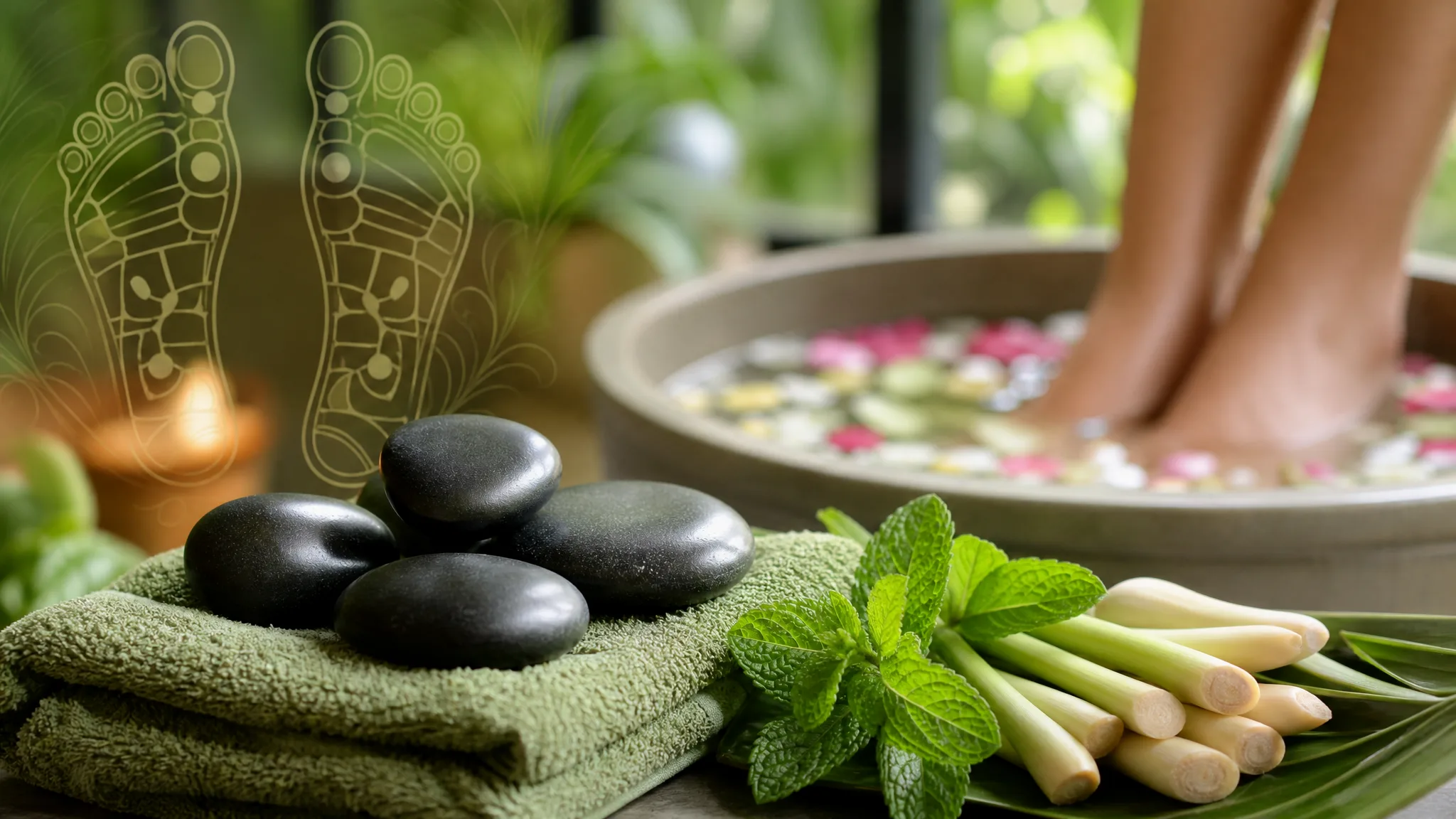
The therapeutic map of the foot is precise and consistent across reflexology traditions: the tips of the toes correspond to the head and brain; the ball of the foot maps to the chest and lungs; the arch to the abdominal organs; the heel to the pelvis and lower back. The inside edge of the foot maps to the spine; the outside edge to the limbs and outer structures. This map is consistent across reflexology schools regardless of whether the tradition is Asian, European, or based in Ayurvedic foot therapy.
Whether you engage with the theoretical framework or remain skeptical about the mechanism, one thing is clear from the experience of practitioners and clients alike: skilled reflexology produces effects that extend well beyond the feet themselves. Clients report headache relief, digestive improvement, general systemic relaxation, and specific symptom changes in areas of the body that weren't directly worked on. The practice has practical results that justify it independent of how one understands the underlying mechanism.
How Reflexology Differs from Regular Foot Massage
This is an important distinction. Regular foot massage focuses on the muscles, tendons, and joints of the foot itself — it relieves the foot's own tension, improves circulation in the foot, and feels pleasant in the local tissue. Reflexology uses the feet as a map to address the whole body.
The techniques are different: reflexology uses specific thumb and finger techniques — walking, rotating, pressing, holding — applied to precise anatomical locations rather than the general stroking and kneading of standard foot massage. The pressure may be focused on points that feel tender or responsive, which reflexologists interpret as reflex areas that need attention. A reflexologist's hands are working with intention toward systemic effect, not just local foot comfort.
That said, reflexology also feels good locally. The feet accumulate a great deal of tension — particularly for people who stand for long periods, wear constrictive footwear, or spend long hours on hard floors. The foot-level benefits of reflexology are real alongside the systemic benefits. You get both simultaneously.
What Happens During a Session
A reflexology session at Raipur SPA begins with a brief conversation about your current health, any areas of particular concern or complaint, and what you're hoping the session will address. This shapes which areas of the foot receive extra attention — if you've been having digestive issues, the reflexologist will work more thoroughly on the digestive reflex zones; if headaches are a primary complaint, the head and cervical spine zones receive focused attention.
The feet are cleansed and prepared at the start, which also serves as a pleasant warming and orienting experience. Then the systematic work begins: the therapist works through all the reflex zones of both feet, spending time on each area and noting areas of tenderness or congestion that signal zones needing more attention. The sensation varies throughout the session — some areas feel pleasant and deeply relaxing, others feel tender or produce a distinct sensation that clients sometimes describe as "finding something" that needed finding.
Clients often notice systemic responses during the session: a warmth spreading from a worked area to a corresponding body region, a shift in breathing quality, digestive sounds (a good sign — the digestive system relaxing), or a spreading relaxation that goes well beyond the feet. These responses are part of what makes reflexology distinctly different from standard foot massage.
What Clients Experience After a Session
Post-session experiences vary between individuals but some are very consistent. The most common is a deep systemic relaxation that persists for several hours — more than what foot massage alone would produce, and more diffuse in quality. Many clients feel it in their whole body rather than just their feet.
Clients with specific complaints often notice changes in those areas: tension headaches improving in the hours following a session that worked the head and cervical reflexes; digestive movement after work on the digestive zones; reduced lower back tightness after focused pelvic and lumbar reflex work. These effects are not always immediate — sometimes they develop over the following day or two as the body responds to the stimulation.
Some clients experience what practitioners call a brief "healing reaction" — temporary intensification of symptoms, unusual fatigue, or increased frequency of elimination as the body processes the stimulation. This typically resolves within 24-48 hours and is generally not concerning. If anything feels significantly wrong, contact us.
Conditions That Often Respond Well to Reflexology
- Tension headaches and migraines — the head and neck reflex zones often produce notable responses in clients with chronic headache patterns; many clients report significant headache reduction following regular reflexology
- Digestive discomfort — constipation, bloating, irregular digestion — the digestive organ reflexes are among the most responsive in most people and many clients notice digestive improvement in the hours following a session
- Stress and anxiety — reflexology produces a quality of deep systemic relaxation that is particularly effective for anxiety-driven physical symptoms; the focused, intentional nature of the work seems to produce a more complete nervous system reset than general relaxation massage for some clients
- Sleep difficulties — the overall nervous system calming effect of reflexology supports better sleep initiation and quality, both for the night following the session and cumulatively with regular practice
- Lower back and hip pain — the lumbar and pelvic reflex zones often produce noticeable responses in people with these complaints
- Sinus congestion — the sinus reflex areas on the toes respond with surprising frequency in clients dealing with chronic sinus issues
- General fatigue and low energy — reflexology's stimulating effect on glandular and organ function is often experienced as increased vitality following a session; regular clients often report sustained improvement in energy levels over months of consistent practice
Reflexology for People Uncomfortable with Full Body Massage
Not everyone is comfortable disrobing for a full body massage. Reflexology is done fully clothed — only the shoes and socks are removed. This makes it an excellent entry point for people who want therapeutic bodywork benefits but aren't comfortable with full body treatment.
It's also suitable for people whose health conditions make full body massage contraindicated but who can safely receive foot treatment. Elderly clients, those in certain stages of illness recovery, and those with skin conditions affecting most of the body can often receive reflexology safely when other massage types would require significant modification.
Frequency and Cumulative Benefits
Reflexology benefits are cumulative. A single session produces noticeable effects; regular sessions (monthly is a good frequency for maintenance, bi-weekly for active condition management) produce ongoing improvement in the conditions being addressed. The relationship between session frequency and outcome is particularly clear in reflexology — the body seems to build on each session's stimulation in a progressive way that develops over months of consistent practice.
Many of our regular reflexology clients report that continuing the practice for three to six months has meaningfully changed the management of chronic conditions they've dealt with for years. Not cured — but managed differently, with less frequent flare-ups and better baseline function. That's a meaningful outcome for conditions that haven't responded well to other interventions.
Related Articles You Might Like
- Reflexology Foot Massage Pressure Points: Complete Guide from Raipur SPA
- Foot Massage and Reflexology in Raipur: Benefits and Differences
- Massage for Blood Pressure: How Spa Therapy Supports Heart Health
- Migraine Relief Through Massage Therapy: A Complete Guide
- Best Foot Massage in Raipur: Relieve Stress & Pain at Raipur SPA
- Deep Tissue Massage in Raipur: Expert Pain Relief & Muscle Recovery at Raipur SPA
Frequently Asked Questions
What is foot reflexology and how does it work?
Foot reflexology applies targeted pressure to specific reflex zones on the feet that correspond to organs and systems throughout the body. Stimulating these points improves circulation, promotes relaxation, and supports the body's natural healing processes.
How is foot reflexology different from a regular foot massage?
A regular foot massage focuses on relaxing the muscles and soft tissues of the feet. Reflexology uses precise pressure on mapped reflex points that connect to specific body organs. Reflexology provides therapeutic system-wide benefits beyond just foot relaxation.
How long is a reflexology session at Raipur SPA?
Our reflexology sessions range from 45 minutes (Rs. 799) to 90 minutes (Rs. 1,599). The 60-minute Classic Reflexology (Rs. 1,199) is our most popular option for a complete therapeutic foot treatment.
Does reflexology hurt?
Tender spots during reflexology indicate energy blockages or stressed organs. The sensation ranges from pleasant pressure to slightly tender - never sharply painful. Our therapists continuously adjust pressure based on your comfort and feedback.
What conditions can foot reflexology help with?
Reflexology effectively supports management of stress and anxiety, poor circulation, digestive issues, hormonal imbalances, insomnia, headaches, and general fatigue. It complements medical treatment as part of a holistic wellness approach.
How often should I get reflexology?
For general wellbeing, monthly reflexology sessions are beneficial. For specific health concerns, weekly sessions for 4-6 weeks are recommended initially. Regular reflexology as part of your wellness routine maintains cumulative therapeutic benefits.
Is foot reflexology safe during pregnancy?
Reflexology during pregnancy should only be performed by a therapist trained in prenatal reflexology. We do not perform reflexology during the first trimester and exercise special caution with specific pressure points in later trimesters.
Book Our Massage Services
Raipur SPA, Samta Colony | Expert therapists from Northeast India | Call to book: +91 98765 43210
People Also Ask
Related Articles
Foot Massage & Reflexology
Foot Reflexology: Pressure Points and Health Benefits – Complete Wellness Guide
8 min read · 05 May 2026
Foot Massage & Reflexology
Foot Reflexology Benefits for Daily Fatigue
1 min read · 21 Apr 2026

Foot Massage & Reflexology
Reflexology for Better Energy and Focus
1 min read · 21 Apr 2026
Enjoyed This Article?
Stop reading about relaxation — come experience it firsthand at Raipur SPA.
 Chat on WhatsApp
Chat with us
Chat on WhatsApp
Chat with us