Ayurvedic Spa Treatments in Raipur: Ancient Wisdom for Modern Life
Ayurveda is a 5,000-year-old medical system that originated in India and remains one of the world's most sophisticated frameworks for understanding the relationship between individual body constitution, lifestyle, and health. At Raipur Spa, Ayurvedic treatments go well beyond a single oil massage — they represent a complete therapeutic framework that, for those who engage with it properly, provides benefits that conventional Western wellness approaches do not replicate. This guide covers the full range of Ayurvedic treatments available, how the constitutional assessment works, and how modern research validates these ancient practices.
The Foundation: Prakriti and Constitutional Assessment
Ayurveda holds that each person is born with a unique combination of three fundamental biological energies — Vata, Pitta, and Kapha — called doshas. This combination, determined at birth, is called Prakriti and governs everything from digestive tendencies to skin type to emotional patterns to the kinds of environments and foods that support or destabilize health.
Vata is the energy of movement — governs circulation, the nervous system, and all bodily movement including breathing and digestion. Vata-dominant individuals tend toward lightness, creativity, and variability but are prone to anxiety, dry skin, irregular digestion, and disrupted sleep when out of balance.
Pitta is the energy of transformation — governs digestion, metabolism, and all the body's transformative processes. Pitta-dominant individuals are typically warm, focused, and organized but are prone to inflammation, skin redness, anger, and overheating when imbalanced.
Kapha is the energy of structure and lubrication — governs immunity, strength, and the physical cohesiveness of tissues. Kapha-dominant individuals tend toward stability, endurance, and calm but may be prone to congestion, weight gain, and lethargy when imbalanced.
An Ayurvedic consultation at Raipur Spa begins with a brief assessment — questions about digestion, sleep, skin type, energy patterns, and stress responses — that helps identify your dominant dosha. This assessment determines which treatment formulations, oils, and techniques are best suited to your constitution. A Vata-dominant client benefits from warming, grounding oils like sesame and treatments that nourish and calm. A Pitta-dominant client benefits from cooling oils like coconut and sandalwood with treatments that soothe. Kapha-dominant clients benefit from stimulating, drying treatments with lighter oils and more vigorous technique.
This is fundamentally different from a Western spa intake, which typically collects medical history but does not inform the treatment protocol based on individual constitution. The Ayurvedic intake creates a personalized treatment plan rather than a standardized service.
Abhyanga: The Full Body Oil Massage
Abhyanga is the most widely known Ayurvedic treatment and the foundation of most Ayurvedic spa visits. It is a full-body oil massage performed with warmed dosha-appropriate oils using long, rhythmic strokes that follow the direction of hair growth and the flow of vital energy through the body. The pressure is consistent and flowing rather than targeted and deep.
The oil is the active therapeutic agent — not just a lubricant for the hands. In Ayurvedic pharmacology, oils are prepared through extended cooking with specific herbs, root extracts, and botanical preparations. These medicated oils penetrate the skin and are believed to reach the seven dhatus (body tissues) sequentially, nourishing each layer of tissue from the outermost skin to the deepest bone marrow.
Modern pharmacological analysis has found that many of the herbs used in Ayurvedic oil preparations do in fact penetrate the skin and demonstrate measurable anti-inflammatory, antioxidant, and adaptogenic activity. Ashwagandha, brahmi, bala, and shatavari — common in Ayurvedic oil blends — all have documented physiological effects.
Shirodhara: The Oil Stream Treatment
Shirodhara is one of the most unique and deeply relaxing treatments in the Ayurvedic system. Warm medicated oil — typically sesame or buttermilk-based depending on the protocol — is poured in a continuous, steady stream onto the forehead, specifically targeting the area between the eyebrows known in Ayurveda as the Ajna marma point.
The continuous warmth and rhythmic stimulation of this sensitive neurological area produces a deeply altered relaxation state in most recipients — more profound than the relaxation from massage alone. Many clients fall asleep during Shirodhara; many others describe it as the most profoundly restful experience they have had in years. The treatment is particularly indicated for anxiety, insomnia, hyperactive mind, stress-related conditions, and Vata imbalance.
Kizhi: Herbal Pouch Massage
Kizhi is a treatment in which warmed herbal pouches — bundles of medicinal herbs, spices, and rice or sand tied in cloth — are pressed rhythmically against the body. The heat and the herbal preparation work together: heat drives tissue penetration of the herbal compounds while the rhythmic pressure stimulates circulation and relaxes muscle tissue.
There are several kizhi variants. Navarakizhi uses bundles of Navara rice cooked in medicated milk — as the treatment proceeds, the rice paste is expelled through the cloth and coats the skin with a nourishing layer. This treatment builds tissue strength, improves skin texture, and is particularly indicated for degenerative conditions and Vata-related dryness and depletion. Elakizhi uses fresh medicinal leaves rather than rice, providing more stimulating and analgesic properties suited to joint pain and inflammation.
Lepam: Herbal Paste Application
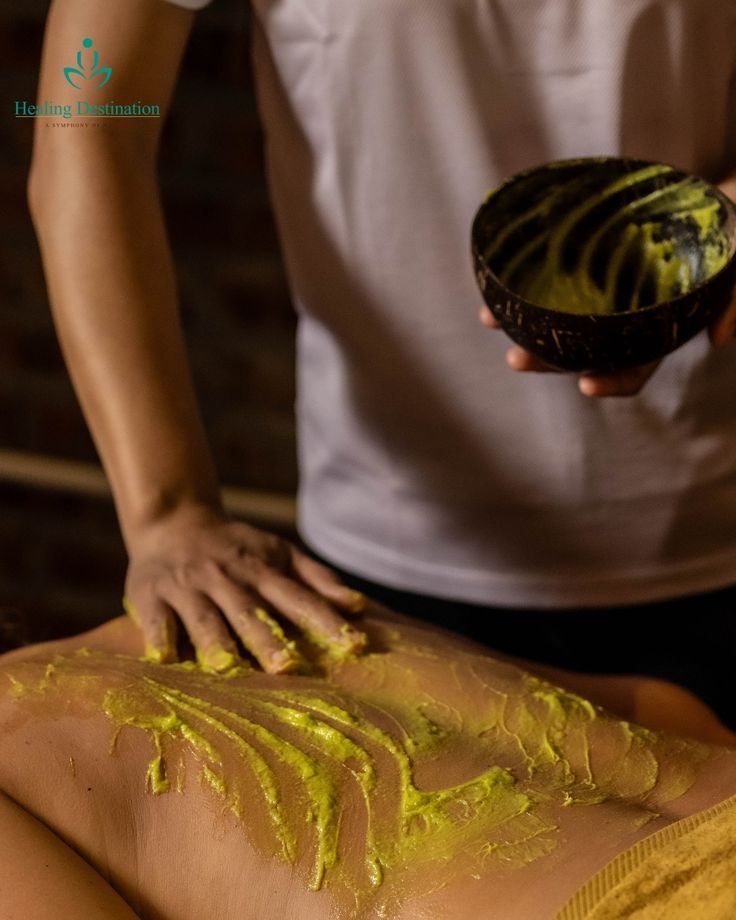
Lepam is an Ayurvedic treatment using freshly prepared herbal pastes applied to specific areas of the body or the full body surface. The paste composition varies by indication: cooling pastes for inflamed or Pitta conditions, drying pastes for Kapha congestion, nourishing pastes for Vata-related dryness and weakness. The paste is applied, left to absorb for a set period, and then removed.
Lepam is used for skin conditions, joint inflammation, hyperpigmentation, and localized pain. The specific herbs used — neem, turmeric, sandalwood, lodhra, and others — have individually documented anti-inflammatory and antimicrobial properties that combine synergistically in Ayurvedic formulation logic.
Seasonal Ayurvedic Treatments
One of the distinctive features of Ayurvedic practice is its emphasis on seasonal adaptation. Ritu charya — seasonal regimen — recognizes that what the body needs in Raipur's summer heat is different from what it needs in the monsoon or winter months. Summer Ayurvedic treatments focus on Pitta pacification: cooling oils, soothing treatments, reduced intensity of stimulating therapies. Monsoon is considered the ideal season for Panchakarma — deep cleansing — because the body is in a natural elimination phase. Winter treatments emphasize Vata management: deeply nourishing oils, warming therapies, and treatments that build strength and tissue density.
How Modern Research Validates Ayurvedic Approaches
The scientific literature on Ayurvedic treatments has grown substantially. Studies on Abhyanga have documented measurable reductions in cortisol, improvements in sleep quality, and reductions in anxiety scores. Research on Shirodhara has shown electroencephalographic changes consistent with deep relaxation states. The herbs used in Ayurvedic formulations — ashwagandha, brahmi, turmeric — have extensive pharmacological research demonstrating their anti-inflammatory, neuroprotective, and adaptogenic properties.
This does not mean Ayurveda and Western medicine are interchangeable — they address health through different frameworks and are best understood as complementary. But the dismissal of Ayurvedic treatments as purely cultural or placebo-based is increasingly unsupportable given the research that has accumulated.
Pricing and Session Lengths
Abhyanga at Raipur Spa is available in 60-minute and 90-minute sessions, priced from Rs. 1,200 to Rs. 2,200. Shirodhara sessions run 45 to 60 minutes and are priced between Rs. 1,500 and Rs. 2,500. Kizhi treatments are typically 60 to 90 minutes and priced from Rs. 1,800 to Rs. 3,000 depending on variant. Lepam is priced based on the area of application and specific preparation required, typically Rs. 800 to Rs. 1,800. Combined Ayurvedic packages — often including Abhyanga followed by Shirodhara — provide both treatments at a package rate and represent the best introduction to the comprehensive Ayurvedic spa experience.
Enjoyed This Article?
Stop reading about relaxation — come experience it firsthand at Raipur SPA.
People Also Ask
Related Articles

Enjoyed This Article?
Stop reading about relaxation — come experience it firsthand at Raipur SPA.
 Chat on WhatsApp
Chat with us
Chat on WhatsApp
Chat with us