Foot Massage and Reflexology in Raipur: Benefits and Differences
Let me tell you something that took me embarrassingly long to figure out: foot massage and reflexology are not the same thing. For years I thought they were interchangeable terms — two ways of saying "someone rubs your feet." Then I got a proper reflexology session at Raipur SPA and the therapist spent a solid ten minutes on my right heel. Just my heel. Not even the whole foot. I was confused and mildly concerned. Afterward, she casually mentioned that the area she worked on corresponds to the sciatic nerve pathway, and that I was holding a lot of tension there. She wasn't wrong. My lower back had been stiff for weeks.
That experience made me want to actually understand what was going on. So let's talk about both — foot massage and reflexology — what makes them different, why both are worth your time, and what you can expect at Raipur SPA.
Foot Massage: The Straightforward One
Foot massage, at its core, is exactly what it sounds like. The therapist works on the muscles, tendons, and soft tissue of your feet using techniques similar to general massage — kneading, friction, compression, stretching. The goal is primarily local: relieve tired, achy feet, improve circulation in the feet and lower legs, reduce swelling, and create an overall sense of relaxation.
If you've spent the day walking around a market in Raipur, or if you're on your feet all day at work, a good foot massage is one of the most immediate forms of relief available. The feet have a dense concentration of nerve endings — more than almost any other part of the body — which is why foot massage produces such a disproportionately strong relaxation response. Your whole system starts to calm down when you give the feet proper attention.
At Raipur SPA, foot massage is often combined with a lower leg treatment — working up through the calves and ankles — which addresses the full kinetic chain. Tight calves contribute to foot pain; tight ankles restrict natural movement. Working just the feet in isolation misses part of the picture.
Reflexology: The Deeper Philosophy
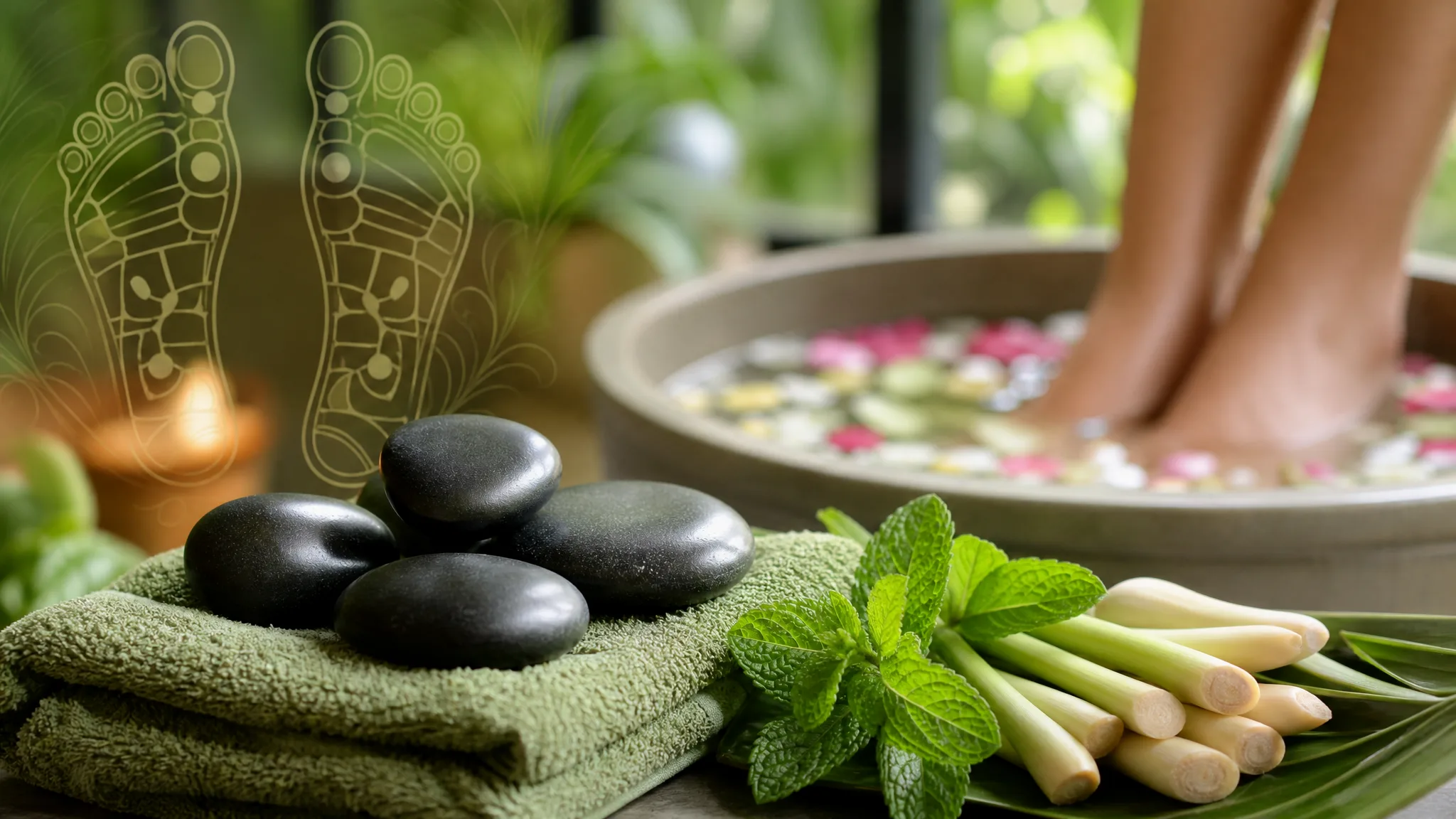
Reflexology operates on a different framework entirely. It's based on the idea that specific zones on the feet (and hands, and ears) correspond to specific organs and systems in the body. The sole of the foot is mapped out like a little diagram of the human body: the toes correspond to the head and sinuses, the ball of the foot to the chest and lungs, the arch to the abdominal organs, the heel to the lower back and pelvic region.
A trained reflexologist reads this map and applies targeted pressure to the relevant zones, with the idea that this stimulates energy flow and supports the function of the corresponding organ or system. Some people experience this quite viscerally — pressure on the liver reflex zone might cause a brief sensation in the abdomen, for instance.
Now, I know what some people are thinking: is this scientifically proven? Honestly, the research is mixed. There are studies showing reflexology reduces anxiety, lowers blood pressure, and improves quality of life in various populations. The mechanism isn't fully understood in Western medical terms. But as someone who has experienced it? There's something going on that's more than just a foot rub. The effects on the rest of the body — the clarity, the digestive calm, the sleep quality afterward — are consistent enough that I take it seriously.
Key Differences Side by Side
Here's how I now think about the two approaches:
Purpose: Foot massage aims primarily for local relief and relaxation. Reflexology aims for systemic effects throughout the body.
Technique: Foot massage uses flowing, kneading strokes across the whole foot. Reflexology uses precise, sustained thumb pressure on specific points — it can feel more pointy or intense in spots.
Duration on specific areas: Foot massage covers the whole foot relatively evenly. A reflexologist might spend significant time on a single point if that zone needs work.
How it feels: Foot massage feels immediately soothing from the first stroke. Reflexology can have tender spots — certain reflex zones feel noticeably more sensitive when the corresponding system is under stress. When a tender spot releases, the relief is satisfying in a very specific way.
Who it's best for: Foot massage is ideal if your main issue is tired, sore feet, general stress, or circulation. Reflexology is worth trying if you have chronic issues in specific organ systems (digestive problems, hormonal imbalances, headaches) or if you want a holistic wellness treatment rather than just local foot relief.
Can You Combine Both?
Yes, and this is actually what makes a session at Raipur SPA quite good. A skilled therapist can provide a session that begins with general foot massage to warm the tissue and relax the client, then moves into reflexology work once the foot is receptive. The transitions are seamless if done well — you're not suddenly jolted from one mode to another. It flows naturally.
This combined approach gives you both the immediate local relief of a good foot massage and the deeper systemic benefits of reflexology. Best of both, really.
Benefits You Can Actually Expect
Regardless of which approach you choose, regular foot work delivers some consistent benefits that I've personally experienced and that clients at Raipur SPA frequently report:
Better sleep. There's something about properly addressed feet that seems to tell the nervous system it's safe to rest. I sleep significantly better on nights after a foot treatment than on nights I don't.
Reduced swelling. People who stand or sit for long periods develop edema in the feet and ankles — a build-up of fluid. Massage and reflexology both improve lymphatic drainage and circulation, which reduces this swelling noticeably.
Headache relief. This one surprises people, but the toe reflex zones and the reflexology points for the neck and head, when properly worked, can genuinely ease tension headaches and migraines. I've had three different people confirm this works for them.
Stress reduction. The feet have so many nerve endings that direct, skilled touch there has an outsized calming effect on the entire nervous system. After even 30 minutes of quality foot work, the shoulders drop, the jaw unclenches, the breathing deepens. The whole body responds.
Practical Things to Know
Wear comfortable clothes — you'll want to roll up your trousers to the knee at minimum. Avoid heavy meals right before a session. Drink water afterward. And if there's a specific concern you want addressed — whether it's sinus problems, back pain, or just exhausted feet — tell the therapist at the beginning. Context helps them focus where it matters most.
Sessions at Raipur SPA typically run from 30 to 60 minutes for foot-focused treatments. Longer sessions allow for more thorough work and integration — 60 minutes gives the therapist time to do both general massage and focused reflexology properly.
Book Your Foot Massage or Reflexology Session
Raipur SPA is conveniently located and easy to book, either online or by phone. If you've never tried reflexology, I genuinely recommend going in without expectations and just experiencing it. And if you think a foot massage is a "nice treat" rather than legitimate wellness — I thought the same thing. Let your feet prove you wrong.
Enjoyed This Article?
Stop reading about relaxation — come experience it firsthand at Raipur SPA.
People Also Ask
Related Articles
Foot Massage & Reflexology
Foot Reflexology: Pressure Points and Health Benefits – Complete Wellness Guide
8 min read · 05 May 2026
Foot Massage & Reflexology
Foot Reflexology Benefits for Daily Fatigue
1 min read · 21 Apr 2026

Foot Massage & Reflexology
Reflexology for Better Energy and Focus
1 min read · 21 Apr 2026
Enjoyed This Article?
Stop reading about relaxation — come experience it firsthand at Raipur SPA.
 Chat on WhatsApp
Chat with us
Chat on WhatsApp
Chat with us