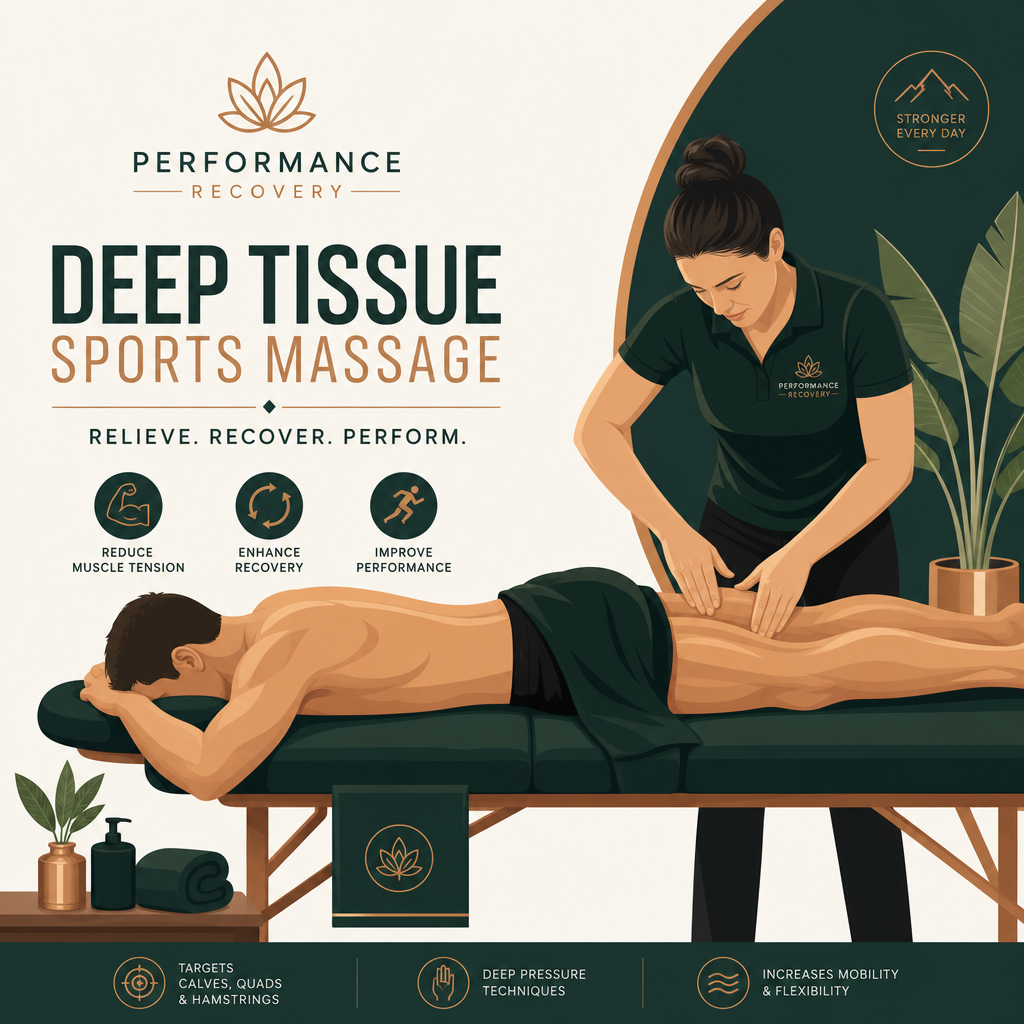
Calves, Quads, Hamstrings: The Leg Massage Every Runner Needs
The Problem With Runner's Legs
I had a conversation once with a marathon runner from Samta Colony that has stuck with me. He had been running for about six years, and he asked me a question that on the surface seemed simple: "Why do my legs feel heavy all the time?"
I asked him to describe it. He said his calves felt like they were wrapped in tight bandages. His quads ached when he sat for too long. His hamstrings always felt "short," no matter how much he stretched. And his knees — well, his knees had their own set of complaints.
The heavy-leg feeling, I told him, is one of the most common complaints I hear from runners. And it's not in his head. It's a physical reality. Running is a ground-impact sport. Every foot strike — and runners take roughly 180 strikes per minute — sends a shockwave up through the foot, ankle, calf, knee, thigh, and into the hip and lower back. Multiply that by 10,000 steps in a typical run, and you start to understand why runners' legs feel the way they do.
This article is my guide to the lower body — the specific muscles that take the biggest beating from running, the problems they develop, and how targeted massage can keep them healthy, strong, and ready for the next run.
We're going to look at three major muscle groups: the calves, the quads, and the hamstrings. Each one has a unique role in running, unique problems, and unique solutions.
The Calves: Your Shock Absorbers
The calves are the first line of defence against impact. Every time your foot hits the ground, your gastrocnemius and soleus muscles eccentrically contract — meaning they lengthen while under tension — to control the rate of ankle flexion and absorb shock. This is billions of dollars' worth of biological engineering, executed millions of times without conscious thought.
But here's the problem: the calves are also the primary source of propulsion. As you push off the ground, the calves contract concentrically — shortening while under tension — to plantarflex the ankle and drive you forward. So the same muscles that absorb the landing also generate the push-off. That's a lot of work.
What Goes Wrong
Runner's calves develop predictable problems. The gastrocnemius — the larger, more superficial calf muscle — gets tight and short from repetitive contraction. This tightness can refer pain into the arch of the foot, which is one reason so many runners develop plantar fasciitis. When you think you have a foot problem, check the calves. Nine times out of ten, the foot is just the messenger. The real problem is up in the calf.
The soleus — the deeper, flatter calf muscle that sits underneath the gastrocnemius — develops trigger points that can refer pain into the Achilles tendon and heel. This is often misdiagnosed as Achilles tendinitis when it's actually just a grumpy soleus referring pain.
And then there's the deep posterior compartment — the tibialis posterior, flexor hallucis longus, and flexor digitorum longus — which all run down the inside of the calf and control arch support and toe flexion. These muscles get neglected in most runners' self-care routines.
I had a runner from Raipur who had been dealing with chronic arch pain for two years. He had tried orthotics, different shoes, ice baths, everything. The pain would get better temporarily and then come back. In our first session, I found that his soleus was so tight it felt like a piece of hardwood. His tibialis posterior was equally restricted. After releasing those two muscles — just two muscles — his arch pain was 70% better. After a second session, it was completely gone. He hadn't fixed his foot. He had fixed his calf.
The Massage Protocol for Calves
For runners, I use a layered approach to calf massage.
Superficial work first: Start with effleurage — broad, gliding strokes to warm up the tissue and assess areas of tightness. Then move to petrissage — kneading and squeezing — to mobilise the superficial fascia and muscle fibres. This should feel good, not painful.
Gastrocnemius release: Using the forearm or thumbs, apply stripping techniques along the length of the gastrocnemius, from just above the Achilles up to the back of the knee. Pay special attention to the medial (inner) head, which is often tighter than the lateral (outer) head.
Soleus release: This muscle requires deeper, more specific pressure. The soleus is underneath the gastrocnemius, so you need to work through the gastrocnemius to reach it. The client should be lying prone (on their stomach) with a pillow under the ankle to relax the gastrocnemius. Then you can address the soleus with deep, sustained pressure.
Achilles tendon work: I'm very careful here. The Achilles tendon doesn't need aggressive pressure. I use very light, transverse friction — rubbing across the tendon fibres — combined with gentle stretching of the calf while maintaining the tendon in a relaxed position. Never dig into the Achilles. It can handle load when it's moving, but direct pressure on the resting tendon can be harmful.
Deep posterior compartment: This requires the client to be supine (on their back) with the knee bent and foot flat on the table. This position relaxes the gastrocnemius and allows access to the deeper muscles on the inside of the shin. These muscles don't get worked on often, and runners find it eye-opening how much tension they hold there.
The Quadriceps: Your Engines
The quadriceps are the primary drivers of forward propulsion in running, especially during uphill sections and sprints. They're also responsible for absorbing landing forces and controlling knee flexion during the stance phase of running.
The quadriceps group consists of four muscles: rectus femoris (which crosses both the hip and knee), vastus medialis (the teardrop-shaped muscle on the inner thigh), vastus lateralis (the outer thigh), and vastus intermedius (underneath the rectus femoris).
What Goes Wrong
Runner's quadriceps tend to become globally tight, but the tightness isn't distributed evenly. The rectus femoris — the only quad muscle that crosses both joints — gets particularly tight because it's being asked to both extend the knee and flex the hip. This dual function creates a lot of tension, especially in runners who also do a lot of hill work.
The vastus lateralis often becomes overactive relative to the vastus medialis. This imbalance can pull the kneecap outward during movement, contributing to patellofemoral pain syndrome (runner's knee). I see this all the time: a runner has knee pain, they think it's a knee problem, but it's actually a quad imbalance.
The vastus intermedius — the deepest quad muscle — is often overlooked entirely, but it can develop trigger points that contribute to deep thigh pain that runners mistake for something more serious.
One of my regulars, a 50-kilometre ultrarunner, came to me with what he thought was a quad strain. He had been having a dull ache in the front of his thigh for weeks. All his online research told him it was a muscle strain. But when I palpated his rectus femoris, I found that it wasn't strained — it was loaded with trigger points. The muscle wasn't injured; it was exhausted. Three sessions of focused trigger point release, and his "strain" was gone.
The Massage Protocol for Quads
Positioning matters: Quad massage is best done with the client supine. The knee should be slightly bent with a bolster under the knee to relax the rectus femoris.
Broad myofascial release: Using the forearm or a broad surface, apply sustained compression along the quad group, moving slowly from the knee upward to the hip. This releases the superficial fascia and prepares the deeper tissue for more specific work.
Rectus femoris focus: This muscle runs straight down the centre of the thigh. It often has a tight band that you can feel as a cord-like structure. Using striping techniques with the thumb or knuckles, work along this band from the pelvis (anterior inferior iliac spine) down to the patella.
Vastus medialis vs vastus lateralis: If there's a knee tracking issue, spend more time releasing the vastus lateralis (which is pulling the kneecap outward) and gently working the vastus medialis (which needs to be stronger to counterbalance). The vastus medialis obliquus (VMO) — the lowest fibres of the inner quad — is particularly important for patellar tracking.
Vastus intermedius: With the rectus femoris lifted to the side, you can access the vastus intermedius underneath. This requires a specific technique where you push the rectus femoris medially and then work on the muscle beneath it. The vastus intermedius often has deep, stubborn trigger points that runners don't even know they have.
Self-Care for Quads
For daily quad maintenance, I recommend using a foam roller on the front of the thighs. But most runners do this wrong. They roll too fast. They don't spend time on the specific muscles. And they skip the vastus intermedius entirely.
Here's my technique: Lie face-down with the foam roller under one thigh. Roll from just above the knee to the hip, very slowly. When you find a tender spot, stop and breathe into it for 30-45 seconds. Then roll another inch or two and repeat. Spend at least 3 minutes on each leg.
For the VMO specifically, lie on your side with the foam roller under the inner thigh, just above the knee. Roll in small circles over the VMO area for 30-60 seconds. This is important for runners, especially those with any knee discomfort.
The Hamstrings: The Overlooked Workhorses
Runners love to hate their hamstrings. They complain that they're always tight. They stretch them constantly. They blame them for their slow times and their nagging injuries. And you know what? The hamstrings deserve a little more respect.
The hamstrings have a dual function in running. During the swing phase — when your leg is moving forward through the air — the hamstrings eccentrically control the extension of the knee. Then, just before foot strike, they concentrically contract to extend the hip and pull the leg backward, contributing to propulsion. They work in both phases of the running cycle. That's a lot of responsibility.
What Goes Wrong
Hamstring problems in runners usually fall into one of three categories:
Proximal tendinopathy: Pain at the attachment point of the hamstrings to the sit bone (ischial tuberosity). This is common in runners who do a lot of speed work, hills, or long runs with poor running form. The repetitive eccentric loading of the hamstrings during the swing phase can irritate the tendon attachment.
Mid-belly trigger points: The body of the hamstring muscle develops trigger points that cause deep ache or sharp pain. These are often the result of overuse or poor recovery between runs.
Distal tightness: The hamstrings attach to the tibia just below the back of the knee. There's a common association between tight hamstrings and knee pain in runners, because tight hamstrings increase the load through the knee joint during the running cycle.
I've also noticed that runners who sit a lot — desk workers, drivers — tend to have tighter hamstrings. The seated position shortens the hamstrings, and then running demands that they lengthen eccentrically through a large range of motion. That mismatch is a recipe for trouble.
The Massage Protocol for Hamstrings
Proximal work (near the sit bone): This is the most important area for most runners. The client lies prone with a pillow under the hips to slightly posteriorly tilt the pelvis, which relaxes the hamstring attachment. I use very specific thumb or elbow work on the hamstring origin at the ischial tuberosity. This area is usually extremely tender. But it's also where most hamstring problems start.
Mid-belly stripping: Working from the mid-thigh down toward the knee, use stripping techniques along each of the three hamstring muscles — biceps femoris (outer), semitendinosus (inner, more superficial), and semimembranosus (inner, deeper). The biceps femoris is the most commonly affected by trigger points in runners.
Distal work: Near the knee, the hamstring tendons become more tendinous and less muscular. Gentle stripping and transverse friction can help maintain flexibility in this area. Be careful not to compress the common peroneal nerve, which wraps around the head of the fibula on the outer side of the knee.
Sciatic nerve considerations: The sciatic nerve runs through or near the hamstring muscles. Sometimes what feels like a hamstring problem is actually nerve tension. I incorporate nerve gliding techniques — gently moving the leg through ranges of motion that slide the nerve through the muscle — to differentiate and address this.
Self-Care for Hamstrings
Foam rolling the hamstrings requires some care, because the muscle bellies are relatively small and the tendons attach to the sit bone. I recommend using a softer roller or a ball for hamstring work.
Sit on the floor with the roller under one hamstring. Support your weight with your hands behind you. Roll from just below the sit bone to just above the back of the knee. Spend extra time on any tender spots.
And for the love of all that is good in the world, do not stretch your hamstrings aggressively before a run. Static stretching of cold hamstrings is a known risk factor for injury. If you feel the need to stretch before running, do dynamic movements — leg swings, walking lunges — not sustained stretches.
The Knee Connection
I can't talk about the calves, quads, and hamstrings without talking about the knee. The knee is the middle child of the running leg — it gets squeezed by the muscles above and below it, and it bears the consequences when those muscles aren't balanced.
Every runner has a different knee story. For some, it's the inside of the knee that hurts — usually from tight adductors or a tight pes anserine (the hamstring tendons that attach to the inside of the shin). For others, it's the outside of the knee — the IT band syndrome I've discussed elsewhere. For others still, it's the front of the knee — patellofemoral pain from quad imbalance or tight calves.
In almost every case, the solution involves releasing the muscles that are pulling on the knee. The knee itself is rarely the problem. It's the messenger for imbalances in the calves, quads, and hamstrings.
When a runner comes to me with knee pain, I always work on all three muscle groups — even if they're confident that "it's just the knee." I release the calves, work the quads, address the hamstrings, and then check in on the knee. More often than not, the knee pain is either gone or significantly reduced by the time we're done.
A Weekly Leg Maintenance Routine
Here's a maintenance schedule for runners who want to keep their legs healthy:
Daily (5-10 minutes):
- Lacrosse ball work on the calves — especially the soleus and deep posterior compartment
- Foam rolling the quads — slow, with pauses on trigger points
- Gentle hamstring rolling with a softer ball or roller
Weekly (60-minute professional session):
- Targeted leg massage covering calves, quads, and hamstrings
- During high-volume training or race prep, weekly sessions are ideal
- During maintenance periods, every 2-3 weeks is sufficient
Before a long run or race:
- A light session 24-48 hours before — focus on mobility, not deep work
- The goal is to feel loose and prepared, not "worked on"
After a long run or race:
- Book a recovery session within 48 hours
- Focus on flushing metabolic waste and reducing tension
- Combine with rest, good nutrition, and hydration
The Bigger Picture: Your Legs as a System
The mistake too many runners make is thinking about their legs as individual parts. "My calf hurts." "My hamstring is tight." "I have runner's knee." But your legs are a system — a kinetic chain where every link affects every other link.
Tight calves change the angle of ankle dorsiflexion, which changes how the knee tracks, which changes how the hip moves. Weak quads mean the hamstrings have to work harder, which makes them tighter, which increases the load through the knee. The system is interconnected.
This is why I always work on all three major muscle groups when I see a runner, even if they only came in complaining about one area. The calves store tension from every foot strike. The quads drive every stride. The hamstrings control every swing phase. They all need attention, and they all affect each other.
If you're a runner in Raipur, come see me at Raipur Spa in Samta Colony. I'll give your legs the comprehensive attention they deserve — from your calves right up to your hips. Because healthy legs don't just happen. They're maintained, cared for, and respected. And your running will be better for it.
People Also Ask
Related Articles
Sports, Fitness & Weight Management
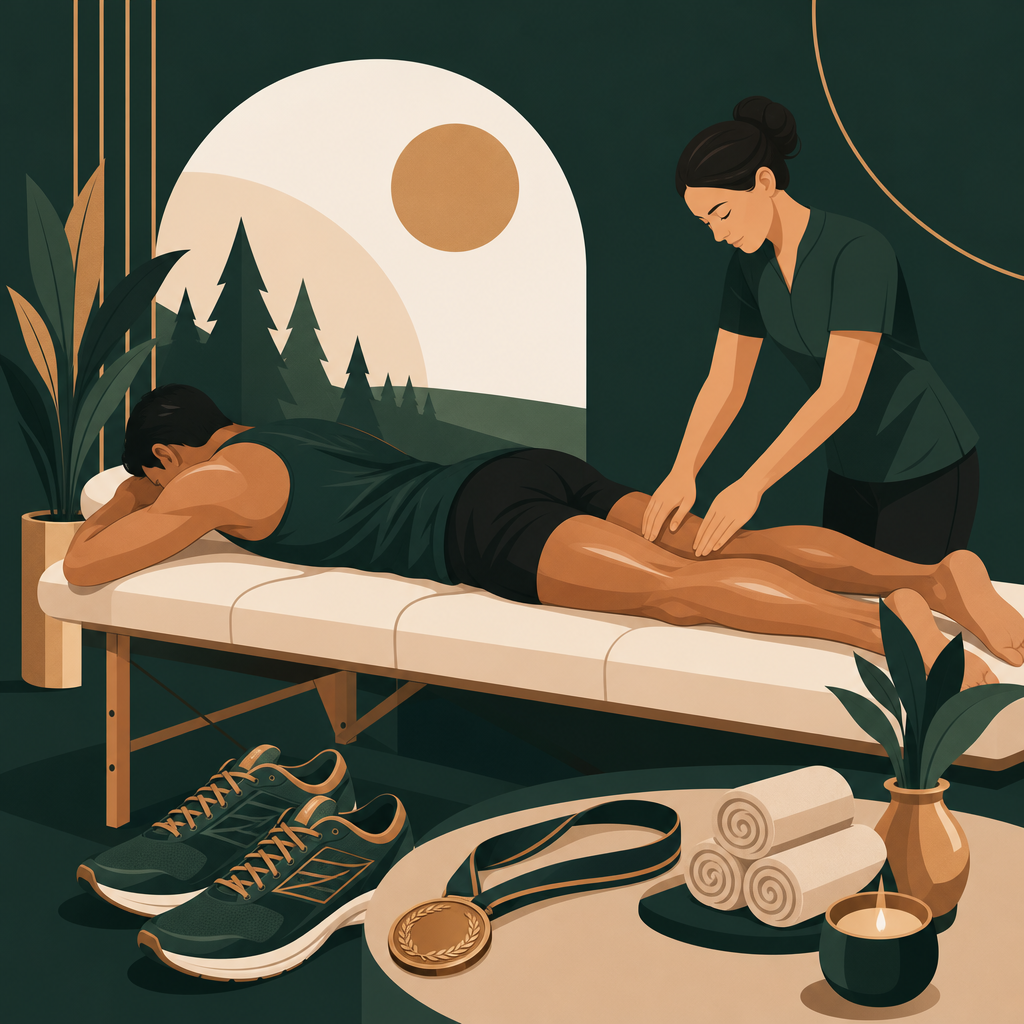
Post-Marathon Recovery: A Runner's Guide to Massage Therapy
15 min read · 12 May 2026
Sports, Fitness & Weight Management
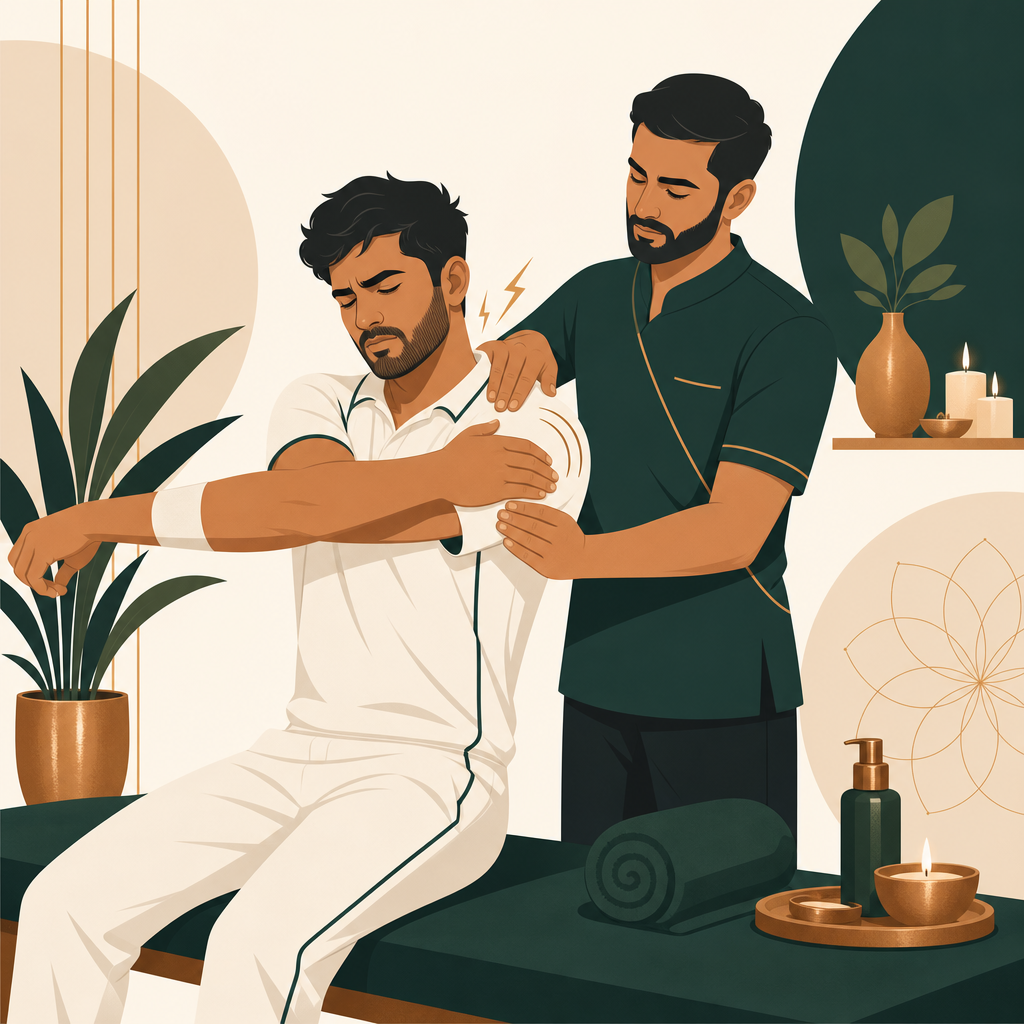
Cricket Injury Prevention: Massage for Bowlers and Batsmen
12 min read · 12 May 2026
Sports, Fitness & Weight Management
Gym Recovery 101: Pre-Workout vs Post-Workout Massage Timing
11 min read · 12 May 2026
Enjoyed This Article?
Stop reading about relaxation — come experience it firsthand at Raipur SPA.