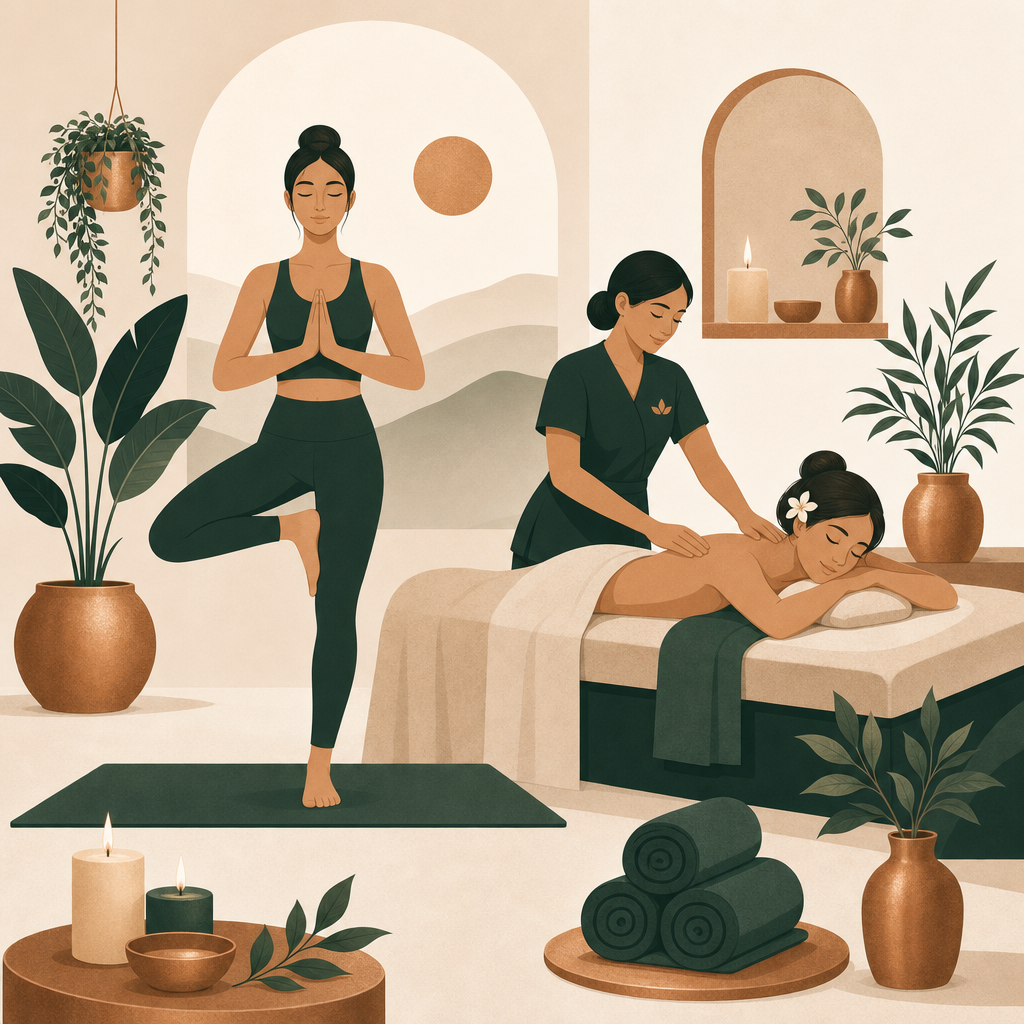
Yoga and Massage: The Perfect Wellness Combo for Flexibility
Two Practices, One Goal
I'll be honest with you — I didn't always believe in the yoga-and-massage combination. For years, I treated them as separate disciplines. Massage was my domain, the thing I understood and could speak about with authority. Yoga was that other practice — the one with the mats and the Sanskrit names and the people who seemed to fold themselves into shapes that defied normal human anatomy.
Then I met Priya.
Priya was a yoga teacher from Raipur who came to my therapy room at Raipur Spa with a problem that confused her. She had been practising yoga for over a decade. She could do advanced asanas with ease. Her flexibility was, by any normal standard, exceptional. But she had developed a persistent tightness in her right hip that no amount of stretching, no variation of pigeon pose, no amount of yin yoga could touch.
"I've tried everything," she told me. "I've held poses for five minutes. I've worked with other teachers. I've done myofascial release with balls and rollers. It feels like something in there just won't let go."
When I assessed her, I found the issue immediately. Her right piriformis — a small but powerful muscle deep in the hip — was riddled with trigger points that had been there for so long they had become chronic. The muscle fibres had essentially learned to stay tight. No amount of stretching was going to fix it because the problem wasn't muscle length — it was neurological. The muscle had forgotten how to relax.
I worked on that piriformis with sustained, deep pressure for about three minutes. She experienced referred pain down her leg — a classic sign that I was hitting the right spot. When I was done, I asked her to try the same hip-opening pose that had been bothering her. She did, and her eyes went wide. "It's different," she said. "It just let go."
That was the moment I became a believer. Stretching works when the muscle is ready to be stretched. Sometimes, the muscle needs help getting to that ready state. And that's where massage comes in.
Why Yoga Alone Isn't Always Enough for Flexibility
This might sound counterintuitive coming from someone who is about to celebrate the combination of yoga and massage. But I need to address the elephant in the room: yoga is supposed to make you flexible. Why would you need massage on top of it?
The answer lies in understanding what actually limits flexibility. Most people think that when they can't touch their toes, it's because their hamstrings are "short." That's not quite right. Your hamstrings are the same length as everyone else's — muscle fibres have a fixed length determined by your anatomy. What's actually happening is that your nervous system has placed a safety limit on the stretch. It's saying, "If we go any further, something might tear." That limit is set by a combination of muscle tension, connective tissue restrictions, and neurological guarding.
Yoga works on this limit by gradually teaching your nervous system that it's safe to go further — through consistent practice, breathing, and the relaxation response that occurs during a held pose. But it works slowly. Very slowly for some people.
Massage works on the same problem from a different angle. By reducing muscle tension, breaking adhesions in the fascia, and calming the nervous system, massage can lower that safety limit more quickly. I've had clients who have been trying for months — sometimes years — to touch their toes in yoga class, and after a focused session on their hamstrings and lower back, they can suddenly do it.
I'm not saying massage replaces yoga for flexibility. Not at all. Yoga teaches you how to breathe into a stretch, how to relax into discomfort, how to be present with your body's limitations. Massage just helps you get past the physical barriers that yoga alone can't always overcome.
The Fascia Factor: Why Connective Tissue Needs Both
Let's talk about fascia. If you've been to a yoga teacher training or read any modern anatomy books, you've probably heard the word. But understanding what fascia actually is — and what it needs — is key to understanding why yoga and massage work so well together.
Fascia is a web of connective tissue that runs through your entire body. It wraps around your muscles, your organs, your nerves, your bones. Think of it as the internal packaging material that keeps everything in its place. When fascia is healthy, it's flexible, hydrated, and glides smoothly over the structures it surrounds. When it's not healthy — when it becomes dehydrated, adhered, or restricted — it can limit movement, cause pain, and create that feeling of being "stuck."
Here's the important part: fascia responds to two different types of input. It responds to prolonged, gentle tension — the kind you get in a yin yoga class or a long-held stretch. And it responds to direct, sustained pressure — the kind you get from massage therapy.
Yoga helps hydrate and stretch the fascia by creating consistent, low-load tension over time. It's like gently pulling on a piece of elastic to encourage it to lengthen. Massage, on the other hand, uses compression and shear forces to break adhesions and promote fluid movement within the fascia. It's like working a stiff hinge back and forth until the rust breaks free.
Combined, they're extraordinarily effective. I've worked with dozens of yoga practitioners — from beginners to advanced teachers — and the ones who combine their practice with regular massage consistently make faster progress in their flexibility goals than those who rely on yoga alone.
Which Yoga Styles Benefit Most From Massage?
Not all yoga is created equal, and different styles create different needs in the body.
Power Yoga and Vinyasa
These are dynamic, flowing styles that involve a lot of repetitive movement — chaturanga to upward dog to downward dog, over and over. The shoulders, wrists, and lower back take the biggest load in these practices. Chaturanga, in particular, is essentially a triceps push-up done repeatedly, and I've seen countless vinyasa practitioners develop shoulder and wrist issues.
For power yoga and vinyasa practitioners, I recommend regular massage focusing on the shoulders (especially the rotator cuff), forearms and wrists, and the lumbar spine. The goal is to prevent overuse injuries from repetitive movement patterns. One of my regular clients is a vinyasa teacher who teaches five classes a week. Without monthly maintenance massage on her shoulders, she tells me she would have had to stop teaching years ago.
Yin Yoga
Here's an interesting paradox: yin yoga, which is supposed to be the gentlest form of practice, actually creates some of the most intense tissue demands. Holding poses for 3-5 minutes places prolonged stress on the connective tissue, particularly in the hips, pelvis, and lower spine.
For yin practitioners, massage is essential for two reasons. First, it helps identify and address areas of chronic tension that yin alone can't reach — the deep hip rotators, the psoas, the adductors. Second, it helps the body process and integrate the changes that yin practice creates. When you hold a yin pose for a long time, you're actually causing micro-changes in the connective tissue. Massage helps those changes settle into the tissue properly, rather than the tissue simply bouncing back to its previous state.
Ashtanga and Mysore Style
Ashtanga is arguably the most physically demanding form of yoga. It's a set sequence of poses done in the same order every time, with a focus on breath and movement. The repetition of the same sequence, day after day, creates very specific patterns of tension and weakness in the body.
Ashtanga practitioners tend to develop tightness in the hamstrings (from forward folds), the shoulders (from the many arm balances and inversions), and the hips (from the seated postures). I've worked with Ashtanga practitioners who have been practising the same sequence for years and have developed such predictable patterns of tightness that I can tell what they need before they even tell me.
For Ashtangis, I recommend targeted work on the hamstrings — specifically the attachment points at the sit bones — and the shoulders. The deep gluteal muscles also need regular attention because the constant forward-folding in the sequence tightens them up significantly.
When to Schedule Massage Around Your Yoga Practice
Just like with gym training, the timing of massage relative to your yoga practice matters.
Before yoga: A very light massage or even just some self-myofascial release with a ball can be helpful before practice. The goal is to mobilise the tissue, not to break it down. Five to ten minutes of light work on the areas you plan to focus on in your practice can make a noticeable difference. I know a few yoga teachers in Raipur who use a lacrosse ball on their feet and calves before class, and they swear by it.
After yoga: This is when the more substantial work should happen. Your body has been warmed up, your connective tissue has been stretched, and your nervous system is more receptive. A focused massage session within a few hours of your practice can be incredibly productive. The muscles are more pliable, the fascia is more hydrated, and the therapist can work more deeply with less discomfort.
On a separate day: This is my preferred recommendation for most practitioners. Book a massage on a day when you're not doing an intense practice — a rest day or a day with just light, gentle movement. This gives your body time to fully benefit from both the massage work and the yoga practice without overwhelming your recovery capacity.
The day after a very deep yin practice: This is actually a terrible time for deep massage. Your connective tissue has been stressed by the long holds in yin, and adding deep tissue work on top of that can cause excessive soreness. Wait at least 24-48 hours after an intense yin session before booking deep work.
Self-Massage Techniques for Yoga Practitioners
You don't need to come to a therapist for every session. There are self-massage techniques that can significantly enhance your yoga practice when done at home.
For the hips: Sit on a tennis or lacrosse ball and find the tender spots in your glutes. This is the single most effective self-massage technique for yoga practitioners. Most hip tightness in yoga comes from the deep rotators — the piriformis, gemellus, obturator muscles — and a ball is the best way to reach them. Spend 2-3 minutes on each side, breathing deeply into the discomfort.
For the shoulders: Lie on your back with a ball placed just inside your shoulder blade. This targets the infraspinatus and teres minor — muscles that get very tight from arm balances and inversions. Again, hold for 2-3 minutes per side.
For the feet: Roll a golf ball under your foot before practice. The feet have an enormous number of nerve endings and fascial connections, and releasing the feet can create a ripple effect of relaxation up through the entire body. This is especially helpful before standing poses.
For the hamstrings: Be gentle here. The hamstrings are vulnerable to over-stretching, and aggressive self-massage can do more harm than good. Use a foam roller with very light pressure, and never roll directly over the attachment points at the sit bones.
The Breathing Connection
One reason yoga and massage complement each other so well is the breath. Both practices, at their best, involve conscious, deliberate breathing. And the breath is the key that unlocks both of them.
In yoga, you're taught to breathe into the stretch — to send your breath to the area of tension. In massage, clients often instinctively hold their breath when I work on a sensitive area. I have to remind them to breathe. "Breathe into it," I tell them, using the exact same language their yoga teacher uses.
The breath activates the parasympathetic nervous system — the rest-and-digest response. It lowers cortisol, reduces heart rate, and sends a signal to the muscles that it's safe to let go. Without the breath, both yoga and massage are just mechanical processes. With the breath, they become something deeper.
I've noticed that yoga practitioners are generally better at breathing through discomfort during massage. They've been trained to stay present with sensation without tensing up. They breathe into the areas I'm working on. They understand that the discomfort is productive, not harmful. These clients consistently get better results from their massage sessions because their nervous system is more receptive to the work.
A Sample Combination Routine
If you want to integrate yoga and massage into a coherent wellness routine, here's a pattern that works well for my clients:
Week 1:
- Monday: 30-minute gentle yoga (focus on breath and mobility)
- Wednesday: 45-minute vinyasa or power yoga
- Friday: 60-minute sports massage (full body)
- Saturday: Restorative yoga or yin (very gentle, focusing on the areas worked in massage)
Week 2:
- Monday: 30-minute gentle yoga
- Tuesday: 60-minute vinyasa or power yoga
- Thursday: 45-minute yin yoga
- Saturday: Self-practice with focus on areas of tension
- Sunday: 60-minute massage (targeted, focusing on specific areas)
This alternating pattern gives your body enough recovery time between deep massage and intense practice while keeping both disciplines active. Adjust based on your schedule and energy levels.
The Big Picture: A New Approach to Flexibility
I want to leave you with a shift in perspective. Most people approach flexibility the way they approach weight loss — as a problem to be solved through sheer effort. Stretch harder. Hold longer. Push through the pain. But flexibility is not something you can force. It's something you invite.
Yoga teaches you the invitation — the patience, the breath, the presence. Massage removes the obstacles that prevent the invitation from being accepted. Together, they create a practice that is more than the sum of its parts.
If you're in Raipur and you're curious about how massage can deepen your yoga practice, come see me at Raipur Spa in Samta Colony. Whether you're a seasoned teacher or someone who can barely touch their toes, I'll work with you to create a treatment plan that supports your practice.
Your body is capable of more than you think. Sometimes it just needs a little help getting there.
People Also Ask
Related Articles
Sports, Fitness & Weight Management
Post-Marathon Recovery: A Runner's Guide to Massage Therapy
15 min read · 12 May 2026
Sports, Fitness & Weight Management
Cricket Injury Prevention: Massage for Bowlers and Batsmen
12 min read · 12 May 2026
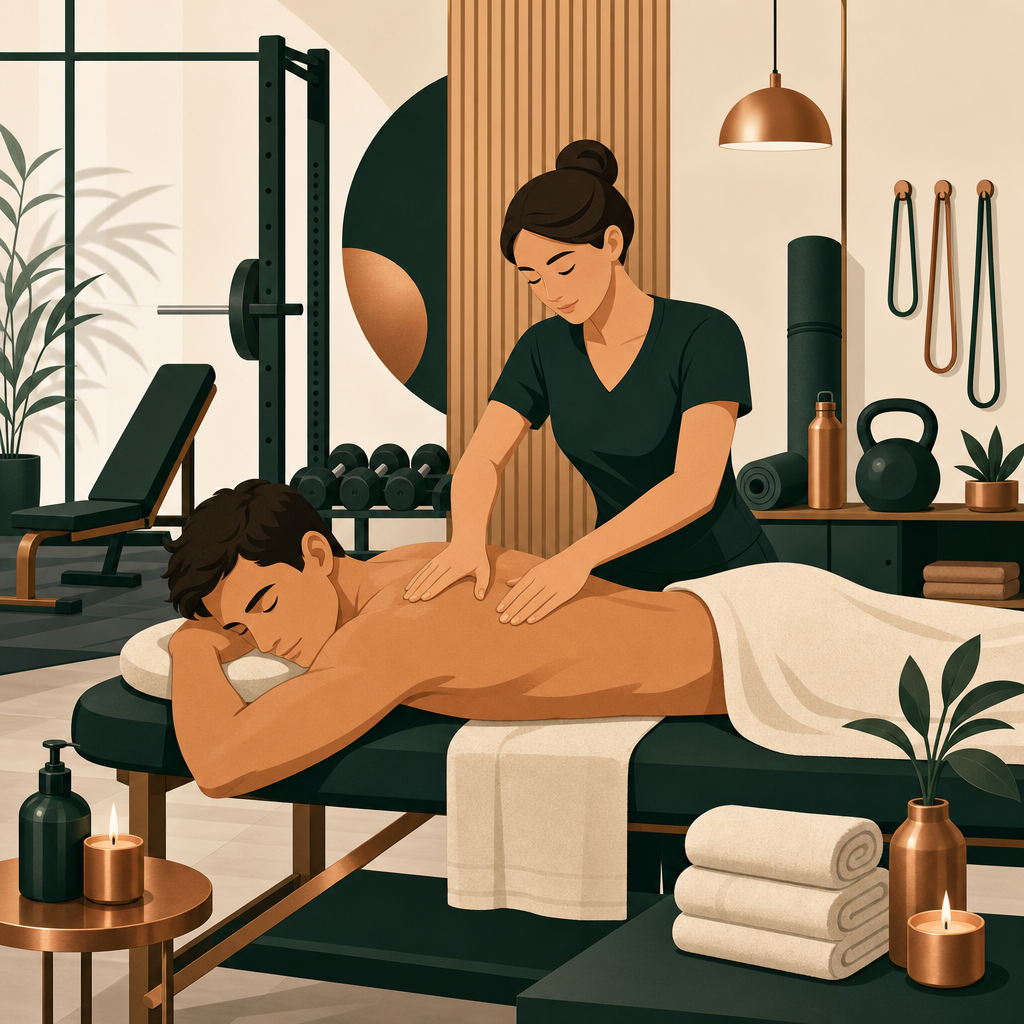
Sports, Fitness & Weight Management
Gym Recovery 101: Pre-Workout vs Post-Workout Massage Timing
11 min read · 12 May 2026
Enjoyed This Article?
Stop reading about relaxation — come experience it firsthand at Raipur SPA.